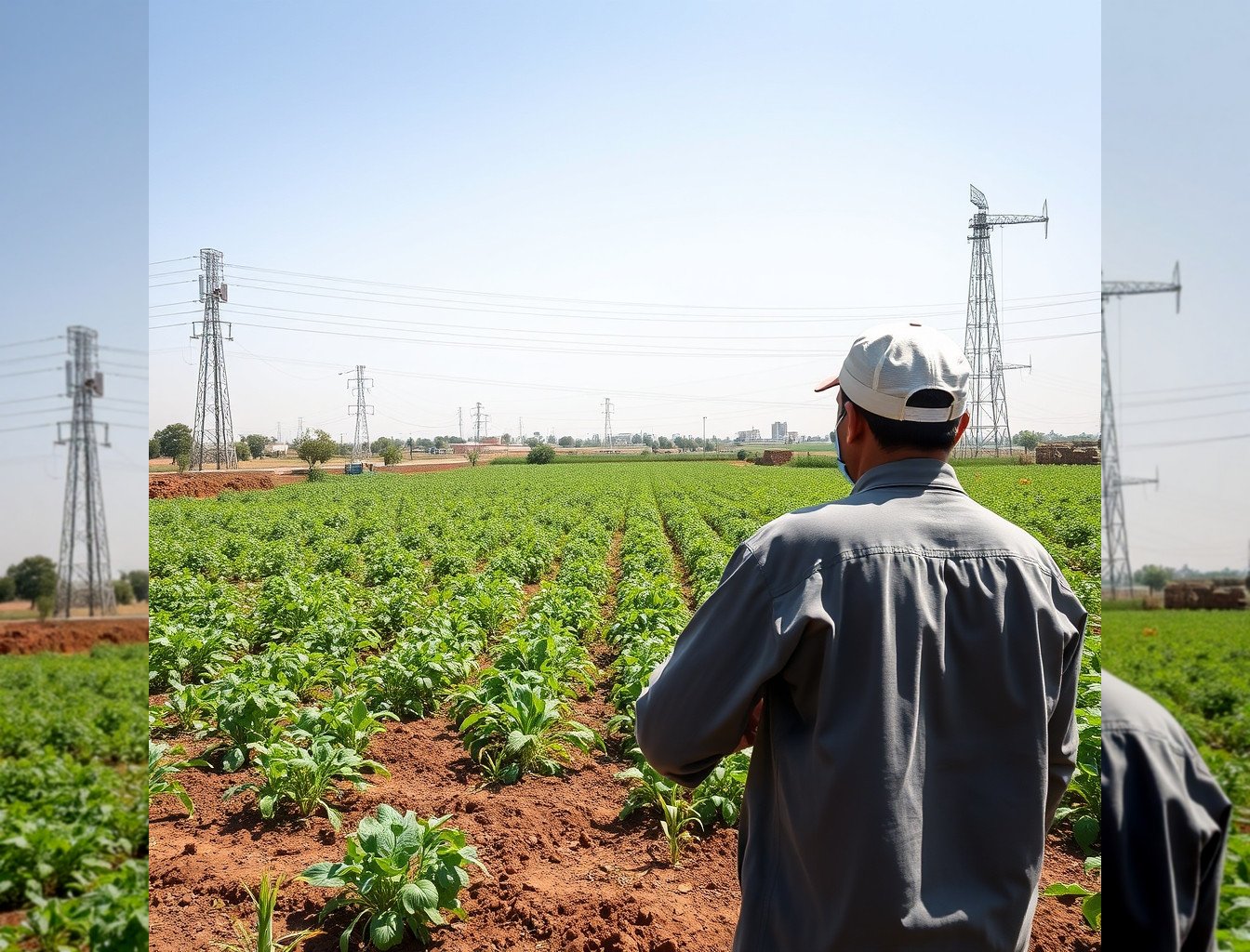
Algeria’s economic cycle this week showed two contrasting flows. On one side, agriculture and energy infrastructures faced import-dependent pressures: wheat purchases remain at 2023 levels, a $1.5 billion chemicals complex remains stalled, and desalination projects multiply to secure water. On the other, startup ecosystems and industrial consortiums gained new financing windows: female-led ventures will receive grants, Egypt’s El-Sewedy family plans regional investments with Algerian partners, and a 2026 oil and gas licensing round is confirmed. Security threats persisted in the south, while hospitality policy tightened for foreign visitors.
Agriculture and Food Security: Wheat Imports Stay High
Algeria’s wheat imports are forecast to remain at elevated levels in 2024. The UN’s GIEWS Country Brief (25 April 2024) projects soft wheat imports near 6.4 million tonnes, roughly equivalent to 2023 volumes, despite improved domestic cereal harvests. The brief notes that Algeria still meets 60–65% of its cereal demand through imports, with soft wheat predominantly sourced from France, Germany, and Russia.
France’s agricultural exports to Sub-Saharan Africa surpassed North Africa in 2023, according to French customs data, reflecting a shift in trade flows that Algeria does not currently lead. For Algerian agribusinesses, this underscores the need to strengthen domestic milling, storage, and logistics to compete with imported flour-based products.
CNRC Registration and Trade Facilitation
At the Algeria Trade Investment Forum – African Export, authorities reiterated the launch pathway for foreign entrepreneurs seeking to register companies under the CNRC (Centre National du Registre du Commerce). The event emphasized streamlined procedures for African investors, particularly in light of Algeria’s 2024 trade agreements with the African Continental Free Trade Area (AfCFTA). The CNRC now publishes digital filing turnaround times: 5 working days for online submissions, 10 days for in-person, with a 3,000 DZD fee for registration and 500 DZD for each additional activity code.
Startup Ecosystem: Funding and Gaps
Two funding initiatives emerged this week. Seedstars and the SANAD program will allocate micro-grants to female-led startups in Algeria, targeting seed-stage ventures in fintech, agritech, and cleantech. Selection criteria include a minimum viable product and revenue under $50,000 annually. Separately, ten incubators and accelerators across North Africa were listed in a regional report, including three Algerian programs: Algeria Venture, Startup Your Life, and Technofund.
Despite these initiatives, a $1.5 billion chemicals complex project (Algeria Chemicals Complex) remains stalled. Sources cite financing delays and regulatory hurdles as key reasons. The project, conceived in 2020, aimed to produce 500,000 tonnes of ammonia and urea annually for domestic and regional markets.
Industrial and Energy Plans: Egypt Consortium and Licensing Round
Egypt’s El-Sewedy Electric Company, part of the El-Sewedy family’s $4.2 billion conglomerate, is exploring investments in Cameroon as part of a new Algeria-Egypt industrial consortium. The consortium targets renewable energy, transmission infrastructure, and industrial parks, with Algeria serving as a regional gateway for North and West Africa.
Algeria will launch a new oil and gas licensing round in 2026, according to the Ministry of Energy and Mines. The round will include 31 onshore and offshore blocks, with exploration areas covering 200,000 square kilometers. The ministry confirmed that the bidding documents will be published in Q3 2025, with a focus on unconventional resources and deep-water prospects.
SMEs and Trade Missions
At the African Trade Fair in Algiers, 20 Togolese SMEs participated, showcasing products in textiles, agro-processing, and handicrafts. Algeria’s Ministry of Commerce facilitated the fair, which included B2B matchmaking sessions and customs facilitation workshops.
Former Minister of Land Management and the Environment, Cherif Rahmani, emphasized the need for transparent land allocation for SMEs, noting that 40% of industrial land parcels remain undeveloped due to administrative bottlenecks.
Company Law and Press Freedom
ARTICLE 19 called on Algerian authorities to protect freedom of expression and a free press, citing a 2023 law that criminalizes online dissent. The organization noted that at least 13 journalists and bloggers were detained in 2024, primarily under articles related to “offending state institutions.”
Hospitality and Security: Policy and Incidents
Algeria’s hospitality sector faces dual pressures. Authorities sentenced two men to seven years in prison for “desecration of the national flag” in a luxury hotel in Oran, a case that highlights stricter enforcement of public order laws in tourist zones. At the same time, the government launched a campaign to reposition Algeria’s tourism sector, aiming to increase international arrivals from 2.5 million (2023) to 5 million by 2027.
QGIRCO, a Qatari real estate developer, confirmed plans to open a $300 million integrated resort in the Tlemcen region by 2027, including a 500-room hotel and golf course.
Counterterrorism: Persistent Threats
The Algerian army conducted an operation in the Tizi Ouzou mountains, targeting remnants of Al-Qaeda in the Islamic Maghreb (AQIM). The operation resulted in the neutralization of three militants and the seizure of weapons and explosives. AQIM remains active in the Sahel-Sahara belt, posing intermittent threats to Algeria’s southern borders.
Youth and Education: English Push
Algeria’s Ministry of National Education announced the introduction of English as a compulsory subject from primary school in 2025, starting with pilot classes. The move aims to align with regional labor market demands but faces logistical challenges, including a shortage of 5,000 certified English teachers and inadequate classroom materials.
Desertification and Water Security
Sonatrach, Algeria’s national oil company, announced a 2030 plan to triple desalination capacity to 3 million cubic meters per day, up from the current 1 million. Three new plants are planned: one in Oran (500,000 m³/day), one in Mostaganem (400,000 m³/day), and one in Béjaïa (300,000 m³/day). The projects are tendered internationally, with bids due by June 2024 and completion scheduled for 2027.
The National Agency for Water Resources (ADE) also confirmed the launch of the National Water Plan (NAPAC 2025), which prioritizes desalination, wastewater recycling, and groundwater recharge in the Sahara.
Key takeaway for entrepreneurs:
Algeria’s startup ecosystem received targeted grants for female-led ventures and expanded incubator networks. Industrial land bottlenecks persist despite trade missions, while desalination and oil licensing present new infrastructure and investment avenues. Regulatory clarity is improving for foreign registration but remains uneven in media and hospitality sectors.
Sources
- Council on Foreign Relations
- PBS
- ARTICLE 19 – Defending freedom of expression and information.
- The Worldfolio
- Togo First
- Billionaires.Africa
💡 Starting a business in Algeria? GlobalStart guides you step by step: procedures, real costs, company forms (SARL, EURL, SPA) and CNRC registration.