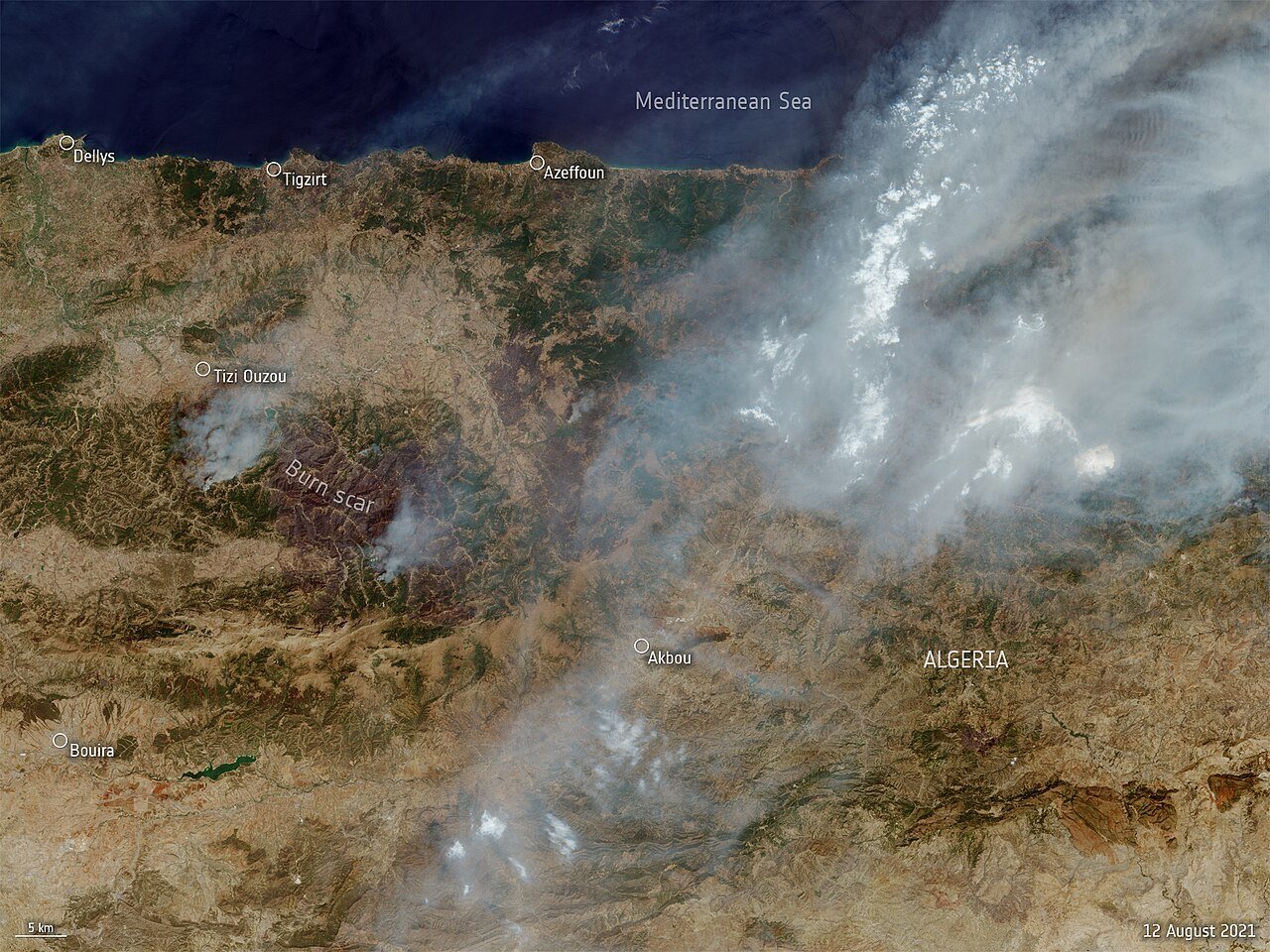
Algeria’s forest fires have claimed at least 12 lives, prompting the government to declare three days of national mourning. The disaster exposes a deeper crisis: climate change is reshaping the country’s economic and social landscape, with severe consequences for entrepreneurs, farmers, and the Algerian diaspora. Beyond the immediate human toll, the fires reveal vulnerabilities in Algeria’s food security, business resilience, and investment strategies—all under threat from a warming climate.
A deadly toll with economic consequences
The forest fires have left 12 dead, a stark reminder of Algeria’s growing exposure to climate-related disasters. While the official death toll stands at 12, the true impact may be higher as rescue efforts continue. The fires, fueled by extreme heat and dry conditions, have destroyed vast stretches of woodland and farmland, directly threatening the livelihoods of rural communities.
For entrepreneurs, the economic fallout is immediate. Small businesses reliant on agriculture—such as timber processors, honey producers, and organic farmers—face immediate losses. The destruction of crops and trees disrupts supply chains, raising costs for raw materials and forcing some to shut down. Meanwhile, tourism operators in affected regions, particularly those in the Kabylie and Aurès mountains, see their revenue evaporate as visitors avoid fire-stricken areas.
The fires also expose Algeria’s dependence on natural resources. Forestry and agriculture contribute significantly to the economy, yet these sectors lack the infrastructure to withstand prolonged droughts and wildfires. Without intervention, the damage will ripple through the economy, from food prices to export markets.
Climate change hits small farmers hardest
Small-scale farmers bear the brunt of these disasters. Many operate on narrow margins, with limited access to insurance or emergency funds. When fires destroy their fields or livestock, they have few options to recover. The loss of timber and grazing land further reduces their ability to generate income, pushing some into debt or forcing them to abandon their land entirely.
The fires also threaten Algeria’s food security. The country imports much of its wheat, but domestic production—particularly of fruits, nuts, and medicinal plants—supports local markets. If fires continue to spread, food shortages could emerge in affected regions, driving up prices and straining household budgets. Entrepreneurs in the food sector, from processors to distributors, must now account for disrupted harvests and higher transportation costs due to damaged roads and infrastructure.
The Algerian government has yet to outline a long-term strategy to protect farmers. While some regions have fire-prevention programs, enforcement remains inconsistent. Without stronger policies, small farmers will continue to bear the economic burden of climate change, while larger agribusinesses with more resources adapt more easily.
Diaspora investments face new risks
The Algerian diaspora plays a crucial role in the economy, sending remittances and investing in local businesses. However, the forest fires introduce new risks for these investments. Many diaspora-backed projects—such as olive groves, vineyards, and eco-tourism ventures—are now in jeopardy. Investors may hesitate to commit further funds if their assets remain vulnerable to wildfires and droughts.
The fires also raise questions about insurance coverage. Many small businesses and farms lack adequate protection against natural disasters. Without proper safeguards, diaspora investors could face significant financial losses, discouraging future capital inflows. The government has not yet addressed how it will support affected investors or improve risk management in high-risk sectors.
For entrepreneurs relying on diaspora funding, the message is clear: climate resilience must become a priority. This means diversifying investments, securing insurance, and adopting fire-resistant farming techniques. Failure to do so could lead to a decline in foreign investment, weakening Algeria’s economic recovery.
Government response: mourning but no clear plan
The Algerian government has declared three days of national mourning, but its economic response remains unclear. While officials express condolences, there is no detailed plan to address the long-term impacts of the fires. Emergency relief efforts focus on rescue and recovery, but reconstruction and prevention strategies are lacking.
Entrepreneurs and farmers are left to navigate the crisis on their own. The government has not announced financial aid packages for affected businesses, nor has it outlined measures to prevent future disasters. Without clear guidance, entrepreneurs must take independent steps to mitigate risks, such as investing in fire-resistant infrastructure or shifting to drought-resistant crops.
The lack of a coordinated response also undermines investor confidence. Businesses and diaspora investors need certainty that their assets are protected. Until the government provides a structured plan, the economic fallout of the fires will continue to deepen.
Opportunities in crisis: fire-resistant businesses
Despite the challenges, the fires create opportunities for entrepreneurs willing to innovate. Demand for fire-resistant building materials, drought-tolerant crops, and climate-adaptive agriculture is rising. Businesses that specialize in these areas can fill gaps in the market, particularly in regions prone to wildfires.
There is also potential in eco-tourism and sustainable forestry. Entrepreneurs who develop fire-safe tourism projects or promote reforestation initiatives can attract investment while supporting local economies. The key is to align business models with climate resilience, ensuring long-term viability in a changing environment.
For those in the food sector, shifting to high-value, low-risk crops—such as almonds, dates, or medicinal herbs—can reduce exposure to fire damage. Similarly, agribusinesses that invest in irrigation technology and early warning systems will be better positioned to survive future disasters.
Key takeaway for entrepreneurs
The forest fires are a wake-up call for Algeria’s business community. Entrepreneurs must treat climate risks as a core part of their strategy, not an afterthought. This means diversifying revenue streams, securing insurance, and adopting practices that reduce vulnerability to wildfires and droughts. The government’s slow response highlights the need for proactive measures—those who act now will be the ones who thrive in a warming economy.
Sources
- Demócrata
💡 Starting a business in Algeria? GlobalStart guides you step by step: procedures, real costs, company forms (SARL, EURL, SPA) and CNRC registration.