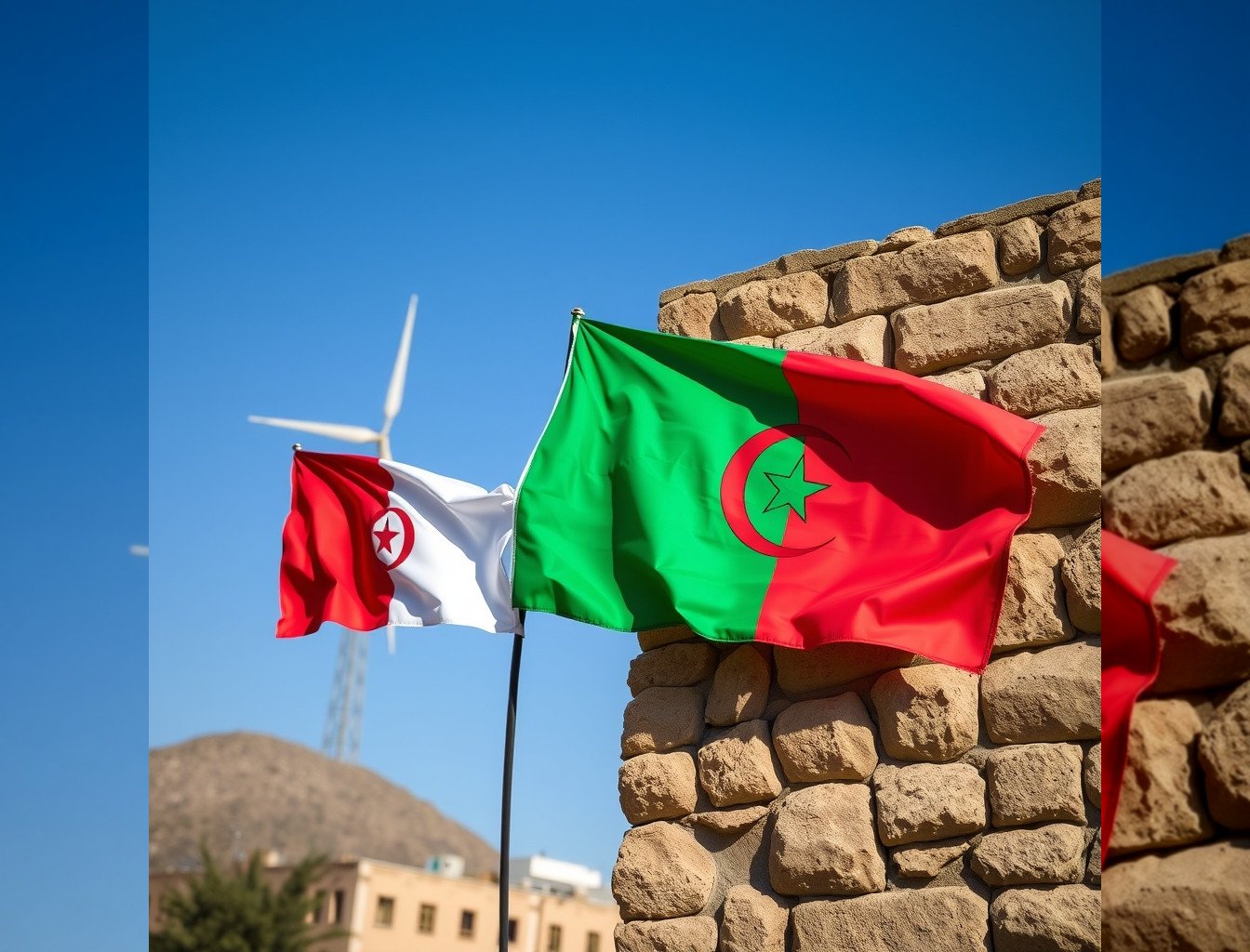
Europe’s North Africa policy is being reshaped by the long-running rivalry between Morocco and Algeria over energy exports, according to Al Jazeera. The standoff is forcing the European Union to reconsider its deals with both countries at a moment when gas security has become a strategic priority. For Algerian entrepreneurs and the diaspora, the changing landscape carries both risks and opportunities as new pipelines and export routes are debated.
Algeria has been a reliable supplier of natural gas to Europe for decades, but its relationship with Brussels has grown tense in recent years. The latest friction stems from Algeria’s decision to halt the transit of Moroccan gas through its pipelines to Spain, a move that cut off the North African kingdom’s exports to Europe and left Rabat scrambling for alternatives. According to Al Jazeera, this disruption has pushed the EU to accelerate negotiations with Algeria for expanded liquefied natural gas (LNG) shipments, including from its new floating export terminal at Arzew, which began operating in 2025.
The European Commission has proposed a multi-billion-euro energy partnership with Algiers, offering financial guarantees and technology transfers in exchange for guaranteed gas volumes. Industry analysts estimate that Algeria could supply up to 45 billion cubic meters of gas annually to the EU by 2030, up from 32 billion in 2023, if infrastructure bottlenecks are resolved. For Algerian business founders in energy services, engineering and logistics, this could translate into new contracts for pipeline maintenance, port upgrades and floating storage projects.
However, the rivalry is not only about volumes but also about routes. Morocco has responded by accelerating its own energy diplomacy, signing deals with Nigeria to build a gas pipeline across West Africa and exploring renewable hydrogen exports to Germany. According to Al Jazeera, these initiatives aim to bypass Algerian territory entirely, potentially diverting future European demand away from Algeria’s existing infrastructure.
For the Algerian diaspora in Europe, the shifts create both market openings and reputational risks. Many professionals work in energy trading, consulting and project finance, sectors that could expand if Algeria secures long-term EU supply contracts. Yet diaspora investors also face uncertainty over whether Algiers will maintain stable export policies or revert to protectionist measures in response to regional pressure.
Entrepreneurs in Algeria’s private sector see mixed signals. Small and medium-sized businesses in renewables, particularly solar and green hydrogen, could benefit from EU funding aimed at diversifying energy sources. The Algerian government has earmarked $6 billion for renewable projects through 2030, with tenders expected in renewable energy zones such as Adrar and Ouargla. Meanwhile, the halt in Moroccan gas transit has left some Algerian industrial zones, including the petrochemical complex in Arzew, operating at reduced capacity due to regional pipeline constraints.
The European Union’s new approach also includes incentives for Algeria to expand its LNG export capacity, including floating units that can dock directly at European ports. According to Al Jazeera, the EU plans to co-finance at least two new floating storage and regasification units (FSRUs) along Algeria’s Mediterranean coast, reducing the need for overland pipelines and lowering transit risks.
Key takeaway for entrepreneurs
Algerian founders in energy services could see increased demand for infrastructure upgrades as EU deals expand. Renewable energy entrepreneurs may access new grant programs tied to Algeria’s green hydrogen and solar targets. Diaspora investors should monitor policy signals from Algiers before committing to cross-border energy ventures.
Sources
- Al Jazeera
💡 Starting a business in Algeria? GlobalStart guides you step by step: procedures, real costs, company forms (SARL, EURL, SPA) and CNRC registration.