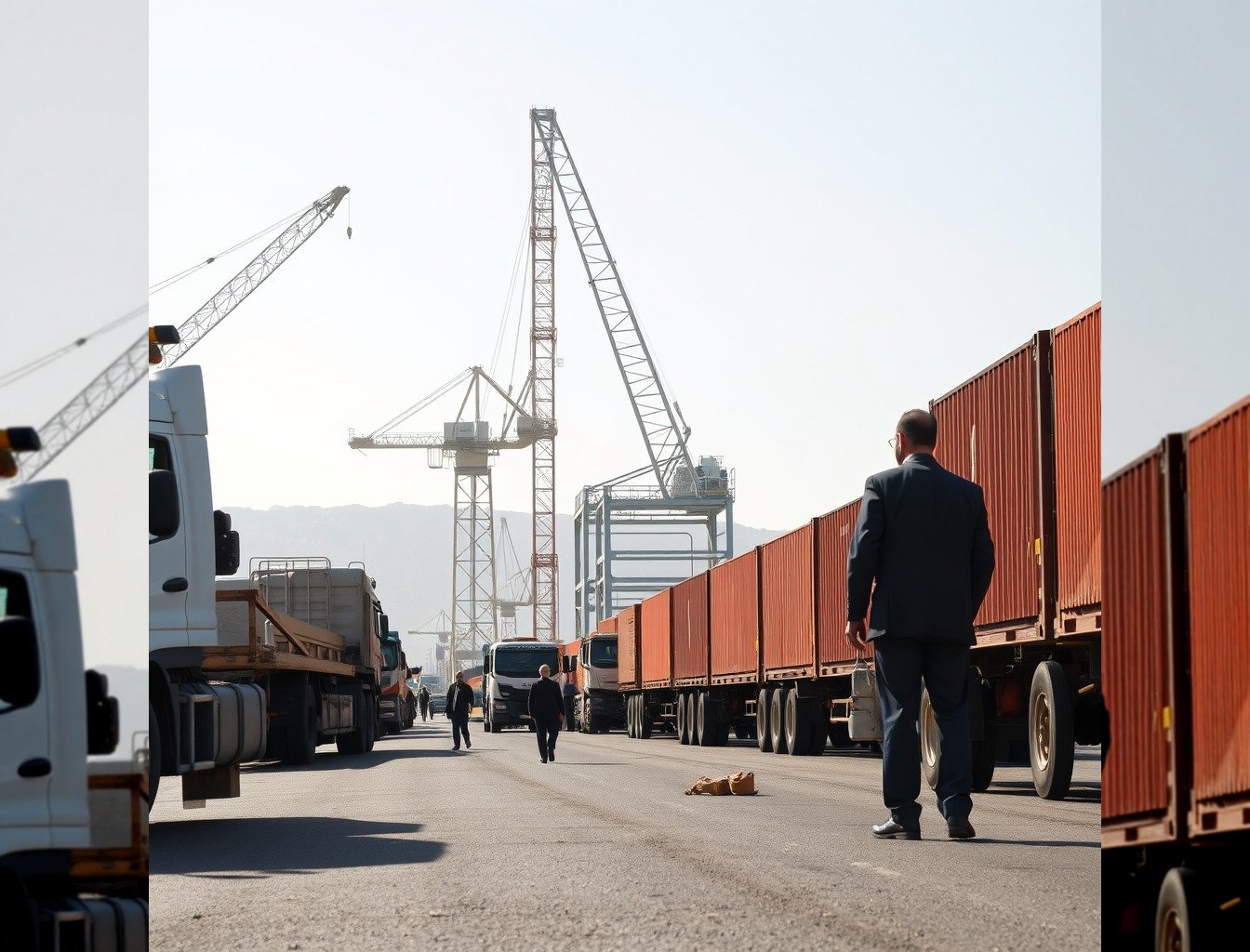
Algeria’s widening trade deficit with the EU—now exceeding $4.5 billion—is a red flag for President Abdelmadjid Tebboune’s economic strategy. While hydrocarbons still dominate exports, the imbalance reveals a dangerous over-reliance on Europe. For Algerian entrepreneurs, this crisis isn’t just a statistic. It’s a wake-up call to diversify, exploit untapped markets, and seize the moment before Brussels tightens its grip further.
Europe’s Gas Grasp Tightens
For SONATRACH, the state energy giant, this means two things. First, Europe’s energy transition is forcing Algeria to compete harder. Second, the deficit exposes Algeria’s vulnerability when EU demand slows. “The EU is our largest customer, but also our biggest creditor,” warns Ali Haddad, CEO of the Algerian Business Forum. “If Brussels turns to US or Qatari gas, we’re left holding the bill.”
Morocco’s Shadow Grows
For Algerian entrepreneurs, this is a warning. If Algeria doesn’t act, Morocco could become the region’s manufacturing hub, leaving Algerian businesses stuck in a hydrocarbon-dependent economy. “We’re exporting sand while Morocco exports cars,” says Karim Benali, founder of Algerian Tech Startups, a network of 500 digital firms. “The deficit isn’t just about oil—it’s about missing the future.”
The Diaspora’s Untapped Leverage
The diaspora isn’t just sending money—it’s bringing skills. Dr. Samira Benaissa, a Paris-based pharmaceutical executive, returned this year to set up PharmaDz, an import-substitution venture producing generic medicines. “The EU deficit shows we need to stop relying on European imports,” she says. “Our diaspora has the capital and networks to make this happen—but we need policies that encourage them.”
SONATRACH’s Dilemma: Diversify or Sink
But the timing is critical. The EU’s Green Deal is pushing member states to phase out Russian and Algerian gas by 2030. If Algeria doesn’t develop non-hydrocarbon exports—agriculture, tech, or manufacturing—it risks being left behind. “SONATRACH can’t be the only engine of growth,” says Hocine Benslimane, an economist at the University of Algiers. “We need a private-sector-led shift, and fast.”
The Morocco-Algeria Standoff: A Distraction?
China, Algeria’s second-largest trade partner, is ramping up investments in renewables and infrastructure. This week, CEFC China Energy signed a deal to build a solar farm in Béchar, a project that could create 5,000 jobs. Meanwhile, Turkey—another non-EU ally—is snapping up Algerian citrus and olive exports, offering a 15% tariff advantage over Europe.
How Algerian Startups Are Fighting Back
Similarly, Fethi Benali’s Algerian E-Commerce platform is cutting out European middlemen by connecting Algerian farmers directly to German and Dutch buyers. “The deficit is real, but it’s also an opportunity,” he says. “We’re proving that Algerian goods can compete—if we stop exporting raw materials and start selling value.”
The EU’s Next Move: Will Algeria Be Ready?
For entrepreneurs, this means three urgent priorities:
1. Diversify exports—shift from hydrocarbons to agriculture, tech, and manufacturing.
2. Leverage the diaspora—attract investment and know-how from Algerians abroad.
3. Target non-EU markets—China, Turkey, and the Middle East are hungry for Algerian goods.
Key takeaway for entrepreneurs
💡 Starting a business in Algeria? GlobalStart guides you step by step: procedures, real costs, company forms (SARL, EURL, SPA) and CNRC registration.