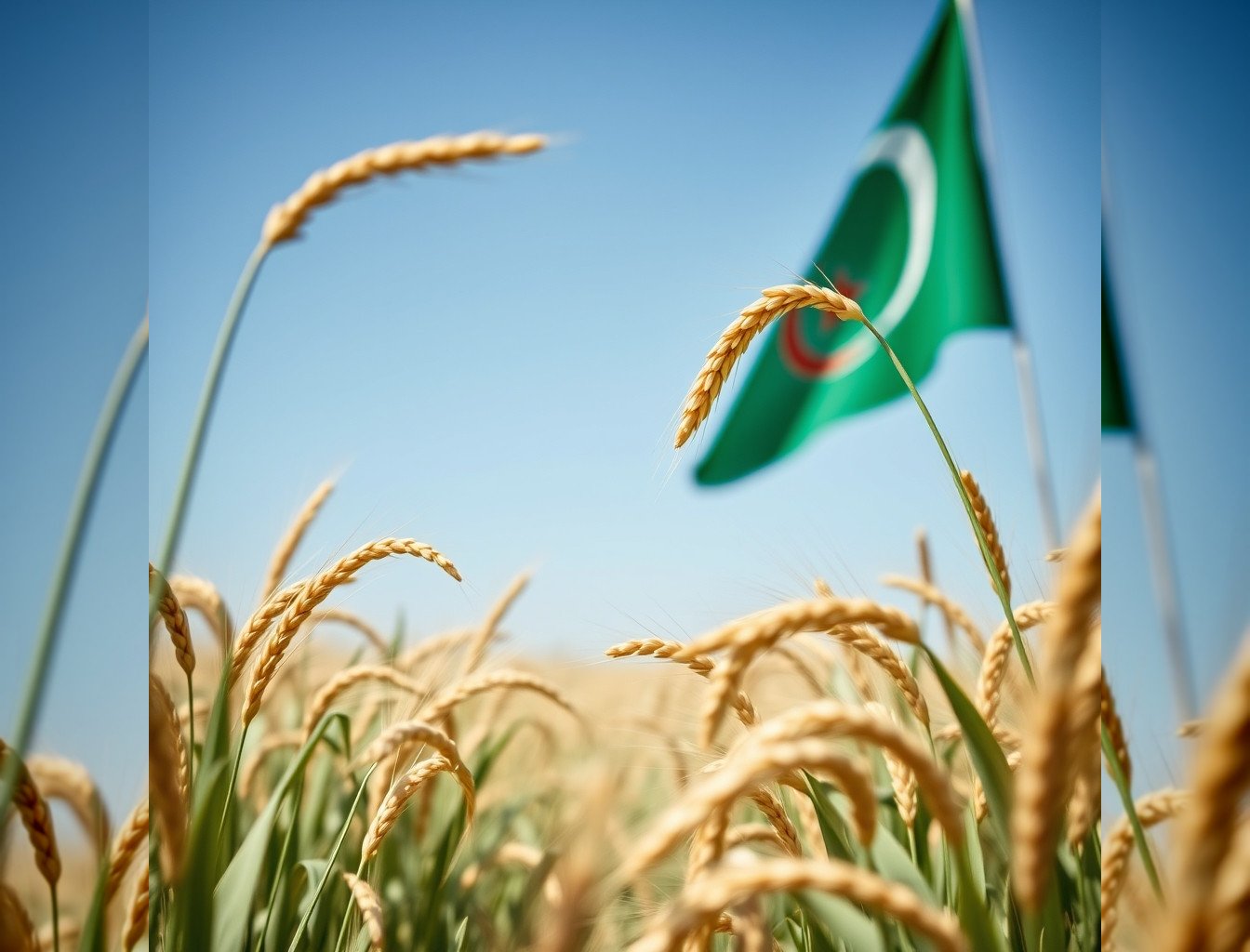
Algeria’s state grains agency and Italy’s Maccaferri Group have finalized a $455 million farming project aimed at boosting domestic wheat output, according to Bloomberg.com. The agreement positions Italian technology and capital alongside Algeria’s drive for self-sufficiency in cereals, a sector strained by drought and rising import costs.
The deal commits Maccaferri to develop large-scale irrigated farms in Algeria’s interior, focusing on wheat cultivation, the agency’s director general said. Bloomberg.com reported the announcement on 7 July 2024, following months of negotiations tied to Algeria’s 2024–2026 agricultural investment plan. The funds will cover farm equipment, irrigation systems, and soil preparation in regions where rainfall is scarce.
For entrepreneurs in Algeria’s agriculture machinery and irrigation segments, the project opens a near-term market for parts, maintenance, and localized service networks. Local suppliers of pumps, drip systems, and solar-powered units may secure contracts if the Italian group prioritizes domestic sourcing for up to 30 percent of components, a threshold often set in public–private ventures. Algerian agri-tech startups specializing in arid-zone farming could pitch solutions for monitoring soil moisture and remote water management, areas where Maccaferri’s existing global supply chain may have gaps.
The scale of the investment—$455 million over multiple years—suggests phased deployment, creating rolling tender opportunities for small and medium enterprises in logistics, storage, and training. Entrepreneurs should watch for upcoming tenders listed by the state grains agency’s procurement portal, which typically follows international transparency rules. Early engagement with local chambers of commerce in Algiers and Oran may improve visibility on subcontracting lists.
For the Algerian diaspora active in agronomy or finance, the deal signals a niche for diaspora-led funds to co-invest in downstream ventures—seed cleaning, flour milling, or bakery chains—that will need steady supplies of locally grown wheat. Remittances from diaspora communities in France and Italy could be channeled into equity or convertible loans for logistics hubs near project hubs. Diaspora entrepreneurs with EU passports may also leverage supplier relationships in Italy to act as intermediaries for Algerian off-takers seeking imported components.
Maccaferri’s involvement points to Italian expertise in water-saving irrigation, a critical advantage in Algeria’s steppe and Saharan zones where groundwater depletion is accelerating. Local agri-entrepreneurs can anticipate demand for training centers to certify technicians on drip-line installation and pump maintenance—skills that can be monetized beyond the project’s direct scope. Partnerships with Algerian universities specializing in hydraulics engineering may yield grant-backed programs aligned with the project’s operational calendar.
The project lands as Algeria’s wheat imports hit 5.8 million tonnes in 2023, a 12 percent rise from the previous year, according to official data. Domestic production met only 38 percent of needs, leaving the country exposed to volatile Black Sea prices and shipping disruptions. By targeting 150,000 hectares of new irrigated wheat fields, the deal aims to lift domestic output by roughly 700,000 tonnes annually once fully ramped up, according to the grains agency’s technical brief.
For Algerian founders in fintech, the project could spur blockchain-based traceability platforms that track farm outputs from field to mill, addressing quality concerns that often slow down state procurement. Digital cooperatives serving smallholder farmers could aggregate plots to meet Maccaferri’s minimum scale requirements, opening revenue streams tied to supply guarantees.
Key takeaway for entrepreneurs: Local agri-businesses should prepare for procurement windows tied to the $455 million project, focusing on irrigation gear and maintenance services. Diaspora investors can target mid-stream processing and logistics ventures that will face rising demand for Algerian-grown wheat within two to three years. Early mapping of EU–Algeria supply chains can uncover brokerage or training niches before formal tenders appear.
Sources
- Bloomberg.com
💡 Starting a business in Algeria? GlobalStart guides you step by step: procedures, real costs, company forms (SARL, EURL, SPA) and CNRC registration.