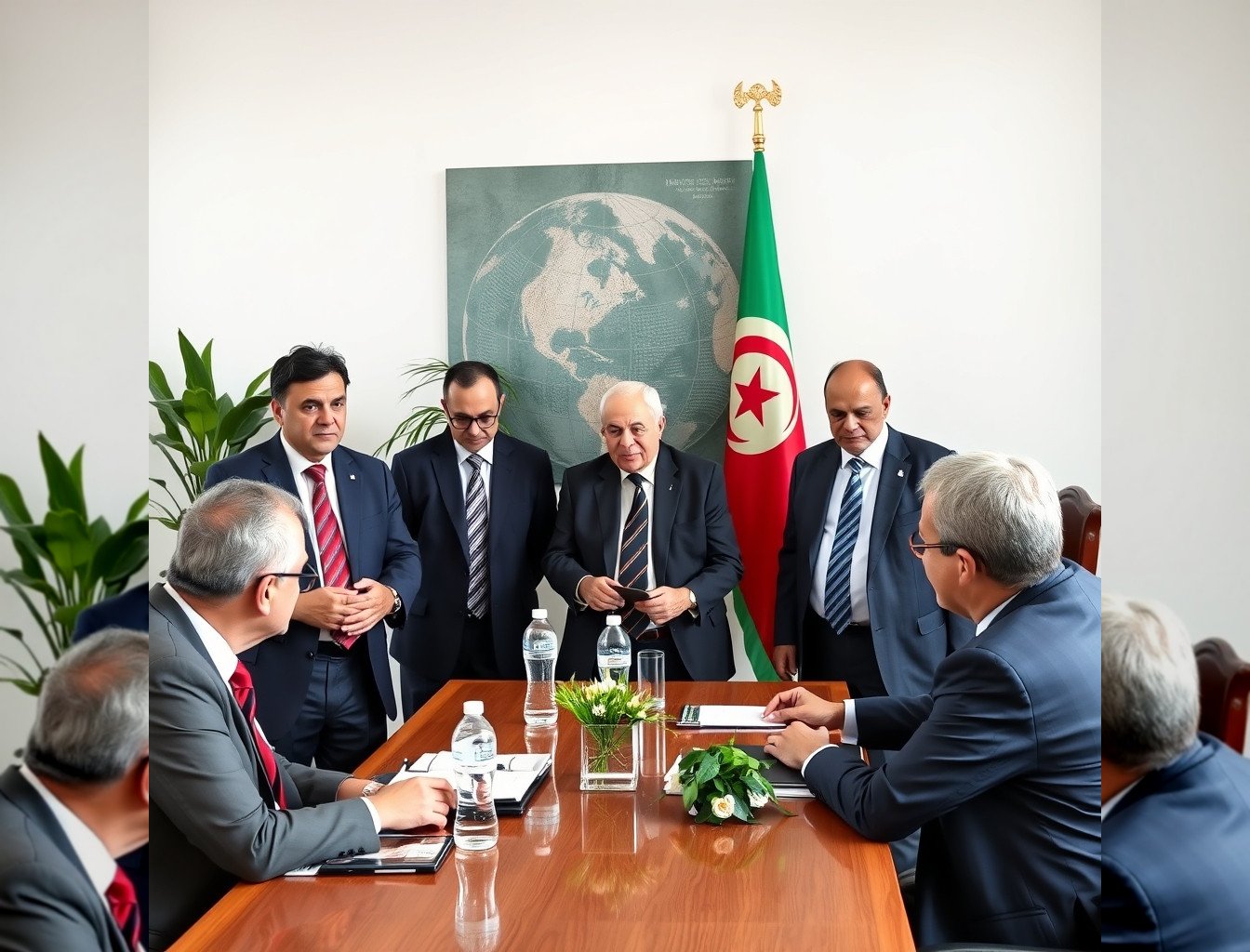
A High-Stakes Meeting: IMF Delegation and Algeria’s Energy Dilemma
The recent meeting between Algerian Minister of Hydrocarbons Mohamed Arkab and an IMF delegation underscores a critical juncture for the country’s economy. While Algerian state media did not disclose specifics, the encounter reflects deeper economic coordination between Algeria’s energy sector and international financial institutions. For a nation where hydrocarbons dominate exports—accounting for over 90% of foreign earnings—this dialogue carries significant weight.
Algeria’s economic strategy hinges on two competing priorities: stabilizing its hydrocarbon-dependent revenue and accelerating diversification. The IMF’s presence signals an external assessment of Algeria’s fiscal sustainability, particularly as global oil prices remain volatile. The government has long emphasized renewable energy as a long-term solution, but progress in this area remains uneven. The meeting may serve as a platform to discuss whether current policies are sufficient—or if deeper reforms are needed—to reduce vulnerability to oil market swings.
Renewable Energy Push: Opportunities Amid Bureaucratic Hurdles
Algeria has committed to expanding solar and wind power as part of its energy transition strategy. Large-scale projects, such as the Noor Ouarzazate solar complex, demonstrate the government’s intent to shift away from fossil fuel dependence. Yet, for entrepreneurs and investors, the path forward is not straightforward. Private sector participation in renewable energy faces persistent obstacles, including bureaucratic delays and opaque procurement processes.
The IMF delegation’s discussions could influence how Algeria structures incentives for clean energy investments. If reforms streamline approvals or clarify foreign ownership rules, entrepreneurs—especially those in the diaspora with energy or technology expertise—may find new avenues for collaboration. Public-private partnerships (PPPs) in energy efficiency, grid modernization, and green technology could emerge as key focus areas. However, without clearer regulatory frameworks, even qualified investors may hesitate to engage.
Energy analysts note that Algeria’s renewable push aligns with global decarbonization trends, which could attract foreign direct investment. Yet, the country’s track record of slow implementation raises questions about whether political will matches financial commitments. For now, entrepreneurs should closely monitor announcements from the Ministry of Energy Transition and Renewable Energies, as upcoming policy adjustments could either open doors or reinforce existing barriers.
Hydrocarbons Under Scrutiny: Fiscal Reforms and Business Implications
Despite diversification efforts, Algeria’s economy remains heavily tied to hydrocarbons. The IMF delegation’s agenda likely includes discussions on fiscal sustainability, subsidy reforms, and revenue management—all of which have direct implications for businesses. Adjustments to energy subsidies, for instance, could reshape consumer demand and operational costs across industries.
For entrepreneurs, these reforms may create both challenges and opportunities. If the government tightens fiscal policies to reduce deficits, certain sectors—particularly those reliant on subsidized inputs—could face higher costs. Conversely, reforms that improve transparency in licensing or foreign investment rules might encourage greater private sector involvement in upstream and downstream energy activities.
Diaspora investors with ties to Algeria’s energy or technology sectors could benefit if reforms ease capital repatriation or reduce restrictions on foreign ownership. Joint ventures or partnerships with state-owned enterprises (SOEs) may become more feasible, provided that bureaucratic hurdles are addressed. However, without concrete policy changes, the potential for collaboration remains limited.
Key Takeaway for Entrepreneurs
Algeria’s meeting with the IMF highlights ongoing economic policy discussions that will shape the energy sector’s future. Entrepreneurs in renewable energy, energy efficiency, and related technologies should track official announcements from both the Ministry of Hydrocarbons and the Ministry of Energy Transition for emerging project opportunities or regulatory shifts. Those with expertise in sustainable energy—and particularly those in the diaspora—may find this period opportune for engagement, provided they navigate Algeria’s complex bureaucratic landscape. Success will depend on whether upcoming reforms translate into actionable, investor-friendly policies.
💡 Starting a business in Algeria? GlobalStart guides you step by step: procedures, real costs, company forms (SARL, EURL, SPA) and CNRC registration.