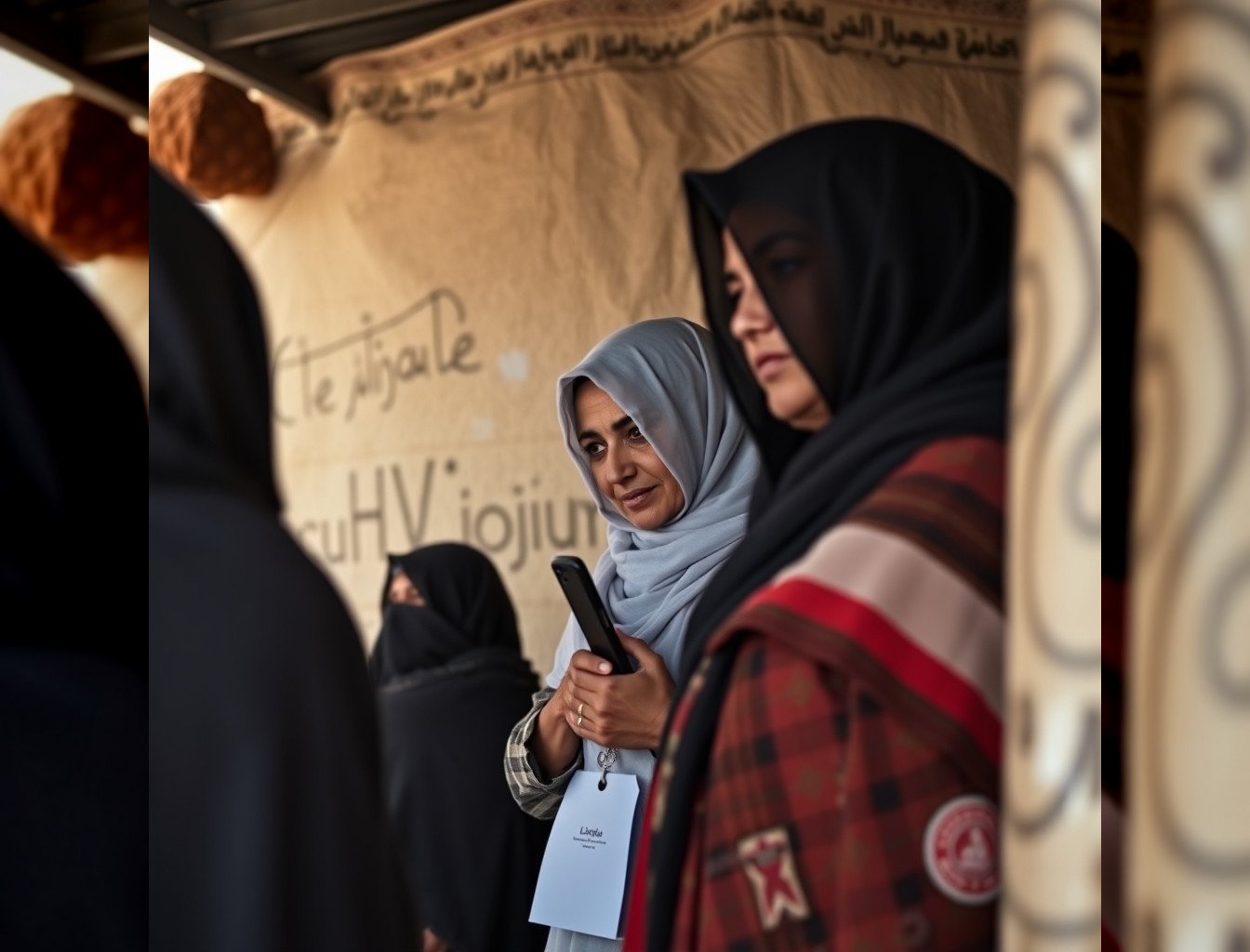
For two decades Algeria’s government has promised to protect women. In 2004 President Abdelmadjid Tebboune’s predecessor signed the Family Code reform that raised the marriage age to 19 and toughened divorce rules. Yet the 2006 implementation grid never appeared. This year, women’s shelters still do not exist outside the capital, court backlogs for domestic violence cases reach 18 months, and entrepreneurs who hire women say the guarantees on paper vanish in practice.
The failure is financial as well as legal. Algeria’s 2026 budget earmarks 1.2 billion dinars for family and women’s programmes, a 22 % cut from 2025. At the same time, SONATRACH’s dividend to the state rose by 400 million dollars, money that activists say could fund the promised shelters. “Every year the prime minister signs decrees, but the decree that creates the shelter fund is never published,” said Fatima Benbraham, head of the National Observatory for Women’s Rights. Benbraham’s organisation runs a single shelter in Algiers with 14 beds. It receives 300 requests a month; only 12 women can be housed.
Legal recognition without enforcement is visible in Algiers’ commercial courts. In 2025 forty-seven women filed suits for unpaid wages after returning from maternity leave. Each case took an average 273 days to reach a verdict, and only three employers paid damages. Walid Hassani, a labour lawyer who represented seven plaintiffs, said judges often adjourn hearings because the Family Code’s article 34 on joint property is still interpreted by male magistrates as “a husband’s right to manage assets.” Hassani added that his clients’ businesses lost an average 8 500 dollars in lost contracts while waiting for justice.
The diaspora has stepped in where the state has not. In 2023 the Paris-based Association of Algerian Women Entrepreneurs launched a 500 000 euro micro-credit line for women starting ventures in Oran and Constantine. By 2026 the fund had placed 187 loans averaging 2 670 euros each. Yet the programme’s manager, Samira Chafai, reports that 60 % of recipients say customers still expect male signatories on bank accounts despite the 2004 legal change. “They tell our women, ‘Come back with your brother,’” Chafai said.
Industrial zones are another flashpoint. In the Sidi Bel Abbes free zone, twenty-two textile factories employ 3 400 women on sewing lines. Last month 150 workers staged a walkout after supervisors docked pay for “excessive” bathroom breaks. The labour inspectorate arrived two weeks later and ruled the deductions illegal, but the fines totalled only 12 000 dinars—less than the wage shortfall for the affected women. The zone’s director, Mokhtar Ziouche, told reporters the settlement was “the best we could do under current regulations.”
The policy gap costs the economy directly. Algeria’s female labour participation rate stands at 18 %, the lowest in North Africa. The World Bank estimates that raising it to 30 % would add 2.3 % to GDP annually. Yet in 2025 only 7 % of SMEs with bank loans had a woman as majority owner, according to the Central Bank. Bankers cite the lack of enforceable marital-property rules as the key risk.
Courts themselves are part of the problem. In 2025 the Algiers Court of Appeal overturned a lower-court ruling that ordered a husband to pay half the marital home’s value to his wife after a divorce. The appeal judges cited an earlier ruling by the Constitutional Council that preserved “family cohesion,” a clause activists say was used to protect male assets. The wife’s lawyer, Leila Djebbar, said the case consumed 14 court sessions and 11 000 dinars in fees—sums that deter other women from filing.
For entrepreneurs and investors, the signal is mixed. On paper Algeria scores above regional peers in gender-sensitive legislation. The 2026 Finance Law includes a 1 % tax rebate for companies that reach a 30 % female workforce, yet the clause lacks an enforcement mechanism. Meanwhile, the Algerian Union of Chambers of Commerce (CAPC) reports that 42 % of start-ups led by women cite gender-discrimination lawsuits as a reputational risk when seeking expansion capital.
Key takeaway for entrepreneurs
Legal guarantees for women’s workplace rights exist but are rarely enforced; female-led SMEs still lose contracts while awaiting court decisions. Diaspora-backed micro-credit funds are bridging gaps left by the state, yet customers and banks continue to demand male signatories. The cost of non-compliance—lost productivity and higher wage claims—now exceeds the penalties employers face, making gender-sensitive hiring and pay policies a competitive edge.
Sources
- Amnesty International
- dandc.eu
- Human Rights Watch
- Arab Reform Initiative
- Middle East Institute
- Freedom House
💡 Starting a business in Algeria? GlobalStart guides you step by step: procedures, real costs, company forms (SARL, EURL, SPA) and CNRC registration.