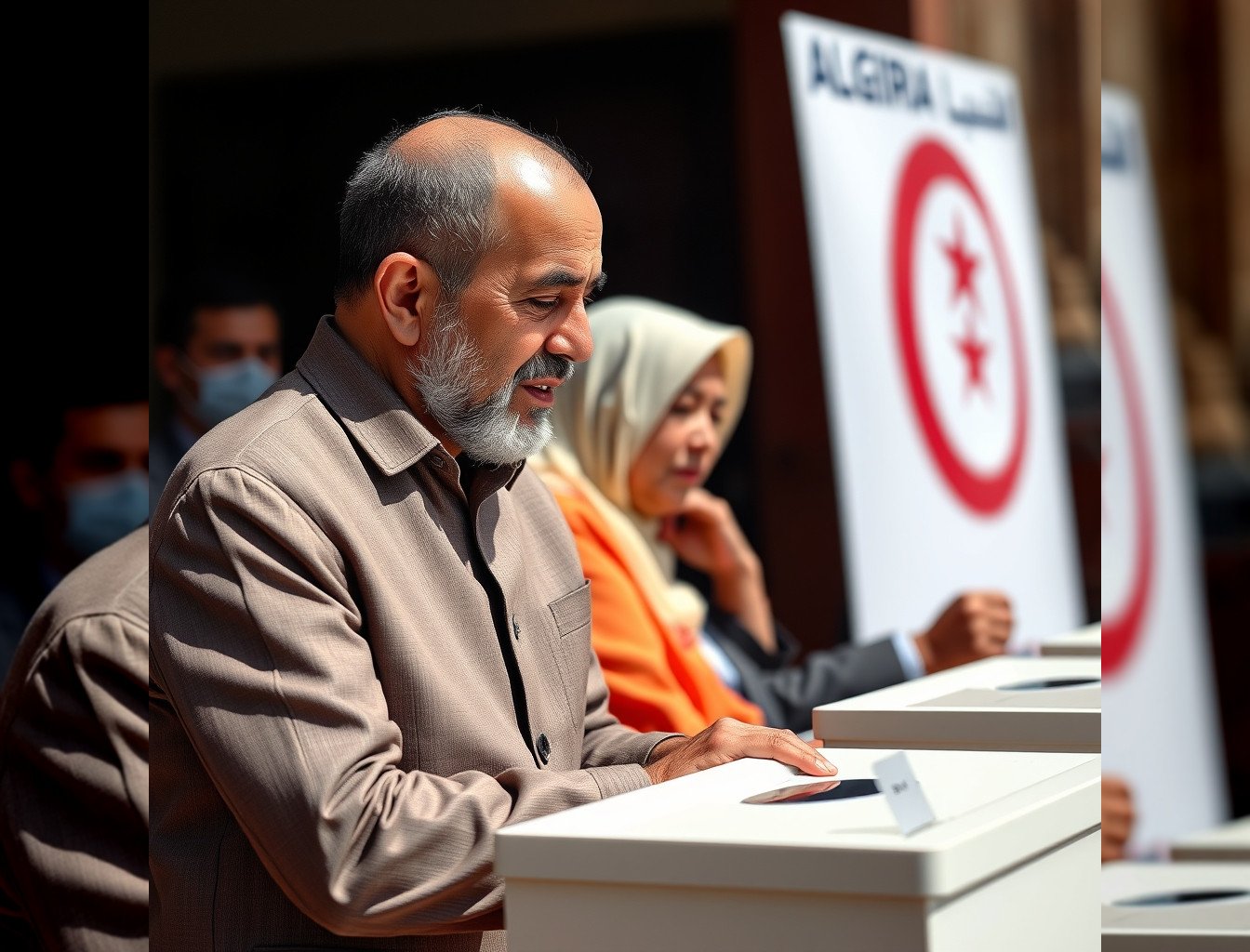
Algeria’s recent legislative elections, held on July 5, 2026, delivered a familiar outcome: the ruling coalition, led by President Abdelmadjid Tebboune’s National Liberation Front (FLN) and the Democratic National Rally (RND), retained its majority in the People’s National Assembly. But the story that matters to entrepreneurs, business founders, and the Algerian diaspora is not the result itself—it is the record-low turnout, particularly among overseas voters, and what it signals about engagement with Algeria’s economic future.
According to the National Independent Authority for Elections (ANIE), only 23.4% of registered voters in Algeria cast ballots, a drop from 39.9% in the 2021 legislative elections. The decline was even sharper among the diaspora: just 8.7% of Algerians abroad participated, down from 12.3% in 2021. In key hubs like France, where over 1.5 million Algerians reside, turnout barely reached 6%. The figures, published by state news agency APS, underscore a growing disconnect between the state and its expatriate community—one that holds significant economic weight.
The diaspora’s disengagement is not just a political footnote. Algeria’s expatriates sent home $2.1 billion in remittances in 2025, according to the Bank of Algeria, making them the country’s second-largest source of foreign currency after hydrocarbons. These funds do more than support families; they fuel small businesses, real estate investments, and informal trade networks. Yet, despite their financial contributions, the diaspora’s influence on policy remains minimal. The recent elections offered 8 seats reserved for overseas Algerians in the 407-member parliament—a symbolic gesture that many in the community dismissed as insufficient.
For entrepreneurs, the implications are clear. The government’s inability to mobilize diaspora voters reflects broader skepticism about Algeria’s business environment. Startup founders in Algiers and Oran frequently cite bureaucratic hurdles, currency restrictions, and limited access to foreign capital as barriers to growth. The diaspora, with its global networks and expertise, could help bridge these gaps—but only if the state creates mechanisms for meaningful participation. So far, those mechanisms are lacking.
The election’s aftermath has done little to reassure investors. Tebboune’s administration has prioritized stability over reform, maintaining tight control over economic sectors through state-owned enterprises like SONATRACH and Sonelgaz. While this approach has prevented economic shocks, it has also stifled private sector innovation. The low turnout suggests that even the diaspora, often seen as a potential catalyst for change, has lost faith in incremental political shifts.
One bright spot for entrepreneurs is the government’s recent push to attract diaspora investment. In 2025, the Ministry of Finance launched the “Diaspora Investment Fund,” offering tax incentives for expatriates who invest in Algerian startups or real estate. Early results are modest: only 1,200 applications were submitted in the first six months, far below the government’s target of 10,000. Analysts attribute the slow uptake to lingering distrust and cumbersome procedures. “The fund is a step in the right direction, but the execution is flawed,” said Karim Benamara, a Paris-based Algerian entrepreneur and founder of a fintech consultancy. “Investors need guarantees, not just promises.”
The disconnect extends beyond politics. Algeria’s diaspora is increasingly diverse, with second- and third-generation Algerians in Europe and North America pursuing careers in tech, finance, and green energy. These professionals could play a pivotal role in Algeria’s economic diversification, particularly in sectors like renewable energy and digital services. Yet, the state’s outreach remains focused on first-generation migrants, many of whom are more concerned with remittances than policy reform.
For business founders, the election’s outcome reinforces the need for alternative strategies. With the political landscape unlikely to shift soon, entrepreneurs are turning to private networks and international partnerships to bypass systemic constraints. The Algerian diaspora in Silicon Valley, for example, has begun organizing pitch competitions for startups in Algiers, offering mentorship and seed funding outside government channels. “We can’t wait for the state to change,” said Leila Hadj, a Berlin-based Algerian tech investor. “The diaspora has the capital and the know-how—we just need to build our own ecosystems.”
The government’s response to the low turnout has been muted. Tebboune’s administration has framed the election as a success, emphasizing the ruling coalition’s continued dominance. But behind the scenes, there are signs of concern. In a recent meeting with business leaders, Prime Minister Nadir Larbaoui acknowledged the need to “reconnect with the diaspora,” though no concrete measures were announced. For now, the state’s engagement with expatriates remains limited to cultural initiatives and occasional investment forums.
The economic stakes are too high to ignore. Algeria’s youth unemployment rate stands at 29.8%, according to the National Office of Statistics (ONS), and the informal sector accounts for nearly 40% of GDP. The diaspora’s financial and intellectual resources could help address these challenges—but only if the government creates a more inclusive environment. The recent elections suggest that this is not yet a priority.
Key takeaway for entrepreneurs
Algeria’s diaspora remains a critical but underutilized economic force, with $2.1 billion in annual remittances and untapped expertise in high-growth sectors. The low election turnout signals skepticism about political engagement, pushing entrepreneurs to seek private solutions. Startups should focus on diaspora-led investment networks and international partnerships to bypass systemic barriers, while monitoring government incentives like the Diaspora Investment Fund—though patience will be needed as reforms move slowly.
Sources
- The Arab Weekly
- The North Africa Post
💡 Starting a business in Algeria? GlobalStart guides you step by step: procedures, real costs, company forms (SARL, EURL, SPA) and CNRC registration.