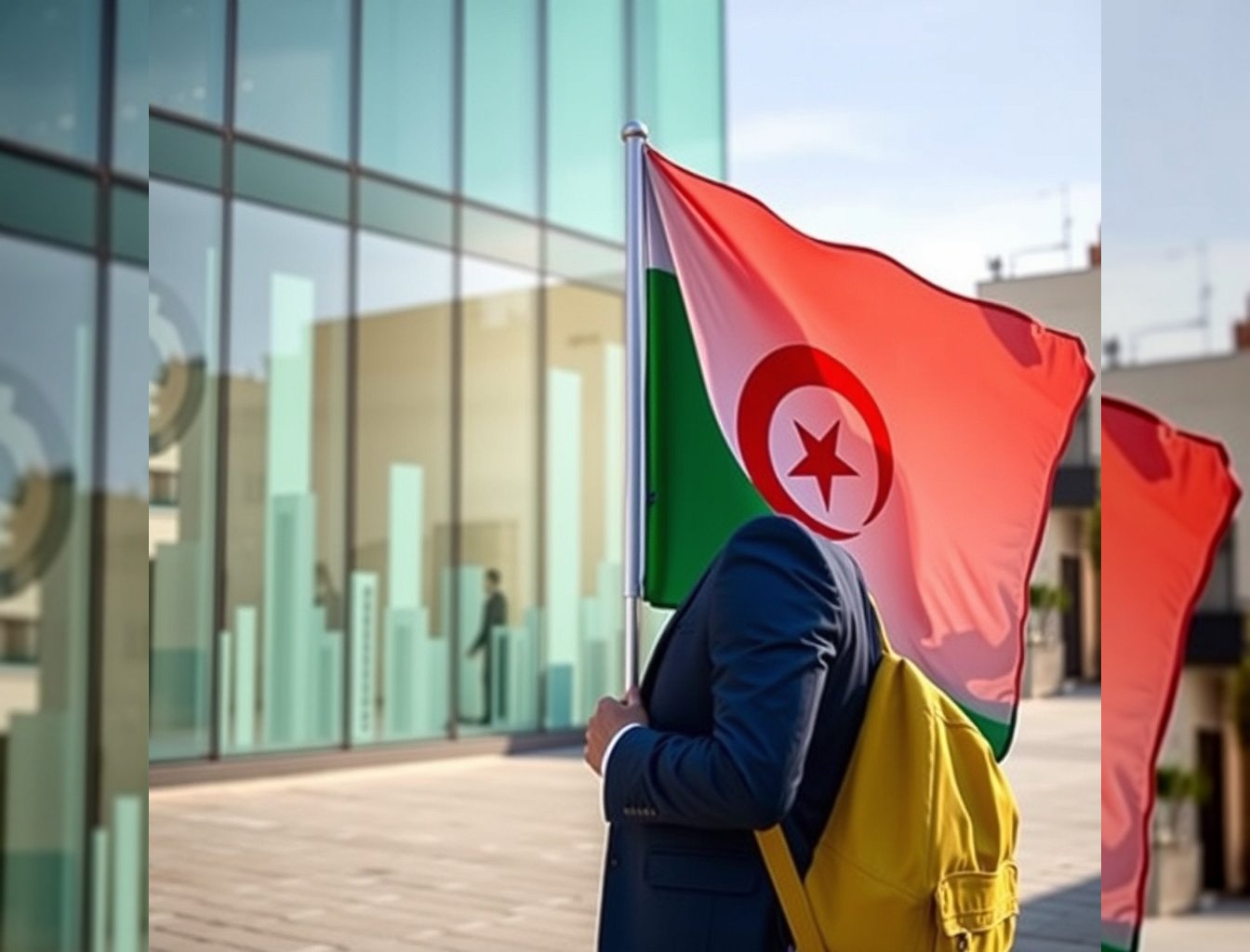
Algeria is banking on artificial intelligence to reshape its economy, and officials want the country’s sizable diaspora to help foot the bill. In early 2025, the government in Algiers set a target: generate 7 percent of GDP from AI-related activities by 2027. The plan—dubbed “AI Algeria 2027”—is more than a slogan. It is a package of tax breaks, free-zone incentives and fast-track residence permits designed to lure back Algerian engineers, investors and start-up founders living in France, Canada or the Gulf.
“Our ambition is to make Algeria a continental hub for AI,” said Karim Djemmane, Algeria’s Minister of Digital Transformation, speaking to state news agency APS this week. “Our compatriots abroad bring capital, know-how and networks. We are counting on them.”
The push is part of a broader shift under President Abdelmadjid Tebboune. After years of capital controls and nationalist rhetoric, Algiers now courts risk capital and talent. For entrepreneurs in the diaspora—especially those in tech, fintech and energy—the message is direct: invest at home or risk missing the first large-scale tech industrialization in decades.
A $1.2 billion allocation to start the engine
Financing for AI Algeria 2027 is drawn from the 2025 national budget and sovereign wealth fund, Fonds Souverain pour l’Investissement. According to Reuters, the fund has earmarked $1.2 billion for AI infrastructure this year—cables, data centers and a new “Algiers AI Valley” in the Sidi Abdellah technology park, 25 km south of the capital.
Sidi Abdellah will host Algeria’s first Tier-IV data center, capable of processing 1.2 million AI training runs per day. The park already employs 2,300 engineers; with AI expansion, that number should rise to at least 7,000 by 2027, according to the Ministry of Digital Transformation. Local start-ups incubated there will pay 10 percent corporate tax for the first five years, versus the standard 26 percent.
How diaspora entrepreneurs can plug in
The residency offer is unusually concrete. Any Algerian abroad with a tech project approved by the Algerian Investment Promotion Agency (APIA) can apply for a five-year renewable “tech residency.” Dependents—spouses and children—receive the same status. Over 1,200 applications have been filed since the scheme opened in March 2025, APIA director Yacine El Mahdi told local daily El Watan.
For founders who want to keep a foot in Europe, Algiers now allows dual-resident companies: officially registered in Algeria, but with legal presence in France or Canada through branch offices. This hybrid model is already used by Algeria’s fast-growing fintech start-up DZ Pay, founded by a Paris-based Algerian engineer in 2022. DZ Pay processes 400,000 cross-border payments monthly and just raised €8 million from Paris-based diaspora investors.
Energy and AI: a marriage of convenience
Algeria’s push into AI is not happening in a vacuum. The country is also the continent’s third-largest gas exporter and home to Africa’s largest solar potential. SONATRACH, the national oil company, recently signed a memorandum with IBM to deploy AI-driven seismic analysis for new gas fields. The aim is to cut exploration time by 30 percent and attract foreign drilling partners.
For diaspora energy techies, this opens a niche. Algeria plans to spin off five AI start-ups from SONATRACH data labs by 2026. Founders will own up to 49 percent equity, with SONATRACH retaining 51 percent and a seat on the board. Shares can be bought back after three years.
France remains the main gateway
France is still the primary bridge. Nearly 600,000 Algerians reside in France, and many hold dual passports. Paris-based VC firm Algeria Venture Capital—run by two former Google Paris engineers—has already committed €15 million to Algerian AI start-ups, with 70 percent of the funds sourced from Algerian-French investors.
“The French market is our launchpad,” said Amine Khelif, co-founder of Algeria Venture Capital. “We bring French regulatory expertise and Algerian technical talent. It’s a win-win.”
Risks and red tape to watch
Despite the incentives, hurdles remain. Algeria’s foreign-exchange regulations still require central bank approval for tech import payments over $50,000. And while the residency card is swift, property ownership for foreigners outside Algiers remains capped at 2 hectares.
“Speed is good, but clarity is better,” cautioned Mehdi Abbas, an Algerian-Canadian serial entrepreneur who runs a Montreal-based AI consultancy. “We need bulletproof guarantees on currency repatriation before we commit seven-figure checks.”
What comes next?
In the coming months, Algiers will open the “AI Algeria Fund,” a $300 million public-private vehicle seeded by the sovereign wealth fund and diaspora investors. The fund will co-invest up to $5 million per start-up, but only if the lead founder is an Algerian national or a dual resident. APIA expects the first close in December 2025.
For entrepreneurs on the fence, the clock is ticking. Algeria’s 2027 deadline is aggressive, and the current wave of incentives is unlikely to be repeated.
Key takeaway for entrepreneurs: Algeria’s AI push offers concrete tax breaks, fast-track residency and co-investment for diaspora-founded start-ups, but founders must move quickly—application windows and incentives are time-bound and linked to Algerian residency or dual registration.
Sources
- The New York Times
- The Africa Report
- Euronews.com
- Pulse Ghana
- Meer | English edition
- Arab America
💡 Starting a business in Algeria? GlobalStart guides you step by step: procedures, real costs, company forms (SARL, EURL, SPA) and CNRC registration.