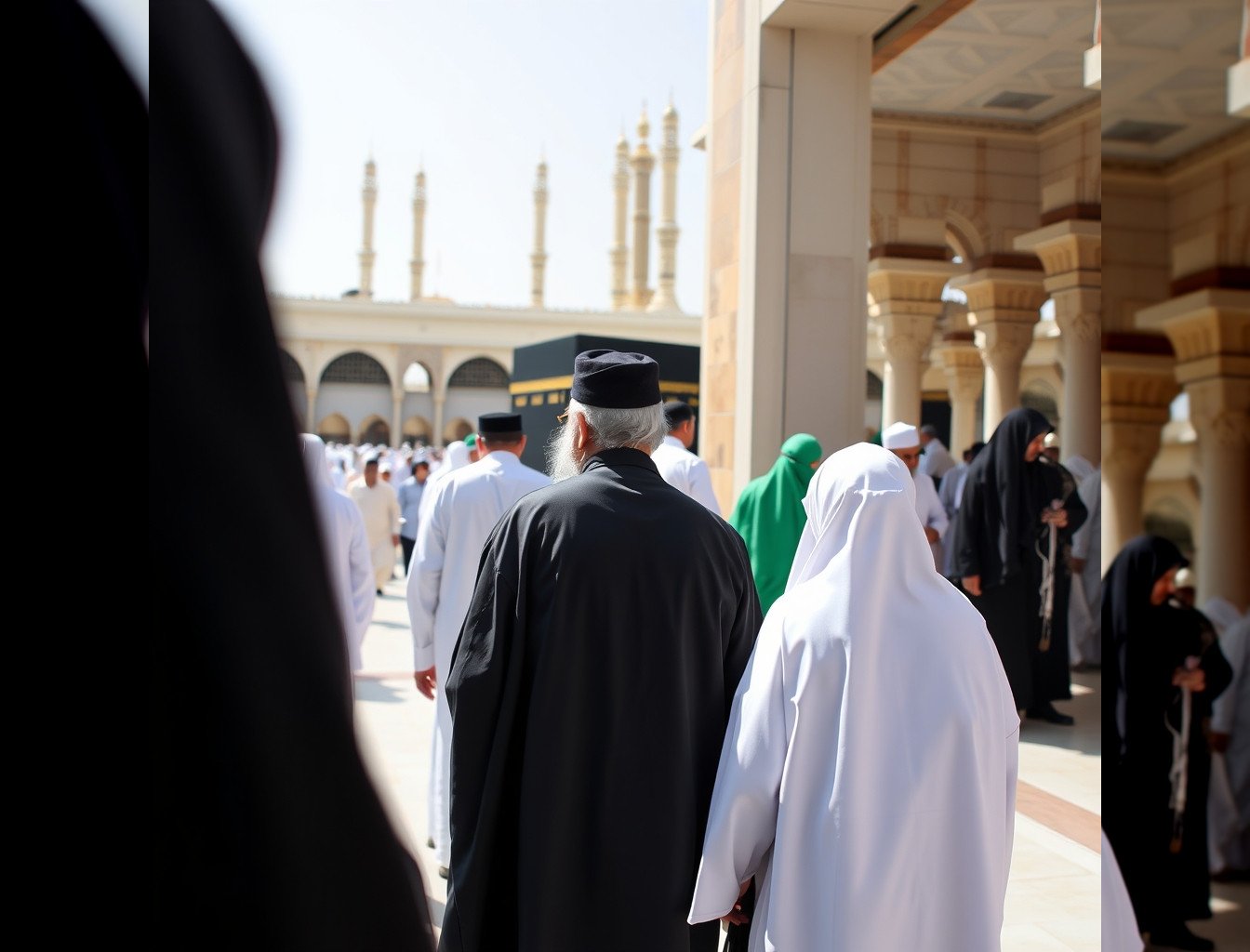
President Abdelmadjid Tebboune has allocated 2,000 additional Hajj permits for the 1448 AH pilgrimage season, targeting citizens aged 70 and older who have repeatedly failed to secure a place through the national lottery. The decision, announced by the Ministry of Interior, Local Authorities and Transport this week, marks the second consecutive year Tebboune has intervened to address long-standing frustrations over Hajj registration.
The ministry’s statement confirmed that the extra permits are reserved for applicants who have registered for the lottery at least 10 times without success. Algeria’s annual Hajj quota, set by Saudi Arabia, typically allows around 30,000 pilgrims, but demand far exceeds capacity. In 2025, over 200,000 Algerians applied for the pilgrimage, according to figures from the Ministry of Religious Affairs. The new measure brings the total number of permits for this year’s season to 32,000, though it remains unclear whether the additional slots will be deducted from future quotas.
Tebboune’s directive follows a similar move in 2025, when he ordered 1,500 extra permits for elderly applicants. That decision was widely praised by religious associations, though some critics argued it did not go far enough. The president’s latest intervention comes amid broader efforts to reform Algeria’s Hajj management system, which has faced criticism for opacity and inefficiency. In June, the government introduced an online registration platform to streamline the process, but technical glitches and delays sparked protests in several cities, including Algiers and Oran.
The Ministry of Religious Affairs, which oversees Hajj operations, has not yet released details on how the 2,000 permits will be distributed. Historically, allocations have been managed through regional committees, with priority given to first-time applicants and those with medical or financial hardships. The ministry’s spokesperson told Algérie Presse Service (APS) that the selection process would be “transparent and equitable,” but did not specify whether the new permits would be subject to the same lottery system.
Religious leaders have welcomed the move. Sheikh Abdelkader Bengrina, head of the Algerian Islamic Council, described it as “a gesture of compassion” that aligns with Islamic principles of honoring the elderly. However, some civil society groups argue that the measure addresses symptoms rather than the root cause of the problem. “The real issue is the quota system itself,” said Mohamed Larbi Zitout, a researcher at the Algiers-based Center for Studies on Religion and Society. “Algeria’s population has grown, but the Hajj quota hasn’t kept pace. The government needs to negotiate a larger share with Saudi Arabia.”
The decision also reflects Tebboune’s broader strategy of using religious and social policies to bolster his administration’s legitimacy. Since taking office in 2019, he has positioned himself as a defender of Islamic values, increasing state support for religious institutions and expanding funding for Quranic schools. In January, his government raised the financial rewards for the President of the Republic Best Start-up Award, a move seen as part of a wider push to encourage entrepreneurship among young Algerians.
The Hajj allocation comes at a time of heightened regional engagement for Algeria. This week, Malian Prime Minister Abdoulaye Maïga concluded a working visit to Algiers, during which the two countries discussed security cooperation and economic ties. Meanwhile, Algeria continues to play a mediating role in the Libyan crisis, hosting talks between rival factions in recent months. Analysts suggest that Tebboune’s domestic policies, including the Hajj expansion, are partly aimed at reinforcing Algeria’s image as a stable and pious nation amid regional turmoil.
For many elderly Algerians, the additional permits offer a rare opportunity to fulfill a lifelong religious obligation. “I’ve been trying for 15 years,” said 73-year-old Ahmed Belkacem from Tlemcen. “This might be my last chance.” The Ministry of Religious Affairs has urged eligible applicants to verify their status through the official Hajj portal, though some have reported difficulties accessing the site.
The government has not indicated whether further reforms to the Hajj system are planned. For now, the 2,000 extra permits represent a small but significant step toward addressing a deeply rooted issue in Algerian society. As the 1448 AH season approaches, the focus will shift to how effectively the new allocations are implemented—and whether they will satisfy those still left waiting.
💡 Starting a business in Algeria? Find the real costs, steps and practical advice on GlobalStart — and the Pack of 10 Business Fiches for the diaspora.