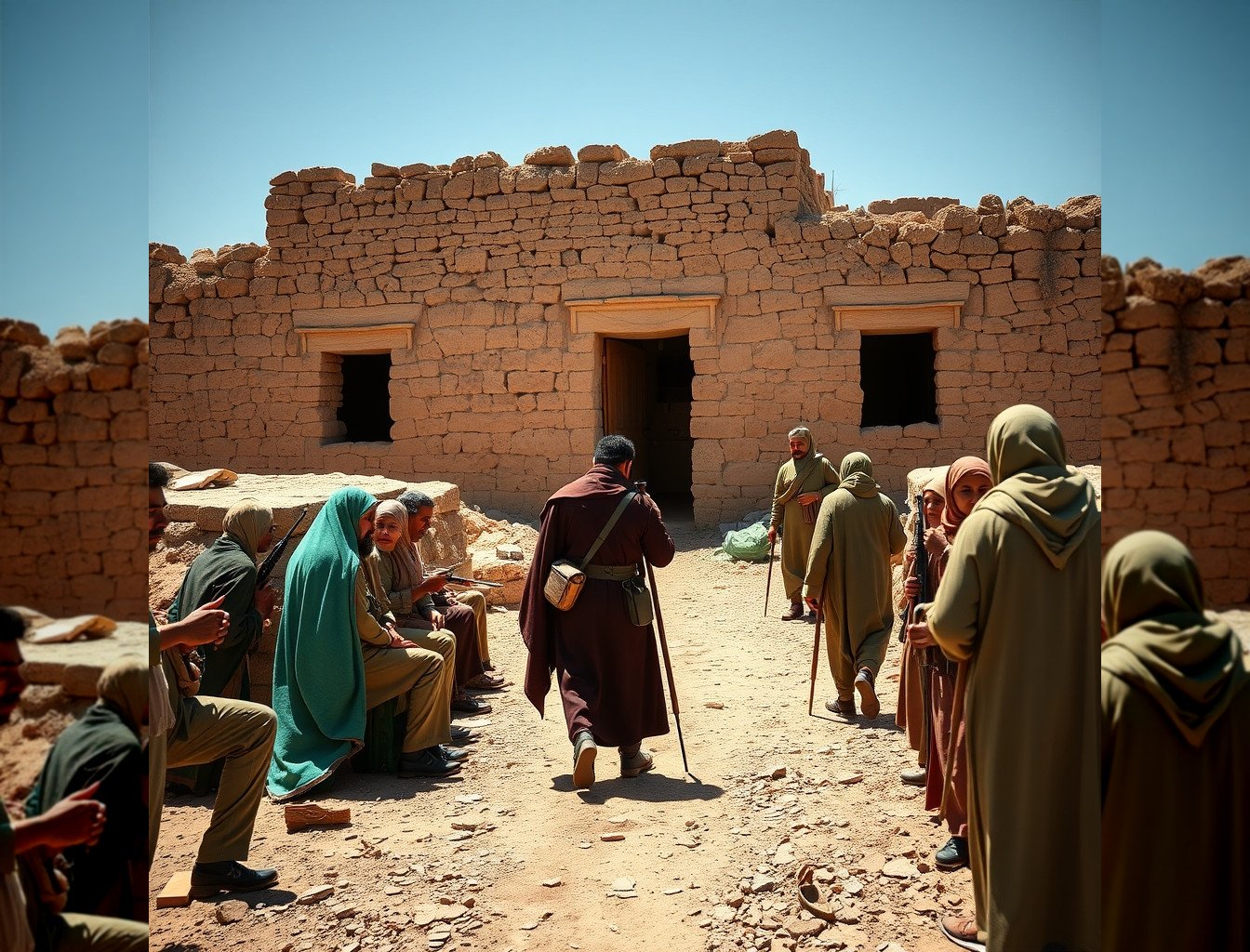
This week, Algeria commemorated the 71st anniversary of the North Constantine Offensive, a pivotal moment in the country’s War of Independence. The offensive, launched on 20 August 1955, marked a turning point in the struggle against French colonial rule by breaking the siege on the Aurès region and mobilizing mass popular support for the National Liberation Front (FLN). Official events in Skikda Province, particularly in the Collo region, highlighted the meticulous planning and sacrifices of Algerian revolutionaries, reinforcing the offensive’s place in national memory.
The North Constantine Offensive was not merely a military operation but a strategic gambit to shift the balance of power. According to Algérie Presse Service (APS), the FLN’s leadership, including figures like Zighoud Youcef, orchestrated synchronized attacks across 20 towns in the Constantine department, targeting colonial infrastructure and military outposts. The offensive’s success lay in its ability to rally thousands of civilians, demonstrating the FLN’s growing influence beyond guerrilla warfare. Historians note that the operation exposed the limitations of French counterinsurgency tactics, which relied heavily on repression but failed to quell the uprising’s momentum.
Skikda’s role in the offensive remains a point of local pride. The Collo region, a mountainous and forested area, provided cover for FLN units and became a logistical hub for arms and supplies. APS reports that recent commemorations included guided tours of battle sites, where veterans and historians recounted the offensive’s tactical brilliance. One such site, the village of El Harrouch, was a key staging ground for attacks on French garrisons. Local officials emphasized the importance of preserving these locations as educational tools for younger generations, many of whom learn about the revolution primarily through textbooks.
The offensive’s legacy extends beyond military history. It galvanized international support for Algeria’s independence cause, drawing attention to the brutality of colonial rule. The French response, which included mass reprisals against civilians, further alienated the Algerian population and strengthened the FLN’s moral authority. APS cited a speech by President Abdelmadjid Tebboune during a 2025 ceremony, where he described the offensive as a “defining moment that proved the Algerian people’s unwavering resolve.” The president’s remarks underscored the state’s commitment to honoring revolutionary history as a cornerstone of national identity.
Efforts to document the offensive have intensified in recent years. The Ministry of Mujahideen (veterans) has partnered with universities to collect oral histories from surviving participants. In 2025, the National Centre for Studies and Research on the National Movement and the Revolution of 1 November 1954 published a comprehensive report on the offensive’s planning, drawing on declassified FLN archives. The report revealed previously unknown details, such as the role of women in smuggling weapons and intelligence across enemy lines. One account from a female combatant, Fatima Boudiaf, described how she and others disguised themselves as market vendors to evade French checkpoints.
The offensive’s commemoration also serves as a counterpoint to contemporary debates about Algeria’s post-independence trajectory. Critics argue that while the state celebrates revolutionary history, it often overlooks the social and economic struggles of modern Algerians. However, officials maintain that these commemorations are not merely symbolic. The Ministry of Culture recently announced plans to restore several battle sites in Skikda and Constantine, transforming them into open-air museums. The project, funded by the National Agency for Archaeological and Historical Heritage, aims to attract both domestic and diaspora tourists.
The North Constantine Offensive’s enduring relevance is evident in its integration into Algeria’s educational curriculum. High school history textbooks devote entire chapters to the operation, framing it as a lesson in strategic leadership and collective action. Teachers in Skikda and neighboring provinces have incorporated field trips to battle sites into their lesson plans, allowing students to engage with history beyond the classroom. APS quoted a history teacher in Collo, who noted that students often express surprise at the scale of the offensive’s planning, which involved coordination across multiple provinces.
The offensive’s legacy also resonates with Algeria’s diplomatic efforts. In 2025, the Algerian embassy in Paris organized an exhibition on the North Constantine Offensive, drawing attention from French historians and media. The event sparked discussions about France’s colonial past and its ongoing impact on Franco-Algerian relations. While some French officials have acknowledged the need for historical reconciliation, Algerian diplomats have emphasized that such gestures must be accompanied by concrete actions, such as the return of archival documents and artifacts held in French institutions.
As Algeria prepares to mark the 68th anniversary of its independence in 2026, the North Constantine Offensive remains a powerful symbol of resistance. The state’s investment in preserving its memory reflects a broader effort to connect past struggles with present-day aspirations. For many Algerians, the offensive is not just a historical event but a reminder of the sacrifices that shaped the nation. The recent commemorations in Skikda, attended by government officials, veterans, and young activists, underscored this continuity. One veteran, speaking to APS, summed up the sentiment: “The revolution was not just about fighting; it was about building a future. That future is now in the hands of the next generation.”
💡 Starting a business in Algeria? Find the real costs, steps and practical advice on GlobalStart — and the Pack of 10 Business Fiches for the diaspora.