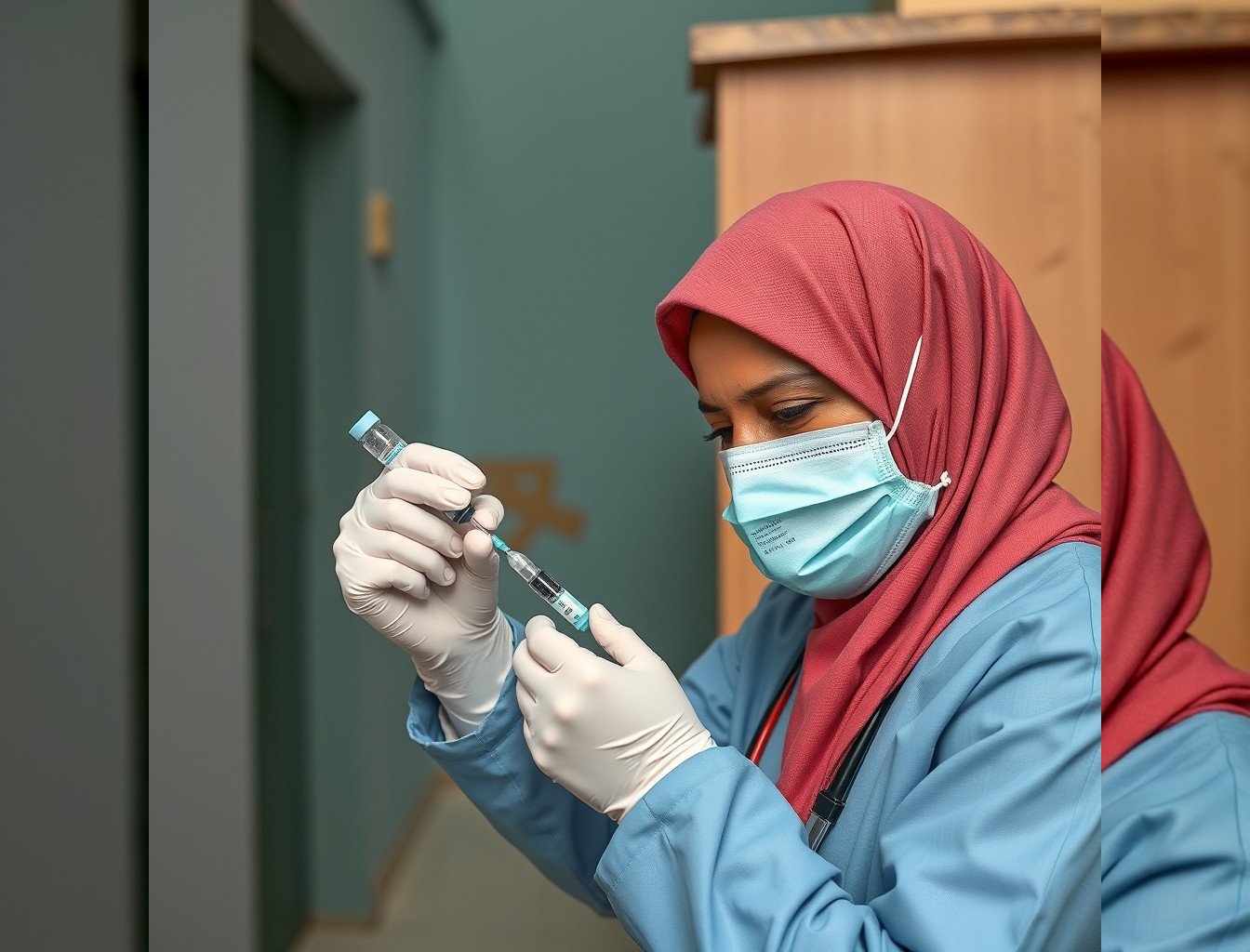
Vaccination rollout and public health priorities: A fragmented legacy
Algeria’s vaccination campaign against COVID-19 began in January 2021, marking a late but decisive response to the pandemic. The government relied heavily on COVAX, the global vaccine-sharing initiative, to secure doses for its population. Early rollout faced logistical hurdles, including distribution delays and skepticism over vaccine efficacy. By mid-2021, coverage improved, but gaps persisted in rural areas, where access to healthcare infrastructure remained limited.
The pandemic exposed structural weaknesses in Algeria’s public health system. While vaccination rates climbed, the crisis also highlighted the country’s reliance on imported medical supplies—a vulnerability that persists even as oil revenues decline. Hospitals in major cities like Algiers and Oran struggled with overcrowding, revealing long-standing underinvestment in healthcare outside urban centers. The government’s response to COVID-19 set a precedent for future health emergencies, but without sustained reforms, the system remains fragile.
Housing policy under scrutiny as oil revenues fall
Algeria’s housing crisis has deepened alongside the erosion of oil-driven economic stability. For decades, the state subsidized housing through programs like the National Housing Fund, but corruption and mismanagement diverted resources. The 2020 Hirak protests, fueled by youth unemployment and unaffordable living costs, forced authorities to acknowledge the scale of the problem. Yet, no structural solutions have emerged.
The decline in oil revenues—historically the backbone of public spending—has forced a reckoning. The government has attempted to redirect subsidies toward social housing, but delays and bureaucratic inefficiency persist. Meanwhile, informal settlements expand, particularly in peripheral neighborhoods of Algiers and Oran. The housing sector’s stagnation reflects broader economic constraints, where declining foreign exchange reserves limit imports of construction materials and financing for large-scale projects.
Fiscal measures for foreign investors in 2025: Incentives amid tightening controls
Algeria’s 2025 Finance Law introduced targeted incentives for foreign investors, particularly in non-hydrocarbon sectors. Tax breaks for industrial projects and expedited registration in special economic zones aim to attract capital amid stagnant growth. However, these measures come with stricter remittance rules, complicating repatriation of profits for multinational firms.
The green hydrogen sector stands out as a priority. Algeria’s cooperation with Siemens Energy signals a push to develop export-oriented projects, with €2.5 billion in committed financing. Yet, bureaucratic hurdles and infrastructure bottlenecks—such as unreliable electricity grids—remain obstacles. Foreign investors must navigate a dual reality: fiscal incentives on paper, but operational challenges on the ground.
Diplomatic recalibrations: Algeria, Morocco, and France in a shifting balance
Algeria’s foreign policy has oscillated between confrontation and pragmatism. Relations with Morocco remain tense, with disputes over the Western Sahara and migration routes fueling periodic crackdowns. Recent arrests of Moroccan nationals linked to migrant smuggling networks underscore the fragility of regional cooperation. The Arab Maghreb Union, once a symbol of integration, has effectively collapsed, leaving bilateral tensions unresolved.
France, Algeria’s former colonial power, has seen a cautious thaw. After years of strained relations—marked by diplomatic expulsions and trade restrictions—Algeria has renewed ties, partly to counterbalance Morocco’s influence in North Africa. However, economic dependencies persist. France remains a key market for Algerian gas, while Algerian firms still rely on French technology and financing. The reset is transactional, not ideological, with neither side abandoning long-standing grievances.
Regional integration stalled, Maghreb Union dormant
The Arab Maghreb Union (AMU) was meant to foster economic and political unity, but it has become a symbol of failed cooperation. Infrastructure projects, such as cross-border railways, remain stalled due to political disputes. Algeria’s trans-Saharan railway, funded by an $878 million loan from the African Development Bank, aims to connect the Sahel to Mediterranean ports—but its completion hinges on resolving transit agreements with neighboring states.
The absence of regional integration has broader consequences. Energy projects, like Algeria’s green hydrogen ambitions, require stable supply chains and investment flows that cross Maghreb borders. Without progress, these initiatives risk isolation. Meanwhile, Algeria’s own infrastructure gaps—crumbling roads, unreliable rail networks—undermine its role as a regional hub.
Campus protests and academic pressures: The unfulfilled promises of the Hirak
The 2019 Hirak protests demanded political and economic reforms, including academic freedom and an end to corruption in universities. One year into the movement, some concessions were made: political prisoners were released, and university autonomy was nominally expanded. Yet, systemic issues persist. Student protests continue, fueled by overcrowded classrooms, underfunded research, and the influence of state-linked administrators.
The government’s response has been reactive rather than transformative. While rhetoric emphasizes education as a priority, budget allocations for universities remain inconsistent. Brain drain persists, with Algerian academics and students increasingly seeking opportunities abroad. The Hirak’s calls for meritocracy and transparency in higher education remain unmet, leaving a generation of graduates disillusioned.
Gender-based violence policies remain unenforced
Algeria’s legal framework on gender-based violence is outdated. Despite a 2005 family code reform and international pledges to establish national shelters, survivors still lack adequate protection. Amnesty International and regional reports confirm that shelters remain underfunded, and police often fail to investigate cases. Awareness campaigns have grown, but cultural resistance and institutional inertia persist.
The gap between policy and practice is stark. Domestic violence cases frequently go unreported, and victims face social stigma. While Algeria has ratified international conventions, enforcement is weak. The state’s reluctance to address systemic failures reflects deeper societal attitudes, where patriarchal norms still dominate public discourse.
Green hydrogen and energy transition signals
Algeria’s pivot toward green hydrogen aligns with Europe’s decarbonization goals. Discussions with Siemens Energy highlight the potential for large-scale projects, with Algeria positioning itself as a supplier to the EU. The €2.5 billion in financing signals serious intent, but execution faces hurdles. Domestic energy shortages and grid instability could delay development.
The green hydrogen push is part of a broader strategy to diversify beyond hydrocarbons. However, the transition requires massive infrastructure investments—something Algeria’s strained finances may not easily support. Without foreign capital and technological partnerships, the transition risks remaining aspirational.
Military operations against smuggling networks
Algeria’s security forces have intensified operations against migrant smuggling networks, particularly along its Mediterranean and southern borders. Recent raids led to arrests of Moroccan nationals accused of facilitating irregular migration to Europe. These crackdowns reflect Algeria’s dual role: a transit country for migrants and a state eager to project stability.
Yet, the operations reveal deeper tensions. Algeria’s cooperation with Spain and Italy on migration control contrasts with its strained relations with Morocco. The crackdowns also highlight the human cost of border security, with reports of pushbacks and detention abuses. The government’s approach balances security concerns with diplomatic sensitivities, but long-term solutions remain elusive.
Infrastructure funding and transport bottlenecks
Algeria’s transport sector is at a crossroads. The $878 million trans-Saharan railway project, backed by the African Development Bank, aims to improve connectivity with sub-Saharan Africa. However, delays in construction and funding gaps threaten its completion. Domestic rail networks also suffer from neglect, with frequent service disruptions and aging infrastructure.
Road transport faces similar challenges. Chronic underfunding has led to congested highways and unreliable public transit. The government’s reliance on oil revenues has limited investments in alternative energy for transport, leaving the sector vulnerable to fuel price shocks.
Balance of the week: Policy continuity and regional friction
This past week in Algeria was defined by contradictions. On one hand, fiscal incentives for foreign investors and green hydrogen deals signal an attempt to modernize the economy. On the other, housing shortages, academic unrest, and unenforced gender protections reveal deep-seated structural failures. Regionally, Algeria’s diplomatic recalibrations with France and Morocco offer short-term stability but do little to address the Maghreb’s stagnation.
The government’s approach remains reactive. Reforms are incremental, often triggered by crises rather than proactive planning. Entrepreneurs and investors must operate in an environment where opportunities coexist with persistent risks—bureaucratic red tape, infrastructure deficits, and geopolitical uncertainties.
Key takeaway for entrepreneurs
Foreign investors in Algeria can access tax breaks for non-hydrocarbon projects and faster registration in industrial zones, but they must navigate stricter remittance rules that complicate profit repatriation. The green hydrogen sector offers export opportunities to Europe, backed by €2.5 billion in financing, though delays in infrastructure and grid reliability pose operational risks. Regional instability—particularly the dormant Maghreb Union and strained Morocco ties—may further delay cross-border energy and transport projects, adding layers of uncertainty to long-term planning.
Sources
- Stimson Center
- The Libya Observer
- France 24
- Gavi, the Vaccine Alliance
- Railway PRO
- Muslim Network TV
💡 Starting a business in Algeria? GlobalStart guides you step by step: procedures, real costs, company forms (SARL, EURL, SPA) and CNRC registration.