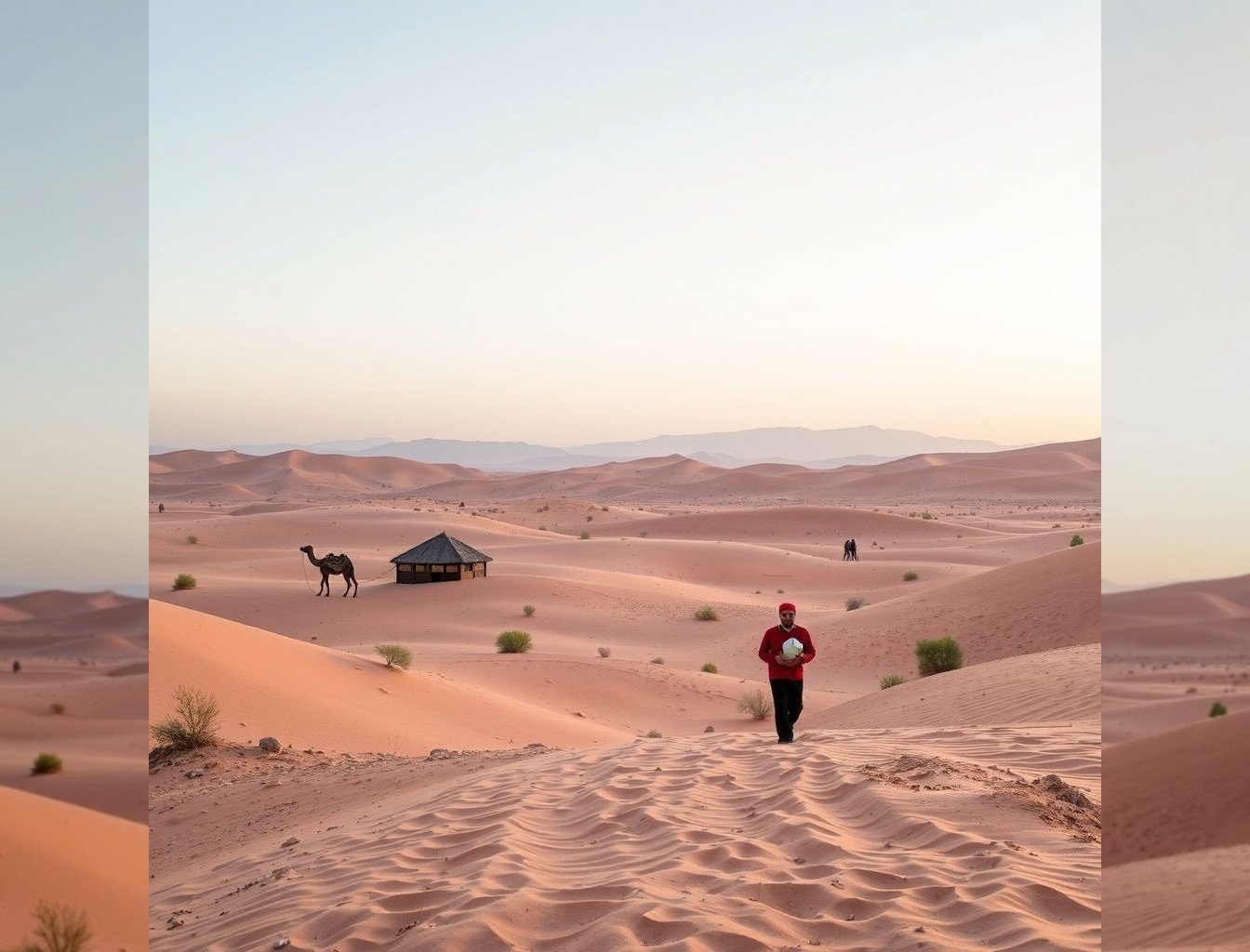
Algeria is quietly positioning itself as a must-visit destination for adventure and cultural tourism, leveraging its vast Sahara Desert and ancient heritage to attract global travelers. This week, the government simplified visa rules for travelers heading to the desert, allowing tourists to obtain visas on arrival when booking through approved tour operators. The move, reported by Middle East Eye, is part of a broader push to diversify Algeria’s economy beyond hydrocarbons by promoting tourism as a high-growth sector.
A desert reborn as a business frontier
The Sahara, covering over 80 percent of Algeria’s landmass, has long been a symbol of natural wonder but underutilized for tourism. Now, officials are framing it as an economic opportunity. According to APS, Algeria hosted just 2.3 million foreign tourists in 2023, a fraction of Morocco’s 14 million. The government aims to double that number within five years by investing in infrastructure, hospitality, and accessibility.
Key to this strategy is partnerships with private operators. Tourism Minister Mohamed Ali Boughazi recently announced a tender for 40 new eco-lodges and desert camps across Tamanrasset, Djanet, and Adrar. “We are opening the door to investors who can build sustainable tourism projects that respect local culture and environment,” Boughazi told APS. The call targets both Algerian entrepreneurs and the diaspora, offering tax incentives and 30-year land leases at low rates.
Heritage revival fuels investor interest
Algeria’s cultural assets are proving just as magnetic as its dunes. This week, restoration began on the Roman city of Timgad, a UNESCO site near Batna, after a 70-million-euro investment backed by the European Union. Agenzia Nova reports the project includes visitor centers, guided routes, and a digital archive accessible online. “Timgad can become a regional hub for cultural tourism,” says historian Fatma Zohra Si-Ahmed. “But it needs hotels, restaurants, transport links—and private capital.”
Meanwhile, the Sebeiba festival in Djanet, a 3,000-year-old Tuareg ritual, is being marketed as a unique selling point. Al Jazeera’s feature on the festival last August highlighted its potential to draw international visitors during the September-October season. Local guides and artisans are already forming cooperatives to sell crafts and lead cultural tours, but scaling up requires training, marketing, and investment in visitor facilities.
Visa reform: the gateway for diaspora investors
One of the most transformative moves is the visa-on-arrival policy for tour packages. Previously, tourists needed visas in advance, a deterrent for spontaneous travelers. Under the new system, approved operators in Algiers, Oran, and Tamanrasset can issue visas at arrival points for groups visiting approved circuits. “This reduces friction for travelers and creates a predictable pipeline for tour operators,” says tourism consultant Kamel Belkacem.
For the Algerian diaspora, this opens a direct path to participate in tourism ventures. Many in France, Canada, and Belgium have capital and networks but have struggled to invest due to regulatory hurdles. Now, diaspora investors can partner with local operators to launch desert expeditions, cultural tours, or boutique hotels. “Diaspora funds are critical,” says Belkacem. “They understand both markets—Algeria’s offer and Europe’s demand.”
Infrastructure gaps remain, but opportunities emerge
Despite the promise, challenges persist. Algeria’s tourism infrastructure is underdeveloped outside major cities. Road access to Djanet and Tamanrasset is limited, and internal flights are expensive. SONATRACH, the national oil company, has pledged to upgrade desert airstrips and build solar-powered lodges, but progress has been slow.
Still, private entrepreneurs are finding niches. A group of young Algerians in Ghardaia recently launched “Sahara Nomad Tours,” offering off-grid expeditions with solar-powered camps and local guides. They report a 40% increase in bookings this year after partnering with a French digital marketing agency. “We are proving that you don’t need big capital to start,” says co-founder Yacine Benali. “You need creativity, local knowledge, and a clear niche.”
The bottom line: Tourism as an export sector
Algeria’s tourism push is not just about attracting visitors—it’s about exporting an experience. With global adventure travel growing at 12% annually, Algeria’s Sahara and cultural sites are well-positioned. The government’s strategy includes a new “Algeria Experience” branding campaign, targeting digital nomads and eco-tourists in Europe and North America.
For entrepreneurs, the message is clear: the door is open. Whether through lodges, guided tours, digital platforms, or heritage restoration, there is room for investors who understand Algeria’s unique assets. The question is no longer whether tourism will grow—but who will build the sector.
Key takeaway for entrepreneurs: Algeria’s simplified visa rules and infrastructure incentives create a low-barrier entry for tourism ventures, especially in the Sahara and cultural tourism. Diaspora investors can leverage dual-market knowledge, while local startups can tap into niche markets like eco-lodging and guided cultural tours. Speed and local partnerships will be decisive in a rapidly evolving landscape.
Sources
- Al Jazeera
- MPR News
- National Geographic
- Toronto.com
- Middle East Eye
- Bradt Guides
💡 Starting a business in Algeria? GlobalStart guides you step by step: procedures, real costs, company forms (SARL, EURL, SPA) and CNRC registration.