Algeria’s economic and political landscape shifted on multiple fronts this week. Energy projects advanced with China and Europe, while the IMF issued warnings on structural failures. Water security became a priority with new desalination contracts. Football regulations tightened, and counterterrorism operations continued in the south. Tourism and transport infrastructure saw incremental progress.
Energy: China’s expanding footprint, Europe’s gas alternatives
Algeria signed a combined-cycle gas turbine (CCGT) “megaproject” in the eastern region, led by Chinese contractors. The project, part of a broader $40 billion energy cooperation deal with China, will add 1.2 GW to the national grid by 2026. China also secured access to Algerian iron ore reserves, aiming to reduce dependence on Australian and Brazilian suppliers. Algeria holds 3.5 billion tonnes of iron ore, with 1.5 billion tonnes in proven reserves.
The Trans-Saharan Gas Pipeline (TSGP), a 4,128 km project linking Nigeria to Algeria, gained traction. If completed, it would supply 30 billion cubic metres (bcm) of gas annually to Europe via Algeria’s existing pipelines. Algeria’s LNG exports to Europe reached 13.2 bcm in 2023, up 12% from 2022. Sonatrach, the state energy firm, announced three new oil and gas discoveries in the Berkine and Illizi basins, with estimated reserves of 1.2 trillion cubic feet of gas and 120 million barrels of oil.
For entrepreneurs: These developments signal increased demand for local engineering, logistics, and maintenance services in energy infrastructure. Chinese firms will likely subcontract to Algerian SMEs for civil works and security.
IMF warnings: GDP growth without economic impact
The IMF released a report stating Algeria’s GDP growth—projected at 3.8% in 2024—is artificially inflated by public spending and hydrocarbon revenues. Non-hydrocarbon GDP grew only 1.5% in 2023. The fund recommended reducing subsidies, diversifying exports, and improving business regulations. Algeria’s fiscal deficit widened to 12.3% of GDP in 2023, up from 9.8% in 2022.
The report noted that 90% of Algeria’s export earnings come from hydrocarbons, while manufacturing accounts for 5% of GDP. Public sector employment absorbs 35% of the workforce, with private sector job creation stagnant. The IMF urged reforms to the investment code, citing bureaucratic delays averaging 18 months for business permits.
For entrepreneurs: The IMF’s critique underscores the risks of over-reliance on state contracts. Diversification into agribusiness, renewable energy, and digital services remains critical.
Water security: Desalination as a national priority
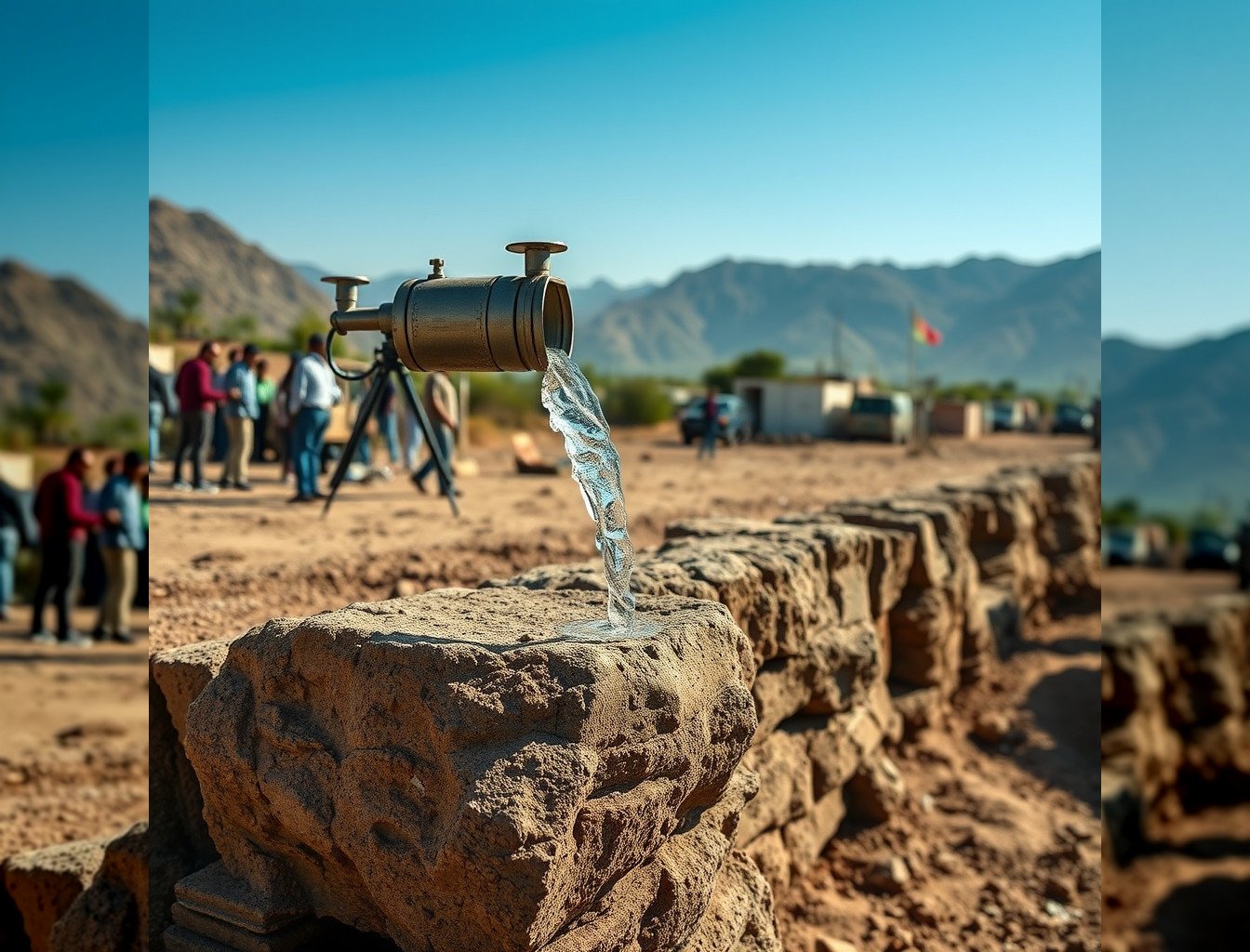
Sonatrach will lead a $3.5 billion desalination program, aiming to produce 2.5 million cubic metres of water daily by 2030. Three plants will be built in Oran, Algiers, and Skikda, with capacities of 500,000, 300,000, and 200,000 cubic metres per day, respectively. The projects attracted bids from Spanish, Italian, and South Korean firms.
Algeria’s water demand exceeds 10 billion cubic metres annually, with 60% used in agriculture. Current desalination capacity is 1.2 million cubic metres per day. The government plans to reduce groundwater extraction by 30% by 2027.
For entrepreneurs: Opportunities exist in water treatment technologies, pipeline construction, and agricultural efficiency solutions. Local firms can partner with international contractors for subcontracting roles.
Football and sports: Regulatory shifts, foreign player ban
The Algerian Football Federation (FAF) banned clubs from signing foreign players, effective immediately. The decision aims to prioritise local talent development. Algeria’s domestic league has 16 teams, with an average annual budget of $5 million per club. Foreign players currently account for 15% of the league’s rosters.
RB Leipzig denied reports of a transfer for Algerian forward Mohamed Amoura, who plays for Union Saint-Gilloise in Belgium. Amoura’s market value is estimated at €12 million. South African coach Rulani Mokwena left MC Alger and agreed to a deal with Libyan club Al-Ittihad.
For entrepreneurs: The ban reduces demand for foreign player agencies but increases opportunities in youth academies, sports analytics, and local player representation.
Tourism and hospitality: Legal risks, infrastructure push
Two men received seven-year prison sentences for “desecrating” the national flag in a luxury hotel in Algiers. The incident involved a private event where the flag was allegedly mishandled. Algeria’s tourism sector contributed 2.5% to GDP in 2023, down from 3.1% in 2019. The government aims to attract 5 million tourists annually by 2027, up from 2.4 million in 2023.
QGIRCO, a Qatari-Algerian joint venture, will open a $1.2 billion mixed-use project in Algiers, including a 5-star hotel and commercial spaces. The project is expected to create 3,000 jobs during construction and 1,500 permanent roles.
For entrepreneurs: The legal risks highlight the need for compliance training in hospitality. Investment opportunities exist in boutique hotels, eco-tourism, and digital booking platforms.
Transport: Tramway expansion ahead of 2026
Algeria’s KC2026 transportation plan underwent its fourth test during the Algeria-Austria football match. The plan includes expanding the Algiers tramway from 23 km to 45 km by 2026, with a budget of $800 million. The system currently serves 150,000 passengers daily.
For entrepreneurs: Local firms can bid for contracts in signalling, station maintenance, and advertising spaces. The expansion may also boost demand for last-mile delivery services.
Counterterrorism: Persistent threats in the south
The Algerian army conducted operations against Al-Qaeda in the Islamic Maghreb (AQIM) in the Tamanrasset and Illizi regions. AQIM’s strength in Algeria has declined since 2017, with estimated active members below 200. The group’s revenue from kidnapping and smuggling fell from $50 million in 2015 to $12 million in 2023.
For entrepreneurs: Security risks remain a barrier to investment in southern Algeria. Firms operating in energy or mining must budget for private security and insurance.
Week’s balance
– Energy: China secured iron ore access and a CCGT project. Europe’s gas alternatives advanced with the TSGP.
– IMF: Warned of structural failures, urging subsidy cuts and export diversification.
– Water: Sonatrach-led desalination projects aim to address shortages by 2030.
– Football: Foreign player ban reshapes domestic league dynamics.
– Tourism: Legal risks persist, but infrastructure projects advance.
– Transport: Tramway expansion progresses ahead of 2026.
– Security: AQIM remains a low-level threat in the south.
Key takeaway for entrepreneurs
Algeria’s energy and water sectors offer near-term contracts for local SMEs, particularly in subcontracting and logistics. The IMF’s warnings highlight the need for export diversification, with opportunities in agribusiness and digital services. Legal and security risks require compliance and risk management investments.
Sources
- Council on Foreign Relations
- PBS
- Insight News
- Modern Ghana
- sports.yahoo.com
- Al Jazeera
💡 Starting a business in Algeria? GlobalStart guides you step by step: procedures, real costs, company forms (SARL, EURL, SPA) and CNRC registration.