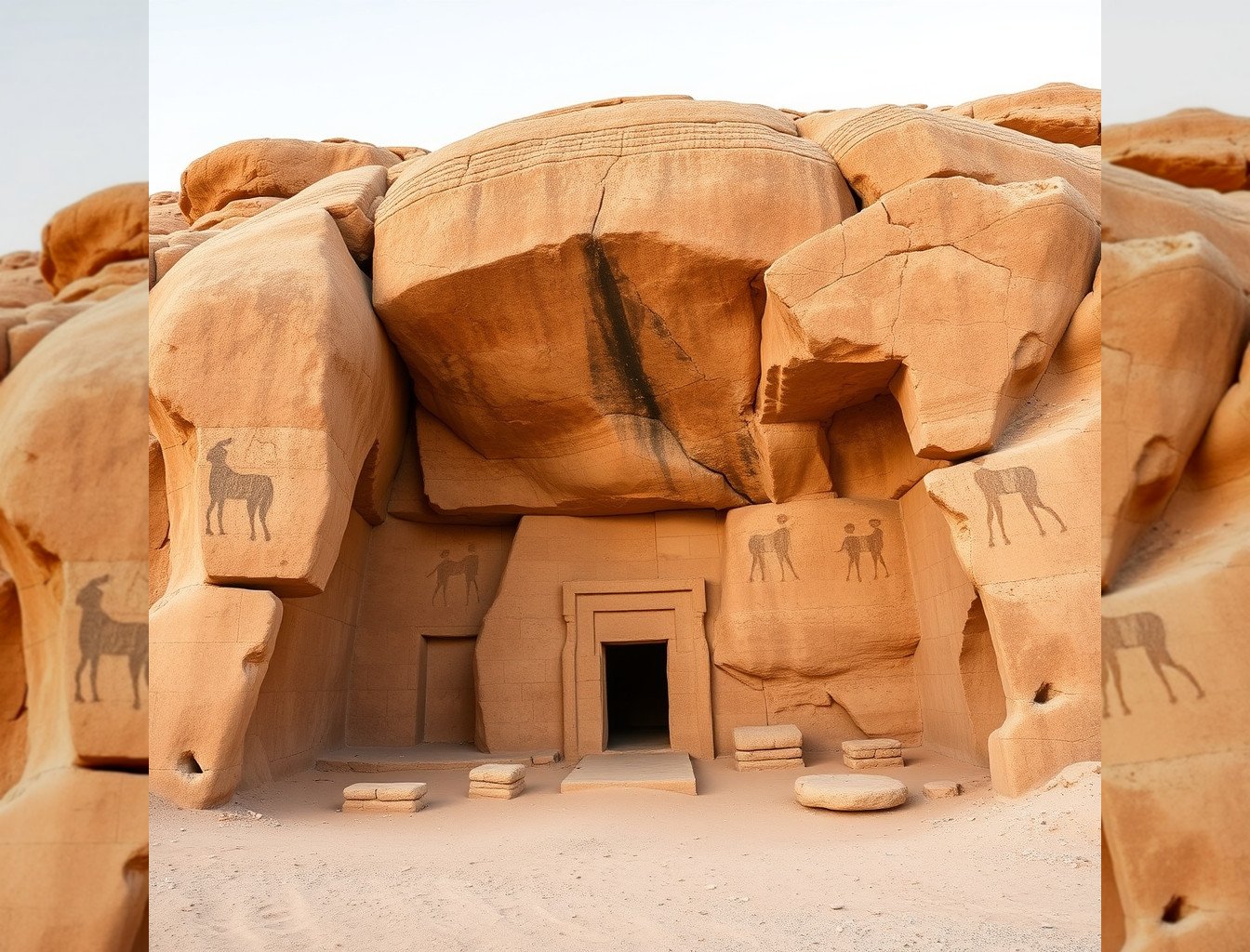
The discovery of 4,000-year-old rock art in the Algerian Sahara is not just rewriting history books—it is opening a new frontier for entrepreneurs, tour operators and investors eager to turn the country’s vast desert landscapes into a sustainable economic engine.
Recent surveys in the Tassili n’Ajjer plateau and the Tadrart Acacus mountains have revealed previously undocumented engravings and paintings depicting giraffes, hippopotami and lush vegetation—evidence of a Sahara that was wet, green and teaming with wildlife millennia earlier. According to researchers cited by IFLScience this week, these findings confirm that the Sahara’s transformation from savanna to desert occurred abruptly around 6,000 years ago, possibly in less than a century.
For Algerian entrepreneurs, this is more than academic. The region holds potential to become a world-class eco-cultural tourism destination, directly linked to job growth, start-up opportunities and foreign investment.
SONATRACH, Algeria’s state-owned energy giant, has already begun exploring partnerships with cultural heritage bodies to develop low-impact tourism infrastructure around Tassili n’Ajjer—designated a UNESCO World Heritage Site in 1982. In recent policy discussions, the Ministry of Tourism emphasized that sustainable tours could generate over 3,000 direct jobs within five years, with an estimated annual revenue impact of 12 billion Algerian dinars (around $90 million) if visitor numbers rise from the current 5,000 per year to 20,000.
“This is not just about caves and paintings,” said Dr. Amina Belkacem, head of the National Institute for Saharan Heritage Preservation (INSHP) in Djanet. “It is about telling a story that spans continents and civilizations, and doing so in a way that protects the site for future generations.”
Entrepreneurs like Ramzi Touati, founder of Sahara Voyages in Tamanrasset, have already launched guided expeditions that combine 4×4 desert treks with guided tours of rock art sites. Touati reports a 40% increase in bookings this year, driven largely by European tourists seeking authentic and educational experiences.
“We’re not selling a trip,” says Touati. “We’re selling a journey through time. And the rock art is the proving ground.”
The Algerian government has signaled interest in supporting private-led initiatives. In 2025, the Ministry of Tourism announced a 5 billion dinar fund to support start-ups focused on eco-tourism, cultural interpretation and digital storytelling in the south. The program offers zero-interest loans for up to 80% of project costs, with repayment linked to revenue performance over 10 years.
But challenges remain. Insiders warn that unregulated tourism could lead to vandalism, as seen in neighboring Libya, where prehistoric rock art has been damaged by armed groups and tourists. To prevent this, INSHP has partnered with local Tuareg communities to co-manage sites, using traditional knowledge and modern monitoring technologies.
“Local communities are the first line of defense,” said Belkacem. “They know every rock, every path. Their involvement is not optional—it’s essential.”
Digital entrepreneurs are also stepping in. Start-ups like “Sahara Memory” in Algiers, founded by software engineer Yacine Bouali, have developed mobile apps that use augmented reality to overlay historical images onto rock surfaces, allowing visitors to “see” the Sahara as it was 6,000 years ago. Bouali’s company secured a 15 million dinar grant from the National Agency for the Development of Microenterprises (ANDE) in 2024 and has since expanded to pilot programs in Tassili.
“Our goal is to make Algeria’s heritage accessible to a global audience,” Bouali said. “But we also want to ensure that every dinar spent stays in the local economy.”
Investors are taking notice. In late 2025, the Algeria Investment Fund (FIA) launched a dedicated “Sahara Heritage Investment Window,” allocating 250 million dinars to projects that blend conservation, tourism and digital innovation. Eligible applicants include cooperatives, tech start-ups and hospitality businesses.
One early recipient is a women-led cooperative in Djanet, “Tassili Women Caravans,” which offers guided tours led by local women fluent in Tamahaq, Arabic and French. The cooperative received 12 million dinars to upgrade its fleet of solar-powered vehicles and train 30 new guides.
“We are not just tour guides,” said Fatima Ag Alim, the cooperative’s president. “We are storytellers, conservators, entrepreneurs. And we are building a future for our daughters.”
Data from the Algerian Chamber of Commerce (CCIA) shows that tourism-related businesses in the south now account for 12% of all new registrations in 2025, up from 8% in 2020. Most are micro and small enterprises, with average startup costs under 5 million dinars.
International interest is also rising. In March 2026, the Financial Times reported that European tour operators are negotiating exclusive access agreements with Algerian partners, signaling confidence in the region’s long-term appeal.
Yet, entrepreneurs must navigate bureaucratic hurdles. Permits for desert expeditions can take up to 18 months to process, and insurance requirements are often unclear. Some founders report doubling their compliance budgets to meet both Algerian and EU safety standards.
“Agility is key,” says Touati. “You have to be prepared for delays, but also ready to pivot when a new site opens or a policy changes.”
As Algeria positions itself as a leader in sustainable cultural tourism, the Sahara’s rock art is no longer just a relic—it is a blueprint for a new economy.
Key takeaway for entrepreneurs
Algeria’s ancient rock art sites are creating new opportunities in eco-cultural tourism, with government grants up to 5 billion dinars and zero-interest loans available. Start-ups in digital heritage, guided tours and conservation are eligible for funding, but must prioritize community partnerships and sustainable infrastructure to avoid long-term damage to these UNESCO-protected sites. Microenterprises dominate the sector, with average startup costs under 5 million dinars and strong growth in female-led cooperatives.
Sources
- The Guardian
- Geographical
- Financial Times
- Space Daily
- The Past website
- VOA – Voice of America English News
💡 Starting a business in Algeria? GlobalStart guides you step by step: procedures, real costs, company forms (SARL, EURL, SPA) and CNRC registration.