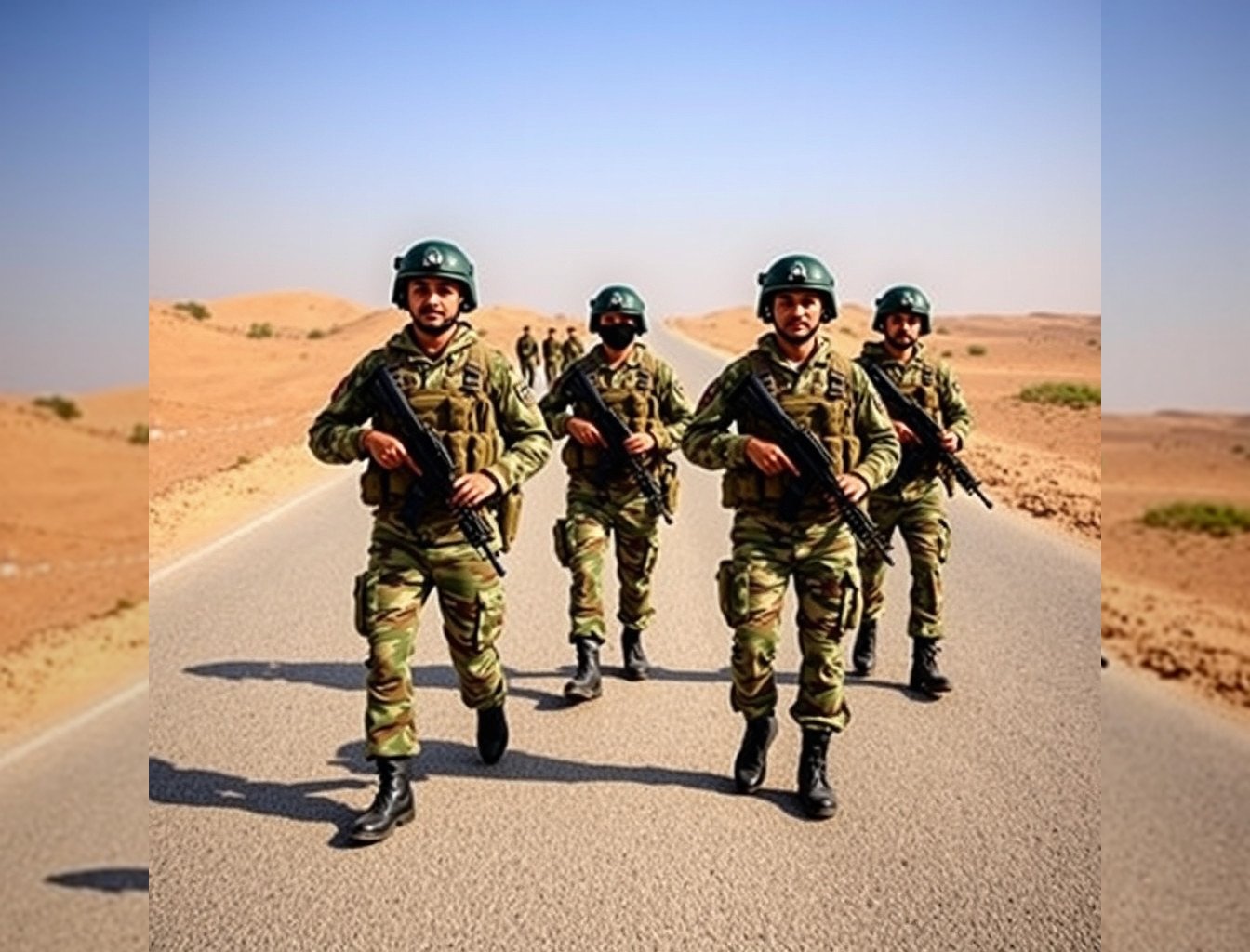
The Algerian People’s National Army (ANP) has intensified its nationwide operations targeting terrorism, smuggling, and illegal crossings, according to AL24 News. The recent surge in military activity, reported on 12 November 2025, includes the surrender of armed individuals, seizures of contraband, and reinforced patrols along Algeria’s borders with Libya, Mali, Niger, and Tunisia.
The ANP’s latest communiqué highlights a series of anti-terrorism operations in the southern wilayas of Tamanrasset, Adrar, and Illizi, where security forces dismantled logistical networks linked to armed groups. These areas, known for their proximity to the Sahel region, have long been transit zones for illicit goods, including fuel, weapons, and narcotics. The army also reported the surrender of several individuals previously involved in armed activities, a development that aligns with Algeria’s broader strategy of countering extremism through both military and reintegration efforts.
Smuggling crackdown disrupts informal trade routes
For entrepreneurs and business founders, this crackdown has immediate economic implications. The informal trade of subsidised goods has long distorted local markets, creating unfair competition for formal businesses. A 2024 report by the Algerian Customs Authority estimated that smuggling costs the national economy between $1.5 billion and $2 billion annually, with fuel smuggling alone accounting for roughly $500 million in lost revenue. The ANP’s operations could reduce these losses, potentially freeing up resources for public investment in infrastructure and business support programmes.
However, the disruption of smuggling routes may also create short-term supply chain challenges for businesses reliant on informal channels. In border regions like Tébessa and El Oued, small retailers and transporters have historically depended on smuggled goods to meet demand. The ANP’s reinforced patrols could lead to temporary shortages or price fluctuations, particularly for fuel and basic commodities. Entrepreneurs in these areas may need to adapt by sourcing goods through formal channels, which could increase costs but also improve supply reliability in the long term.
Security gains and business opportunities in the south
Algeria’s 2024-2028 economic diversification plan prioritises the development of the southern regions, with a focus on renewable energy projects and the expansion of the Trans-Saharan Highway. The ANP’s efforts to secure these areas could accelerate these initiatives by reducing the risks associated with armed groups and smuggling networks. For example, the Tamanrasset Solar Power Plant, a $1.2 billion project announced in 2023, is expected to benefit from improved security, as the army’s operations target the same routes used by traffickers to move goods and personnel.
For the Algerian diaspora, particularly those in Europe and North America, the ANP’s operations could present new investment opportunities. The government has actively encouraged the diaspora to participate in Algeria’s economic development, offering incentives for investments in agriculture, renewable energy, and technology. A more secure southern region could make these investments more attractive, particularly for those with ties to the wilayas of Tamanrasset, Adrar, and Illizi.
Reintegration efforts and the informal economy
The informal economy, which employs an estimated 40% of Algeria’s workforce, could also benefit from these efforts. Many former combatants and smugglers have skills in logistics, trade, and transportation—sectors that could be formalised with the right support. Business founders in Algeria’s southern regions could explore partnerships with reintegration programmes to tap into this labour pool, particularly in sectors like renewable energy, construction, and agribusiness.
Key takeaway for entrepreneurs
Sources
- AL24 News
💡 Starting a business in Algeria? GlobalStart guides you step by step: procedures, real costs, company forms (SARL, EURL, SPA) and CNRC registration.