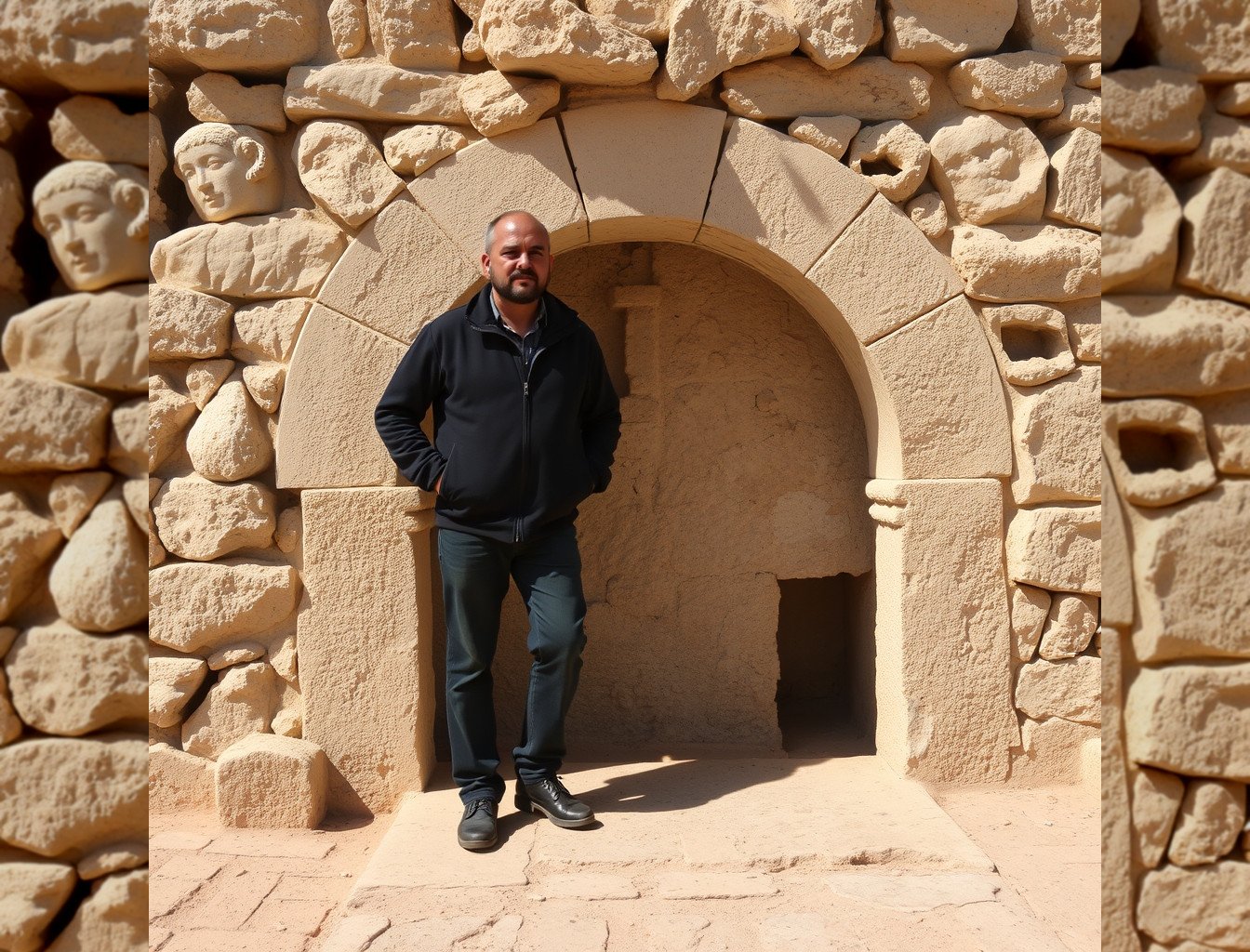
Heritage and identity: UNESCO push for Berber sites
Algeria has formally nominated two ancient Berber mausoleums—Medracen (Batna) and Numidian Royal Mausoleum of Dougga—for UNESCO World Heritage status. The dossier, submitted on 13 June, lists 2,300-year-old structures and highlights Amazigh (Berber) architectural techniques. The move follows a 2023 government decree allocating DZD 1.2bn (≈ €8.4m) to Berber heritage rehabilitation across 12 wilayas. Parallel to this, an inter-ministerial committee is reviewing textbook content to reduce Arab-centric narratives—an initiative linked to the 2020 Amazigh language constitutional recognition.
In parallel, Algeria’s Haut-Commissariat à l’Amazighité (HCA) reported 3,412 public-sector job postings in Tamazight (Berber) for 2024, up from 2,891 in 2023. This is part of a broader public-sector quotas plan under Law 16-03, which mandates 20% of civil service communications in Tamazight by 2025.
Energy pivot: gas pipelines and LNG credibility
OPEC Algeria’s Trans-Saharan Gas Pipeline (TSGP) project—planned to run 4,128 km from Nigeria through Niger to Hassi R’Mel—secured a €3.6bn feasibility study contract awarded to Sonelgaz (Algeria), Sonatrach (Algeria), and Nigerien partners on 11 June. The pipeline aims for 30 bcm/year capacity by 2030, with Sonatrach targeting €1.8bn in annual export revenues under long-term European contracts.
However, Algeria’s LNG export volumes fell 8.7% year-on-year in Q1 2024 to 5.2 mt, according to Algerian Energy Ministry data, citing maintenance delays at Skikda and Arzew liquefaction plants. Total installed LNG capacity stands at 28.5 mt/year, but utilization rates hover at 68%. European buyers have issued non-delivery notices for three cargoes since April, prompting Sonatrach to offer spot market discounts of up to 12% to secure offtake agreements.
Separately, Algeria signed a €450m oil infrastructure loan with the African Development Bank on 14 June to expand storage at Bejaïa and Skikda terminals, increasing crude export capacity by 1.1 million barrels.
Security tensions: border exercises and regional risks
On 12 June, Algeria’s Chief of Staff General Saïd Chengriha oversaw a military exercise near the Tindouf border involving 12,000 troops, 300 vehicles, and 20 combat aircraft. The drill emphasized rapid deployment logistics and electronic warfare integration, according to a Ministry of National Defence communiqué.
The same day, Algeria recalled its ambassador to Morocco for consultations following Morocco’s “escalatory statements” on the Western Sahara dossier. Algeria also lodged a formal complaint with the AU Peace and Security Council over alleged Moroccan drone incursions along the Tindouf-Mali border.
In Sahel security, an Al-Qaeda in the Islamic Maghreb (AQIM)-linked ambush killed 11 Nigerien soldiers near the Algerian border on 9 June, prompting Algeria to reinforce 2,500 additional troops along the 600-km southern frontier with Niger.
Cinema: event disruptions and sector stagnation
Algeria’s National Documentary Film Week, scheduled for 10–16 June in Algiers, was postponed indefinitely due to budget shortfalls and venue unavailability. The Ministry of Culture cited “logistical constraints” after the Algiers Opera House was withdrawn for maintenance. The event had an allocated budget of DZD 450m (≈ €3.1m) and was expected to host 68 filmmakers from 15 countries.
Cinema admissions in Algeria fell 11% in 2023 to 1.8 million tickets, per the Centre National du Cinéma (CNC), with domestic productions accounting for 3% of screen time.
Sports: governance and diplomatic outreach
Algeria’s Ministry of Youth and Sports signed a tripartite MoU with INTERPOL and the IOC on 13 June to combat match-fixing and doping in football. The agreement includes €2.3m in technical assistance for Algerian authorities to develop an early-warning system for irregular betting patterns.
On 15 June, Algerian Foreign Minister Ahmed Attaf met Egyptian President Abdel Fattah El-Sisi in Cairo to discuss sports diplomacy and joint infrastructure projects, including a proposed DZD 8bn (≈ €56m) stadium in Batna as part of the 2027 African Games.
Meanwhile, Algeria’s football federation (FAF) confirmed that DZD 780m (≈ €5.5m) in government grants were disbursed in Q2 2024 to support 12 local clubs, following delays in the 2023 budget.
Climate: Green Dam legacy and new afforestation plans
Algeria’s Green Dam—a 1,500-km-long, 20-km-wide reforestation belt launched in 1971—covers 2.2 million hectares, with 34% survival rate due to climate aridity and pastoral grazing, according to the National Agency for the Development of Steppe Zones (ANDRS). A new DZD 11.2bn (≈ €78.5m) program announced on 11 June will plant 50 million new trees across 14 wilayas by 2026, targeting Saharan and steppe regions.
The World Bank’s Sahel Climate Resilience Program approved a €180m credit line for Algeria on 10 June to fund water-conservation projects and solar-powered irrigation in the Oued Souf and Tindouf regions.
Civil society: independent unions gain traction
In a rare development, Algeria’s Ministry of Labour registered three new independent unions in the health sector on 12 June, bringing the total to seven since 2021. The unions—SNATSSA (Tizi Ouzou), SNAM (Batna), and SNASP (Oran)—represent 8,200 healthcare workers and have filed collective bargaining requests for wage increases and better equipment allowances.
Separately, the National Union of Education (SNE) reported that 94% of its 2024 salary adjustment demands were rejected by the Ministry of National Education. The union is now pursuing legal action under the 2022 Public Service Law, which grants unions the right to challenge wage policies.
Real estate and trade: Vietnamese cooperation and wheat tenders
Vietnamese investors and Algerian counterparts agreed on 14 June to explore joint ventures in real estate, pharmaceuticals, and agriculture, following a Vietnam-Algeria Business Forum in Hanoi. Algerian pharmaceutical exports to Vietnam reached DZD 1.8bn (≈ €12.6m) in 2023, with local production expected to rise after Algeria’s Ministry of Pharmaceutical Industry signed a DZD 2.4bn (≈ €16.8m) loan with the Arab Monetary Fund for API manufacturing.
In commodities, Algeria’s Office des Céréales issued a tender for 50,000 metric tons of soft milling wheat on 13 June, with delivery scheduled for July-August 2024. The tender is part of a DZD 120bn (≈ €840m) annual wheat import budget to meet domestic demand of 7.8 million tons.
Diaspora: Amazigh identity politics and remittances
The Union of Tamazgha, a diaspora organization led by Rachid Raha, intensified lobbying for regional Amazigh integration during a conference in Brussels on 10–11 June. The group proposed a free-movement zone for Amazigh regions across Morocco, Algeria, Tunisia, and Libya, citing €1.2bn in annual remittances from Algerian Amazigh communities in Europe.
However, Algeria’s Islamist parties—particularly Movement of Society for Peace (MSP)—are leveraging identity issues to mobilize support ahead of local elections. The MSP’s 2024 manifesto calls for reducing Tamazight in official use, which analysts link to declining rural support for traditional parties.
Education: women’s HE gains, but job access lags
A World Bank report published on 13 June showed that Maghreb women now represent 59% of higher education enrolments, up from 48% in 2010. In Algeria, 64% of university graduates are women, but their labour force participation rate stands at 18%, below the 42% regional average. The report attributes the gap to cultural barriers and public-sector hiring freezes since 2021.
The Ministry of Higher Education allocated DZD 3.1bn (≈ €21.7m) for STEM scholarships in 2024, targeting 3,000 female students to address skills shortages in engineering and IT.
Key takeaway for entrepreneurs
Algeria’s energy and infrastructure sectors offer opportunities in gas logistics and renewable energy financing, with €3.6bn TSGP feasibility funds and €180m World Bank climate credits. Diaspora-led Amazigh business networks are emerging but face regulatory uncertainty. For local SMEs, public-sector procurement in Tamazight services (DZD 1.2bn allocations) and pharmaceutical API production (DZD 2.4bn loan) present near-term openings.
Sources
- Africa Defense Forum
- Middle East Monitor
- The Arab Weekly
- The North Africa Journal
- University World News
- FOX4KC.com
💡 Starting a business in Algeria? GlobalStart guides you step by step: procedures, real costs, company forms (SARL, EURL, SPA) and CNRC registration.