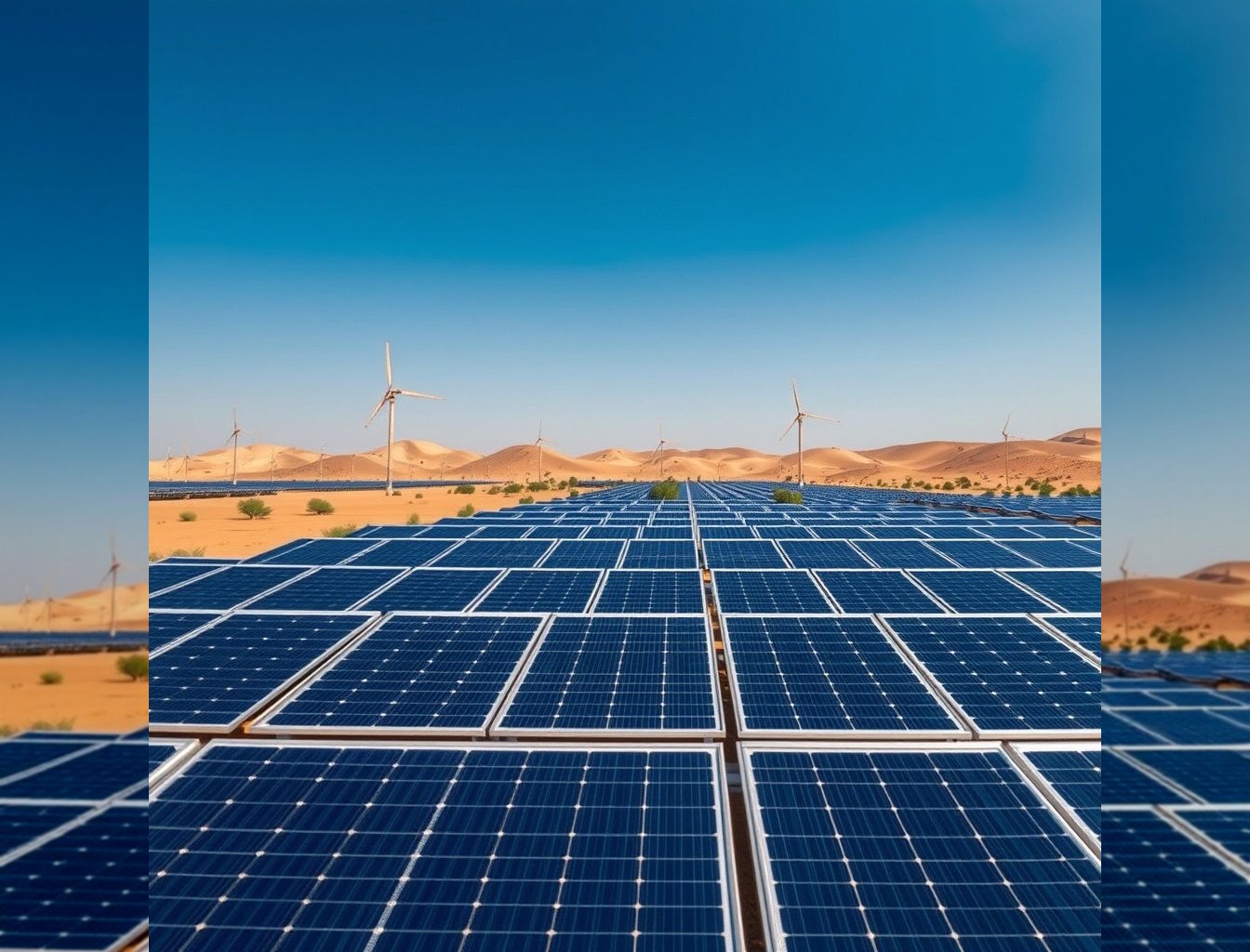
Algeria’s push to build massive solar farms in the Sahara is drawing global attention—but not all the fallout is welcomed by neighboring countries or local farmers. Recently, Moroccan farmers evicted from disputed border lands took to the streets in protest, accusing Algerian authorities of seizing territory under the guise of renewable energy projects. At the same time, new research from AGU Publications warns that large-scale solar installations in the Sahara could alter regional vegetation and rainfall patterns, adding a layer of environmental uncertainty to the nation’s green energy plans.
The Moroccan farmers’ dispute centers on farmland near the Algerian border in the region of Béchar. According to Africanews, dozens of Moroccan farmers were removed from land they say has been in their families for generations. The Algerian government has not publicly commented on the evictions, but local media reports suggest the land was reallocated to state-backed solar energy projects. Moroccan officials in Rabat have called the action a violation of bilateral agreements and demanded compensation for the displaced families.
For Algerian entrepreneurs eyeing the renewable energy sector, the land dispute highlights a critical challenge: securing usable terrain for large projects. Algeria’s state-owned oil and gas company, SONATRACH, and the Ministry of Energy have outlined plans to install up to 15,000 megawatts of solar capacity by 2030. If fulfilled, this would position Algeria as a major green energy exporter to Europe. But the push requires vast tracts of desert land—often overlapping with pastoral grazing areas or border zones.
The AGU study adds another layer of complexity. Published in 2020 but increasingly cited in policy debates, the research models the impact of covering 20% of the Sahara with solar panels. It finds that such installations could reduce local surface temperatures by up to 2°C but also decrease rainfall by 0.5 mm per day—enough to shift vegetation patterns and threaten desert flora and traditional herding routes. For Algerian startups and agri-tech firms working on drought-resistant crops or drip irrigation, this signals both risk and opportunity.
“If solar farms reduce rainfall, we need to adapt our farming techniques,” said Dr. Amina Benali, an agricultural engineer based in Ouargla. “We’re already seeing changes in oasis productivity. This could accelerate desertification in marginal zones.”
Local entrepreneurs in the renewable sector are responding. In Ghardaïa, solar maintenance startup Solargy recently secured a €800,000 grant from the European Bank for Reconstruction and Development to train technicians in panel cleaning and repair. The company employs 45 locals and plans to expand to Adrar and Tamanrasset, where large solar farms are under development.
Yet, land acquisition remains a bottleneck. Bureaucratic delays and overlapping land claims—between state entities, tribal groups, and neighboring countries—are slowing project timelines. In 2023, the Ministry of Energy announced a new public tender for 2,000 MW of solar capacity, but only 12 bids were submitted, half the expected number. Industry insiders cite land uncertainty as the top deterrent.
The Moroccan farmers’ protest has also raised diplomatic concerns. Algeria and Morocco have not had formal diplomatic relations since 2021, and the land dispute risks further straining already tense relations. For Algerian businesses seeking cross-border trade or technology partnerships, this adds another layer of risk.
Still, the potential rewards are significant. Algeria’s solar potential is among the highest in the world, with average solar irradiance of 5–7 kWh/m²/day in southern regions. The government has committed $3.9 billion to renewable energy investments by 2025, aiming for 30% renewable electricity by 2030.
Entrepreneurs in the diaspora are watching closely. “For Algerian engineers abroad, this is a chance to come back and lead in a sector with global relevance,” said Mourad Zaidi, a solar engineer based in Berlin. “But they need clear land rights and stable regulations.”
As Algeria races to meet its green energy goals, the clash between development, sovereignty, and environmental change is becoming unavoidable. What’s clear is that success will depend on more than just panels and megawatts—it will require careful negotiation with land, climate, and neighbors.
Key takeaway for entrepreneurs:
Algeria’s solar push offers high-growth potential but faces land-use conflicts and environmental risks. Secure land titles early, monitor climate studies, and prepare for cross-border regulatory hurdles. The sector rewards local partnerships and technical adaptation to changing desert conditions.
Sources
- AGU Publications
- africanews.com
💡 Starting a business in Algeria? GlobalStart guides you step by step: procedures, real costs, company forms (SARL, EURL, SPA) and CNRC registration.