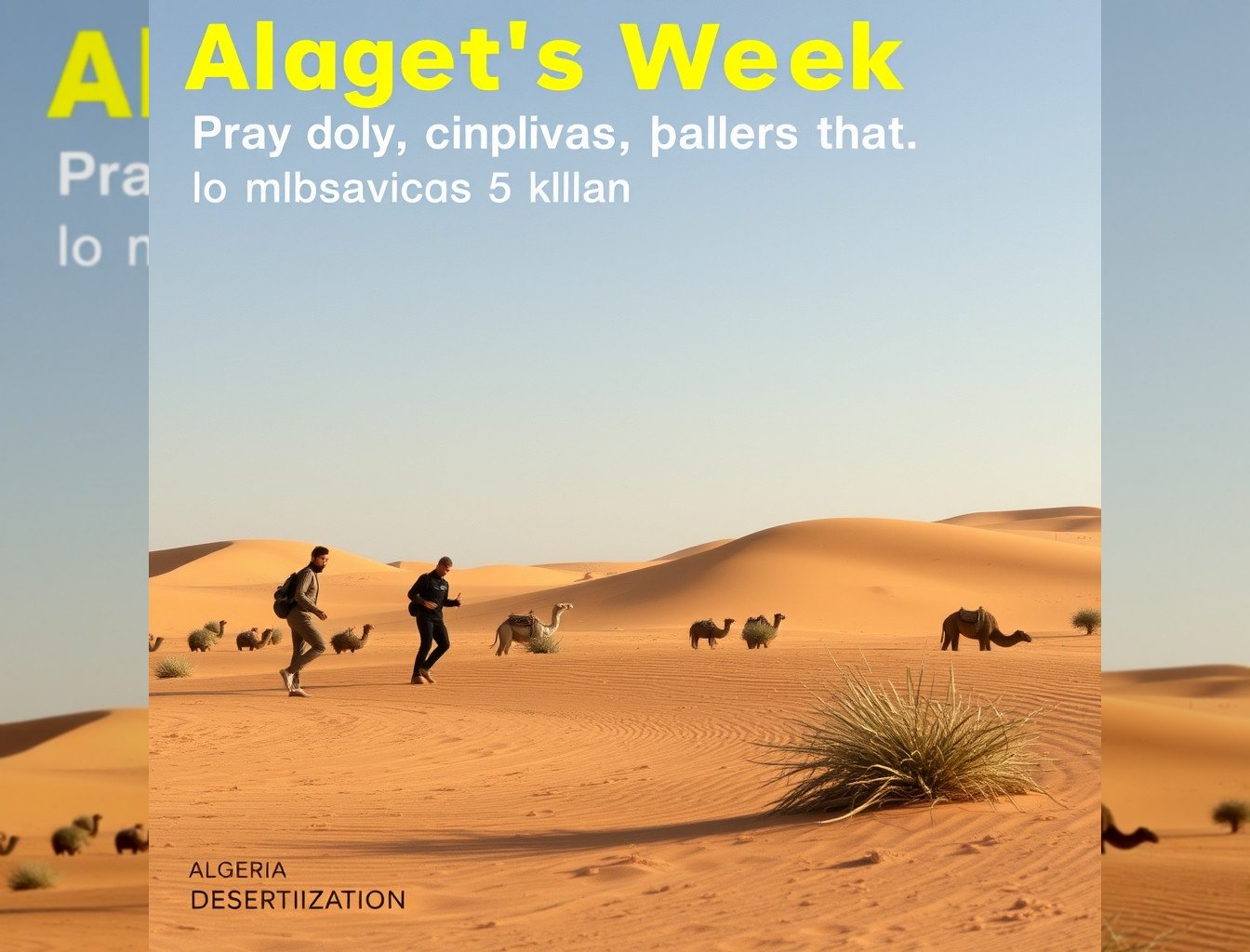
Policy and Legitimacy: Electoral Participation Falls, Judicial Overhaul Advances
Judicial reform remains a stated priority. The constitutional amendments include provisions on judicial independence and the role of the judiciary in overseeing elections. Critics argue that recent crackdowns on dissent—including arrests of journalists and activists—undermine the reform narrative. On the diplomatic front, Foreign Minister Ahmed Attaf met the new OIC Secretary-General-elect in Jeddah, while Algeria reaffirmed support for Palestinian statehood during the OIC summit.
Climate and Energy: Solar Ambitions, Land Disputes and Water Constraints
Simultaneously, a study published in Scientific Reports assessed water quality in Oued Souf using an integrated weight index and simulation techniques to evaluate environmental and health risks linked to heavy metals. The findings point to elevated levels of toxic elements in groundwater—a critical input for both agriculture and urban supply. Algeria’s agriculture ministry has yet to respond publicly with mitigation plans.
Health Sector: Vaccination Rollout and Systemic Strain
Yet systemic pressures persist. Medical students staged protests last month over shortages of basic supplies, staffing gaps, and what they describe as systemic neglect of public hospitals. A parallel report on mental health services highlighted long waiting lists and reliance on informal support networks, particularly in urban centers like Algiers and Oran.
Women in Leadership: Gains and Setbacks
In the private sector, a study by the National Office of Statistics showed that 26% of Algerian women aged 15–24 are unemployed, compared to 22% of men in the same cohort. The gender gap widens in rural areas, where 41% of young women are economically inactive. Digital platforms and remote work have created new opportunities—particularly in freelance IT, translation and e-commerce—but remain constrained by limited internet penetration outside major cities (53% nationally).
Regional Diplomacy: Balancing Alliances in a Shifting Middle East
Youth Employment and Economic Policy: Rent Redistribution Under Scrutiny
A policy shift toward vocational training has begun, with 12 new technical institutes opened this year. Yet entrepreneurs report persistent barriers: access to credit (average interest rate for SMEs: 8.5%), bureaucratic delays in business registration (average 12 days), and limited export infrastructure.
Culture and Crisis Response: Wildfires and Civil Protection
Interconnected Trends and Business Implications
1. Energy Transition and Land Use: Solar expansion in the Sahara will require land tenure clarity and community consultation to avoid conflict. For entrepreneurs in agribusiness, water-intensive sectors and eco-tourism, monitoring land allocation in southern regions is critical.
2. Institutional Signals: The constitutional amendments and electoral turnout indicate a tightening political environment. For foreign investors, this suggests higher regulatory predictability but also increased scrutiny of partnerships with state entities. Investors in energy, water infrastructure and digital services should account for potential delays in approvals.
3. Healthcare as a Productivity Factor: The vaccination campaign’s slow pace and hospital protests reflect systemic strain. Private clinics and insurers may find opportunity in filling gaps, particularly in mental health and chronic care. Digital health platforms are gaining traction, with 18 startups active in telemedicine as of 2021.
4. Women’s Economic Participation: With 30% of parliamentary seats held by women, policy momentum may grow around family care support, childcare subsidies and anti-discrimination enforcement—areas with direct impact on female entrepreneurship. Remote work platforms are growing at 11% annually, but require improved rural connectivity to scale.
5. Water and Agriculture: Rising toxic element levels in Oued Souf’s groundwater threaten date palm cultivation, a key export sector. Entrepreneurs in agri-tech, desalination and precision irrigation should monitor regulatory updates from the Ministry of Water Resources.
Balance of the Week
– Parliament adopted constitutional amendments without dissent.
– Electoral turnout hit a historic low at 20.79%.
– Solar farm land disputes escalated in the south.
– Oued Souf water quality study warned of toxic element risks.
– 1.2 million Covid-19 doses administered; student protests continued.
– Wildfires affected six provinces; relief efforts active.
– Foreign policy emphasized strategic autonomy amid Middle East shifts.
Key takeaway for entrepreneurs:
Algeria’s policy environment is tightening, with constitutional amendments and low electoral turnout suggesting limited appetite for systemic reform. Water scarcity and land disputes in the south pose operational risks for energy and agri-business. Female labor participation remains constrained by rural infrastructure gaps, while digital platforms offer selective opportunities. Monitor regulatory changes in water, energy and youth employment policy—key drivers of market access and growth.
Sources
- APS English
- ISPI
- Daily Sabah
- Middle East Institute
- CaixaBank Research
- AGU Publications
💡 Starting a business in Algeria? GlobalStart guides you step by step: procedures, real costs, company forms (SARL, EURL, SPA) and CNRC registration.