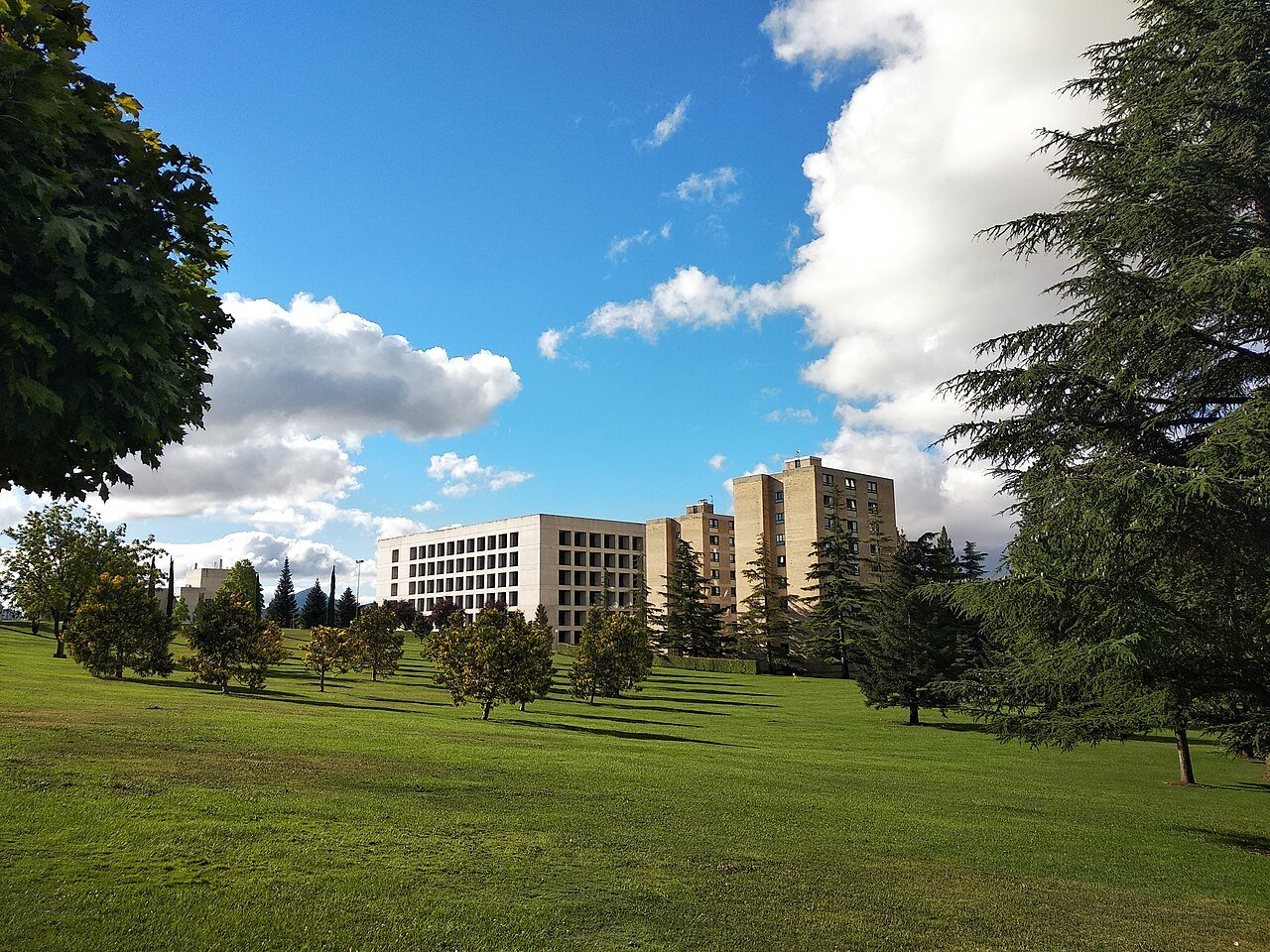
Algeria’s higher education system is undergoing its most significant linguistic transformation in decades. President Abdelmadjid Tebboune’s government has mandated that all university courses—except those in Arabic literature, Islamic studies, and law—must now be taught in English. The policy, confirmed by University World News and The New Arab in recent months, replaces French as the primary medium of instruction across engineering, medicine, economics, and the sciences.
The decision follows years of debate. In 2019, then-Higher Education Minister Tayeb Bouzid first announced plans to phase out French, sparking what local media dubbed a “language war.” The shift gained momentum in 2023 when the Ministry of Higher Education and Scientific Research issued a circular requiring universities to prepare English-language curricula. By early 2025, the transition was formalized: new academic programs must launch in English, while existing courses have until 2027 to comply.
For Algerian students, the change is immediate. Universities like the University of Algiers 1, Houari Boumediene University of Sciences and Technology (USTHB), and the National Polytechnic School of Algiers (ENP) are scrambling to recruit English-proficient faculty. The Ministry of Higher Education reports that 60% of master’s and doctoral programs in STEM fields are already being taught in English, up from 20% in 2022. Meanwhile, French remains a compulsory subject in secondary schools, ensuring graduates retain bilingual skills.
The move aligns with Algeria’s broader economic pivot. Tebboune’s administration has prioritized sectors like renewable energy, IT outsourcing, and pharmaceuticals—industries where English is the global lingua franca. Algeria’s 2023-2027 five-year development plan explicitly links English proficiency to export competitiveness. The Ministry of Industry estimates that 70% of Algeria’s non-hydrocarbon exports—valued at $7.2 billion in 2024—target markets where English is dominant, including the Gulf, Sub-Saharan Africa, and Europe.
Entrepreneurs are already adapting. Startups in Algiers’ “100,000 Entrepreneurs” incubator, such as Yassir (ride-hailing) and TemTem (e-commerce), now require English fluency for technical roles. “Three years ago, 80% of our engineers interviewed in French,” says Yassir CEO Nadir Kouidri. “Today, 60% of candidates are tested in English.” The shift has also accelerated demand for English-language business services. Edtech platforms like DzairEnglish and English Club Algeria report a 300% increase in corporate training contracts since 2023, with clients including Sonatrach and Cevital.
The diaspora is taking notice. Algerian professionals abroad—particularly in Canada, the UK, and the Gulf—are returning to fill gaps in academia and industry. The Ministry of Higher Education has launched a “Return of Competencies” program, offering tax breaks and housing subsidies to repatriate English-speaking researchers. Over 1,200 applications were submitted in 2024, double the 2022 figure. “We’re seeing a reverse brain drain,” says Dr. Amina Bensmail, a biotechnology professor at USTHB who returned from Cambridge in 2023. “The government is finally creating an ecosystem where global experience is valued.”
Challenges remain. Algeria’s education system has long struggled with teacher shortages. The Ministry of National Education estimates a deficit of 15,000 English instructors, forcing universities to rely on part-time lecturers and online courses. Private language centers, such as Wall Street English and British Council Algeria, have expanded operations, but fees—ranging from 50,000 to 200,000 DZD ($370–$1,500) per year—put them out of reach for many students. The government has responded with free digital platforms like “English for Algeria,” which has enrolled 500,000 users since its 2023 launch.
The policy has also reignited tensions with France. In 2024, French Ambassador to Algeria François Gouyette criticized the move as “a political decision, not an educational one.” Algeria’s Foreign Ministry dismissed the remarks, citing sovereignty. Trade data underscores the stakes: France remains Algeria’s top supplier, with bilateral trade reaching $12 billion in 2023, but Algeria’s imports from English-speaking countries—led by the US, UK, and China—grew by 18% in the same period.
For businesses, the transition is a double-edged sword. Companies in sectors like energy and IT stand to benefit from a workforce fluent in English, which could attract foreign investment. Sonatrach, Algeria’s state-owned oil giant, has already begun requiring English proficiency for management roles. “We’re negotiating with American and British firms,” says Sonatrach CEO Rachid Hachichi. “English is non-negotiable.” Meanwhile, French-speaking SMEs—particularly in retail and services—face higher training costs. The Algerian Confederation of Employers (CAP) estimates that 40% of small businesses lack the resources to upskill employees.
The shift also impacts Algeria’s startup ecosystem. Venture capital firms like Afak and Smart Capital, which fund early-stage companies, now prioritize English-speaking founders. “We look for teams that can pitch to international investors,” says Afak CEO Samir Abdelkrim. “French is no longer enough.” The policy has already borne fruit: Algerian startups raised $45 million in 2024, up from $12 million in 2020, with the majority of funding coming from Gulf-based and European VCs.
Key takeaway for entrepreneurs
Algeria’s shift to English in universities is accelerating demand for English-proficient talent, particularly in tech, energy, and export-driven sectors. Entrepreneurs should invest in language training to access global markets and attract foreign investment. The policy also creates opportunities for edtech and corporate training businesses, as companies race to upskill employees.
Sources
- University World News
- The Arab Weekly
- Nature
- Arab Reform Initiative
- The New Arab
💡 Starting a business in Algeria? GlobalStart guides you step by step: procedures, real costs, company forms (SARL, EURL, SPA) and CNRC registration.