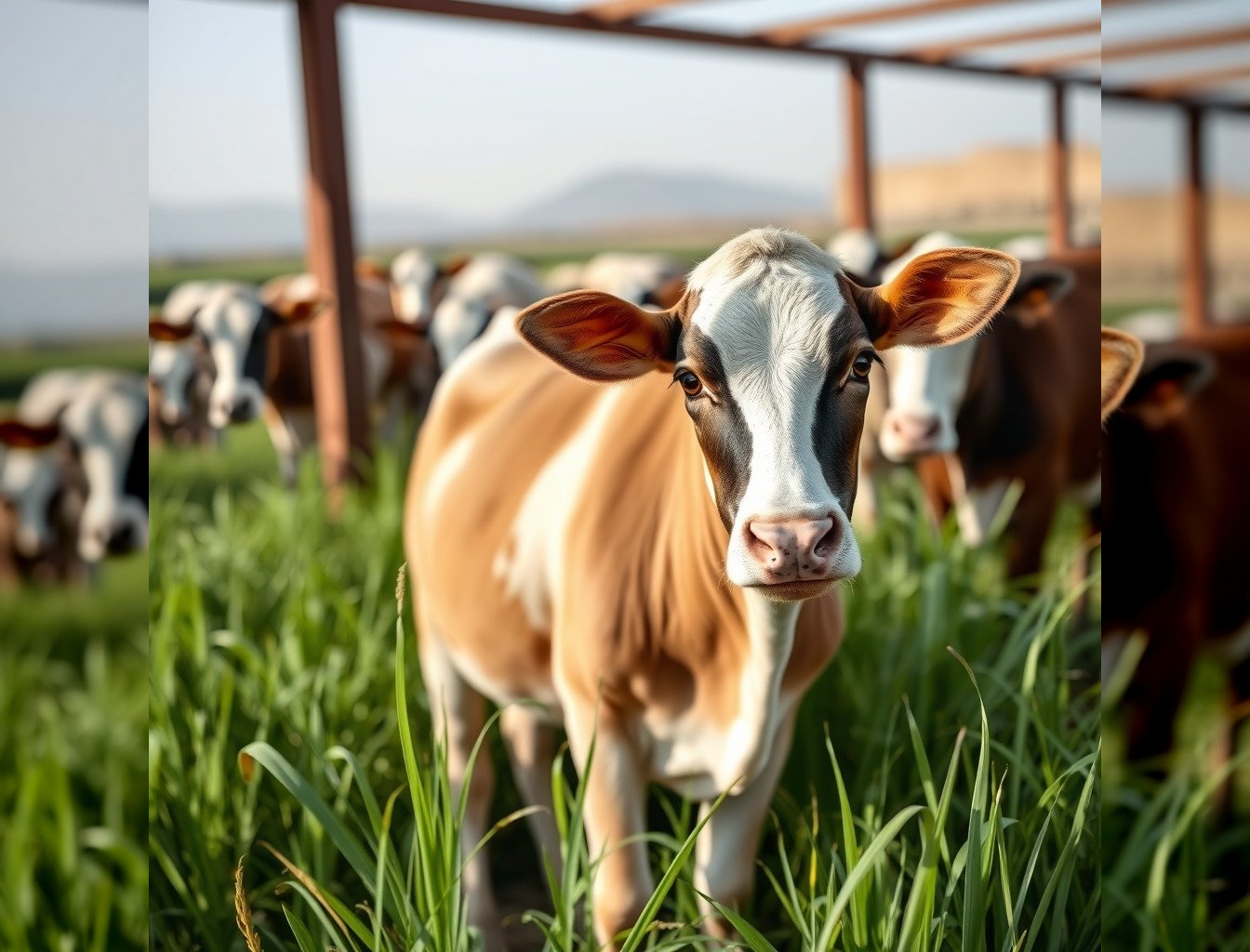
Algeria has taken a major step toward shoring up its food security by signing a $3.5 billion agreement with Qatar Investment Authority (QIA) to build the world’s largest dairy farm. The project, valued at 3.5 billion USD, will be located in the southern region of Ouargla and is expected to produce 1.5 million liters of milk daily within seven years. According to Al-Monitor, the deal was finalized in April 2024 and marks one of Algeria’s largest foreign direct investments in agriculture.
The agreement comes at a time when Algeria is struggling with severe water scarcity and rising food import bills. The country imports nearly 70% of its food needs, according to recent government reports. The new dairy farm, to be developed by QIA’s agricultural arm Hassad Food, aims to reduce this reliance by boosting local milk production. The project is part of Algeria’s broader push to enhance food self-sufficiency, a priority outlined in the 2023 National Food Security Strategy.
Ouargla, a key city in the Algerian Sahara, was chosen for its proximity to underground water sources and its potential for solar-powered irrigation. The region’s harsh climate and limited freshwater access have long posed challenges, but Algeria’s Ministry of Agriculture and Rural Development has highlighted recent advances in desalination and drip irrigation as enabling technologies. “We are investing in technology to turn the desert into productive land,” said Agriculture Minister Mohamed Belkacem in a recent statement.
For entrepreneurs and business founders, the deal signals a growing openness to large-scale foreign investment in agriculture. The project is expected to create thousands of jobs, both directly and through ancillary industries such as logistics, packaging, and dairy processing. The government has pledged to streamline permits and provide tax incentives for companies involved in the supply chain.
The dairy farm will operate under a 30-year concession, with QIA holding majority ownership. Hassad Food, which has previously invested in Sudan and Australia, brings expertise in large-scale agribusiness to the project. Algerian dairy producers, many of which are small and medium-sized enterprises (SMEs), could benefit from partnerships with the new facility to improve milk collection and processing standards.
The announcement follows Algeria’s recent push to diversify its partnerships beyond traditional suppliers like France and Italy. In May 2026, Algeria and Egypt signed agreements to strengthen agricultural cooperation, including joint investments in food processing and export-oriented farming. This pivot reflects a broader regional strategy to reduce dependence on imports amid global supply chain disruptions.
Yet challenges remain. Algeria’s water resources are under severe strain, with the country experiencing its worst drought in decades. According to a 2024 report by the European Commission’s Joint Research Centre, prolonged dry spells have led to repeated crop failures in the Maghreb. The Ouargla project will rely heavily on non-conventional water sources, including brackish water and treated wastewater, which require significant infrastructure investment.
Entrepreneurs eyeing opportunities in Algeria’s agribusiness sector should note the government’s commitment to funding water-efficient technologies. The Ministry of Water Resources has recently allocated 500 million USD to modernize irrigation systems across the country. For SMEs, this could mean opportunities in manufacturing drip irrigation equipment or providing consulting services for water management.
The dairy farm deal also underscores Algeria’s strategic pivot toward Gulf investors. Qatar, in particular, has emerged as a key partner in food security initiatives, following similar investments in Morocco and Egypt. The partnership with QIA could pave the way for more Gulf-funded agribusiness projects in Algeria, particularly in high-value sectors like horticulture and poultry.
For the Algerian diaspora, the project offers potential avenues for involvement. Many expatriate entrepreneurs have expressed interest in returning to invest in food production, particularly in regions like Ouargla where family ties remain strong. The government has introduced a repatriation program offering tax breaks and land leases for returnees in the agricultural sector.
Still, the scale of the project demands patience. Construction is expected to begin in late 2024, with full production slated for 2031. Until then, Algeria will continue to rely on imports to meet its dairy demand, which stands at around 3 billion liters annually.
Key takeaway for entrepreneurs: Algeria’s $3.5 billion dairy farm project with Qatar opens opportunities in agribusiness, water technology, and supply chain logistics. The government is prioritizing foreign investment in food production, with incentives for SMEs and returnee entrepreneurs. However, water scarcity remains a critical constraint, making innovation in irrigation and desalination essential for long-term success.
Sources
- resilience.org
- joint-research-centre.ec.europa.eu
- Al-Monitor
- archdaily.com
- Free Press Kashmir
- Dailynewsegypt
💡 Starting a business in Algeria? GlobalStart guides you step by step: procedures, real costs, company forms (SARL, EURL, SPA) and CNRC registration.