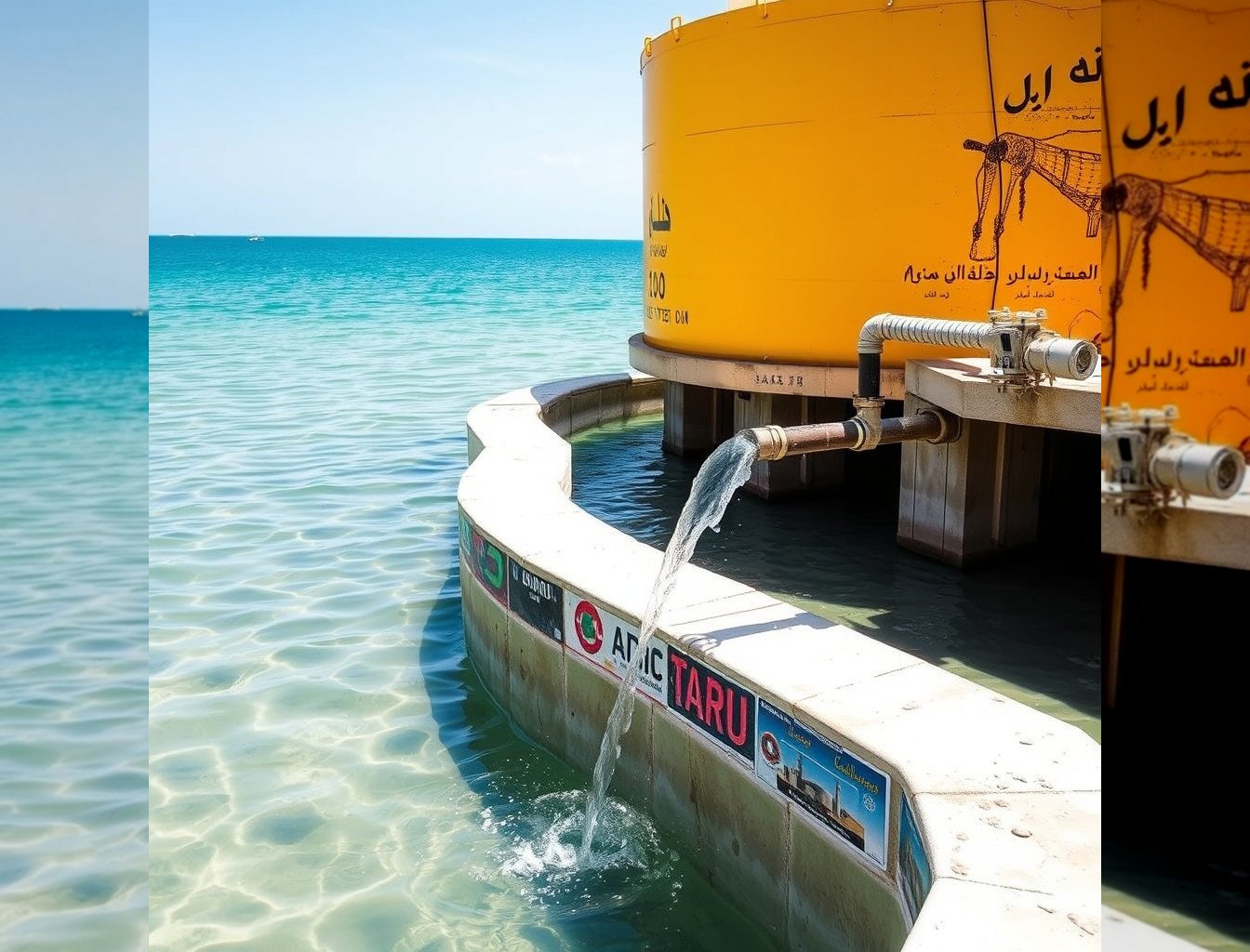
Algeria’s chronic water shortages are pushing the country into a new era of infrastructure investment, with desalination plants emerging as a critical solution. The Hamma Seawater Desalination Plant, commissioned in Algiers in 2016, remains the country’s flagship project, but officials say more facilities are now being fast-tracked to meet growing demand. The crisis has forced businesses—from farmers to tech startups—to rethink their long-term water strategies, while also creating opportunities for Algerian entrepreneurs in engineering and renewable energy.
Desalination plants fill the gap as rainfall declines
This week, Algeria’s state-run water utility Algérienne des Eaux announced that four new desalination plants are under construction along the Mediterranean coast, adding to the existing network. The projects, funded by the Ministry of Water Resources and the state oil company SONATRACH, aim to increase daily desalination capacity from 1.6 million cubic meters to over 2.5 million by 2025. In Oran, a major city in western Algeria, the new plant is expected to supply 500,000 cubic meters per day, covering nearly 60% of local demand.
Agriculture, which consumes 60% of Algeria’s water, is feeling the strain. SONATRACH recently allocated $1.2 billion to desalination projects, with a focus on irrigating high-value crops like dates and citrus fruits in regions like Béjaïa and Skikda. “We’re moving from emergency measures to long-term planning,” said Water Resources Minister Tayeb Louh this week. “The priority is no longer just rationing—it’s securing water for the next decade.”
Businesses adapt to unreliable supply
For Algerian entrepreneurs, the water crisis has become a daily operational hurdle. In Algiers, many cafes and restaurants now rely on private water tankers, paying up to 15,000 Algerian dinars ($110) per tank—a 40% increase from last year, according to the Algerian Chamber of Commerce. “We’ve had to install storage tanks and invest in water filters,” said Kamel Hadj, owner of a popular café in the capital. “It’s an added cost, but we can’t afford to shut down.”
Startups are also stepping in. In Oran, a local tech firm launched a mobile app this month that connects businesses with licensed water suppliers, reducing downtime caused by shortages. Meanwhile, in the agricultural sector, some entrepreneurs are pivoting to hydroponics and drip irrigation systems, which use up to 60% less water than traditional farming. The Ministry of Agriculture has pledged $500 million in subsidies for farmers who adopt water-efficient technologies.
Diaspora entrepreneurs see opportunity
The crisis has also caught the attention of Algerians abroad, many of whom are investing in water-related ventures. In France, a group of entrepreneurs from Annaba recently launched a startup specializing in desalination plant maintenance, targeting North African markets. “The demand is there, and Algeria’s expertise is limited,” said co-founder Yacine Belaid, who moved to Lyon in 2018. “We’re seeing openings for training programs and technology transfers.”
Another opportunity lies in renewable energy-powered desalination. Algeria’s vast solar potential could cut the energy costs of desalination plants, which currently account for 3% of the country’s electricity consumption. Earlier this year, the Algerian Renewable Energy Company (New Energy Algeria) signed a deal with a German firm to develop a pilot solar-powered desalination plant in Adrar, a desert region with severe water scarcity.
Challenges remain for private sector growth
Despite the momentum, entrepreneurs face hurdles. Licensing for new desalination plants can take years, delaying projects. In 2024, a tender for a plant in Tipaza was canceled after delays, frustrating investors. “The bureaucracy is the biggest obstacle,” said an Algerian engineer working on water infrastructure who asked not to be named. “Even with funding lined up, red tape slows everything down.”
Corruption allegations have also surfaced in past desalination tenders, though officials deny any wrongdoing. In 2023, the Anti-Corruption Observatory flagged irregularities in a contract for a plant in Mostaganem, leading to an investigation by the National Council for Transparency.
Future outlook: A water-secure Algeria?
For now, the government is betting on desalination as the primary solution. But critics argue that without stricter water conservation policies, the infrastructure push will only be a temporary fix. Algeria’s annual rainfall has dropped by 30% over the past decade, and scientists warn that temperatures could rise by 2°C by 2050, exacerbating droughts.
Still, the push for desalination is creating jobs and attracting foreign investors. In March, the World Bank approved a $300 million loan to support Algeria’s water sector, part of which will fund small-scale desalination projects in rural areas. “This is an inflection point,” said Louh. “We either invest in water infrastructure now, or we pay the price later.”
Key takeaway for entrepreneurs: Algeria’s water crisis is accelerating investment in desalination, creating opportunities in plant construction, maintenance, and water-efficient technologies. However, bureaucratic delays and high costs remain barriers, while the shift toward solar-powered desalination could open new markets for Algerian and diaspora entrepreneurs.
Sources
- Worldcrunch
- General Electric
- The North Africa Post
- Morocco World News
💡 Starting a business in Algeria? GlobalStart guides you step by step: procedures, real costs, company forms (SARL, EURL, SPA) and CNRC registration.