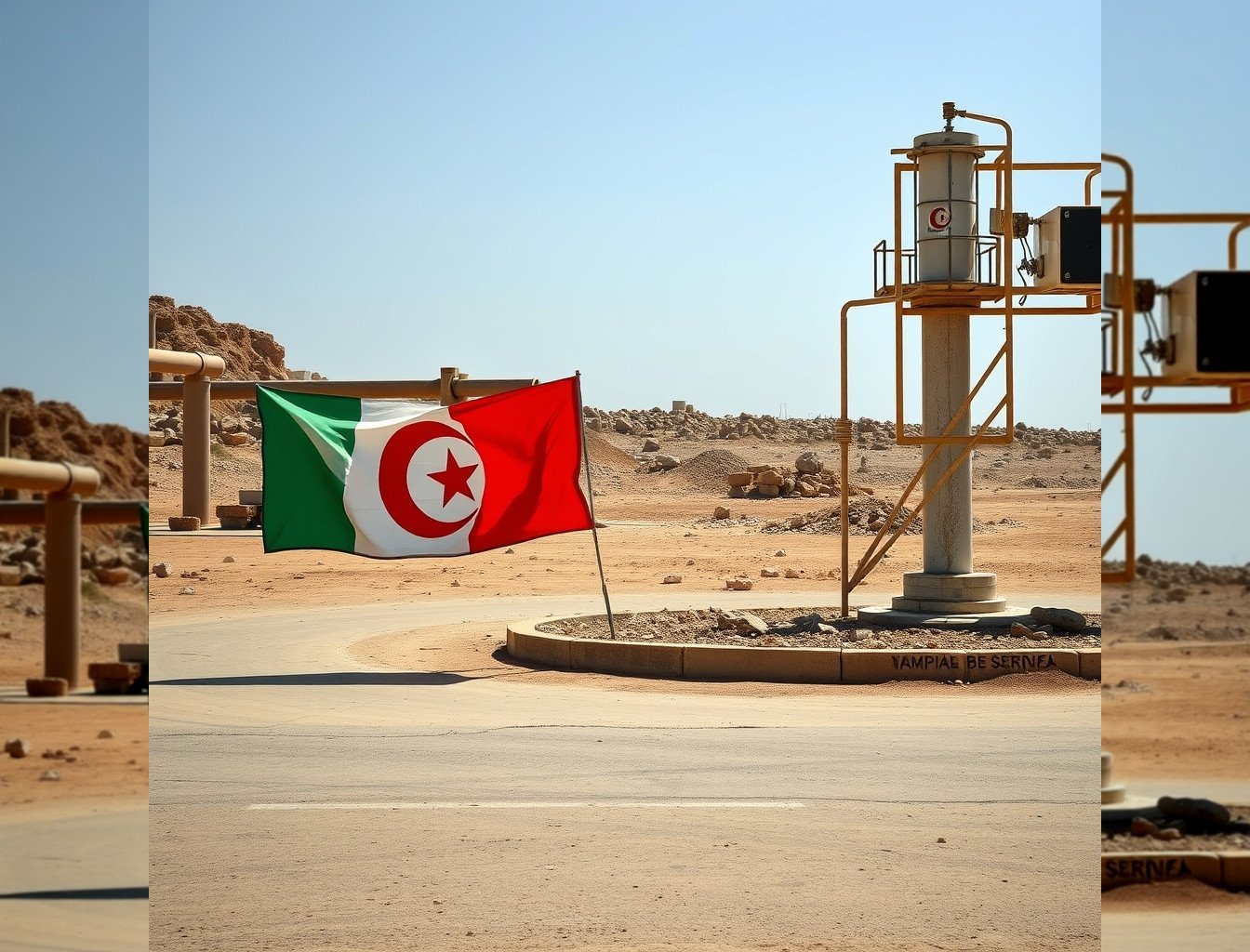
Rebalancing hydrocarbons: policy moves and legal risks
At the same time, Sonatrach faces environmental scrutiny. A national watchdog report found Sonatrach operations encroaching on more than 20 protected areas, an issue labeled “ecocide” by environmental groups. These areas include national parks and biosphere reserves, with documented impacts on biodiversity. Sonatrach has not publicly disputed the findings but has not released a corrective action plan.
Shale gas developments remain stalled. A pilot program in the south, launched in 2019, has not progressed beyond exploratory drilling. Technical challenges, water scarcity and public opposition have delayed further steps. A 2023 feasibility study by the Ministry of Energy estimated shale gas reserves at 700 billion cubic meters but did not set a timeline for commercial extraction.
OPEC dynamics and crude output
Tunisia border crossings and regional tensions
The incident follows a joint statement by UN human rights experts expressing concern over the alleged repression of families of disappeared persons in Algeria. The experts cited cases of enforced disappearances dating back to the 1990s, with 200 new cases reported in 2023. Algeria’s Interior Ministry did not respond to requests for comment.
Civil society crackdown and diaspora pressure
In France, Algerian exiles held a meeting in Paris on May 29, demanding “concrete guarantees” and a general amnesty before considering return. Organizers cited ongoing repression and lack of transitional justice as key obstacles. The French government has not issued a formal response.
Women’s rights: stalled legal and institutional reforms
The government has not advanced a draft law on violence against women, first proposed in 2016. A 2024 draft penal code reform includes articles on domestic violence but retains provisions that allow rapists to avoid prosecution by marrying their victims. Human rights groups have criticized the continuation of these clauses.
Medical research: niche studies and trade frictions
On trade policy, the average US tariff on Algerian goods remains at 3.3%, unchanged since 2022. Algeria’s top export categories to the US—petroleum products, chemicals and textiles—face a blended average tariff of 2.1%. The US suspended Algeria’s Generalized System of Preferences (GSP) eligibility in 2023, citing insufficient market access reforms.
Desertification and solar ambitions
Meanwhile, Moroccan farmers displaced by the Morocco-Algeria border closure protested in Rabat on May 28, demanding compensation for land confiscated in the 1970s. Algerian authorities have not acknowledged the claims.
Political shifts: Islamism, quietism and post-Bouteflika pressures
The post-Bouteflika era continues to test institutional stability. Parliament has not passed a new electoral law despite multiple drafts. Municipal elections scheduled for November 2024 are expected to proceed under existing rules. Opposition parties have called for postponement, citing lack of reforms.
Middle East diplomacy: energy and security alignments
Algeria’s gas exports to Europe reached 28 billion cubic meters in 2023, up from 24 billion in 2022. Italy, Spain and France remain the top buyers. The European Commission’s REPowerEU plan lists Algeria as a key partner for reducing European dependence on Russian gas.
Week in figures
Balance of the week
Key takeaway for entrepreneurs: The hydrocarbons reform offers clearer rules but carries legal and environmental risks. Women-led businesses face institutional gaps in protection and funding. The solar sector remains small-scale with regulatory uncertainty. Trade with the US requires compliance with tariffs and GSP ineligibility. Regional instability may affect cross-border logistics and supply chains.
Sources
- U.S. Energy Information Administration (EIA) (.gov)
- Carnegie Endowment for International Peace
- Hudson Institute
- GIS Reports
- Amnesty International
- dandc.eu
💡 Starting a business in Algeria? GlobalStart guides you step by step: procedures, real costs, company forms (SARL, EURL, SPA) and CNRC registration.