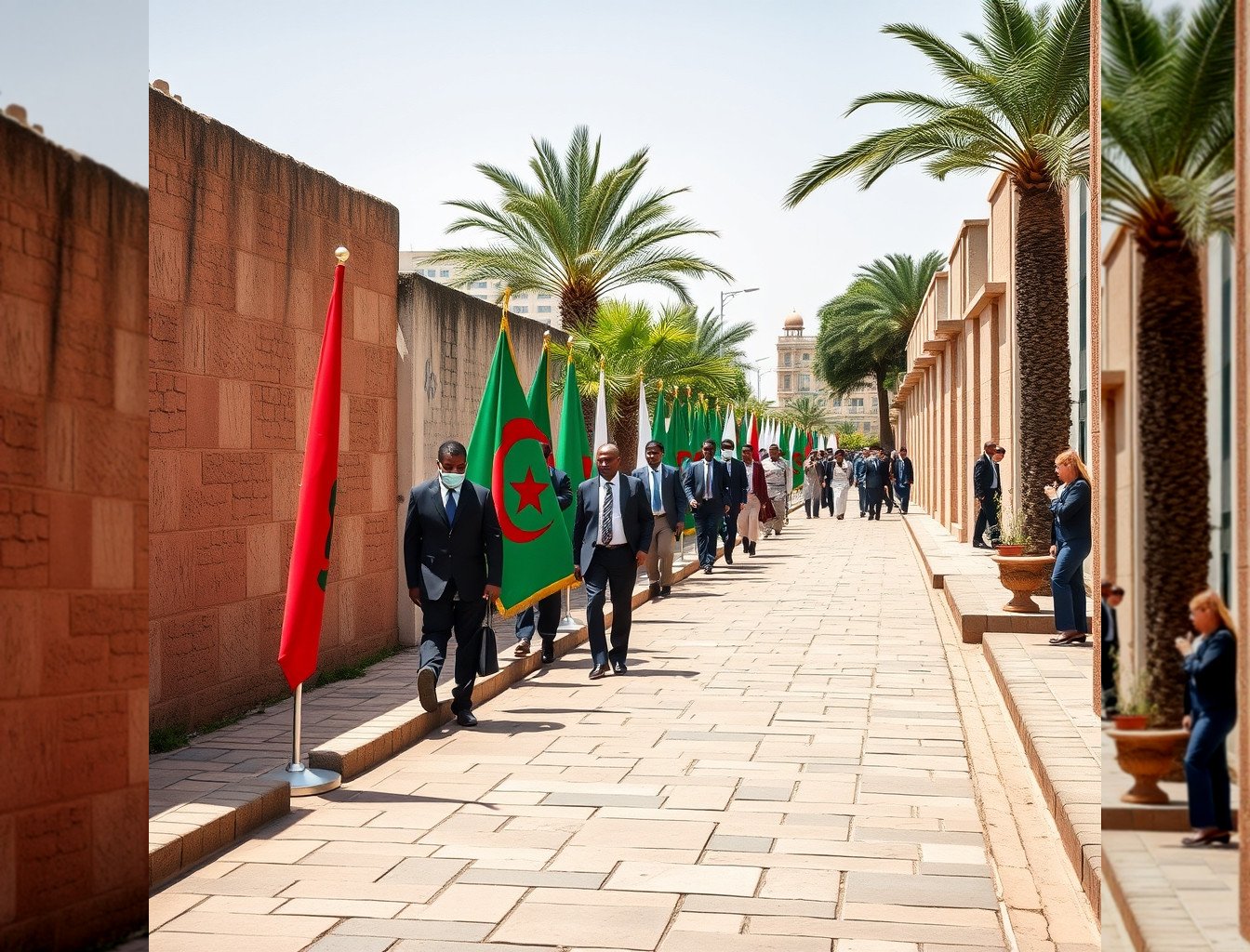
Algeria’s economic relationship with France has recently cooled, raising questions about the North African nation’s openness to new business partnerships and trade routes. According to RealClearWorld, the shifting diplomatic winds between Algiers and Paris are prompting Algerian entrepreneurs and members of the diaspora to reassess opportunities closer to home and across Africa.
The discussion comes as Algeria’s trade ties with France show signs of strain. Official data from recent years shows France remains Algeria’s top European trading partner, but the volume of exchange has fluctuated amid political disagreements over migration, energy contracts and historical grievances. Bilateral trade reached about $8 billion in 2023, down from a peak of nearly $10 billion in 2021, according to Algerian customs figures cited by RealClearWorld.
French companies, long dominant in sectors like hydrocarbons, pharmaceuticals and infrastructure, now face slower approval processes and increased local content requirements in Algeria. French energy giant TotalEnergies suspended new projects in Algeria in 2023 after contract renegotiations stalled. Similarly, Renault’s car assembly plant in Oran, which supplies the domestic market, has seen delays in expansion plans due to bureaucratic hurdles.
For Algerian entrepreneurs and business founders, the cooling ties present both risk and opportunity. Domestic demand in Algeria remains strong, driven by a young population and rising purchasing power. The informal economy, valued at over $30 billion by the World Bank, continues to be a hidden engine of growth for founders who navigate licensing and compliance challenges.
Meanwhile, Algeria is turning eastward. In 2024, Algeria signed a $1.4 billion deal with Russia to expand gas exports, diversifying beyond traditional European buyers. This follows a 2023 agreement with Italy to supply an additional 4 billion cubic meters of gas annually by 2026. Such moves signal a strategic pivot that could open doors for non-Western investors and technology providers.
The Algerian diaspora, particularly in France, has played a crucial role in cross-border entrepreneurship. Many Algerian-French founders have mediated trade deals and facilitated remittances, which reached nearly $10 billion in 2023—more than foreign direct investment. With France’s visa policies tightening and diaspora links under strain, some returnees are exploring ventures in Algeria’s burgeoning fintech and agribusiness sectors.
Algeria’s business climate remains complex. The country ranks 149th out of 190 in the World Bank’s 2024 Doing Business report, with challenges in starting a business, obtaining credit and resolving insolvency. Regulatory reforms aimed at simplifying company registration are progressing slowly, though a new digital portal launched in early 2025 aims to cut processing times for business licenses by up to 50%.
Against this backdrop, Algerian entrepreneurs are pivoting toward intra-African trade. Algeria’s accession to the African Continental Free Trade Area (AfCFTA) in 2023 offers duty-free access to a market of 1.4 billion people. Algerian furniture makers in Tizi Ouzou are already exporting to Senegal and Ivory Coast, while tech startups in Algiers are targeting clients in Morocco and Tunisia.
Diaspora investors are eyeing opportunities in Algeria’s renewable energy sector, which aims to generate 30% of electricity from renewables by 2030. Local solar startups have secured funding from Algerian-French entrepreneurs who see long-term potential despite regulatory delays. In Oran, a new industrial zone focused on green hydrogen is in development, with international partners expected in 2026.
The question for founders is no longer whether Algeria can pivot away from France, but how quickly it can integrate into broader African and global networks. Those who move early—leveraging diaspora capital, adopting digital tools and aligning with AfCFTA rules—stand to gain first-mover advantage.
Key takeaway for entrepreneurs: Algeria’s strained ties with France are accelerating its shift toward African and Eurasian markets. Entrepreneurs should explore AfCFTA trade benefits, monitor renewable energy tenders and prepare for slower Western market entry. The diaspora remains a critical bridge, but new partnerships and digital compliance tools could reduce dependency on traditional channels.
Sources
- RealClearWorld
💡 Starting a business in Algeria? GlobalStart guides you step by step: procedures, real costs, company forms (SARL, EURL, SPA) and CNRC registration.