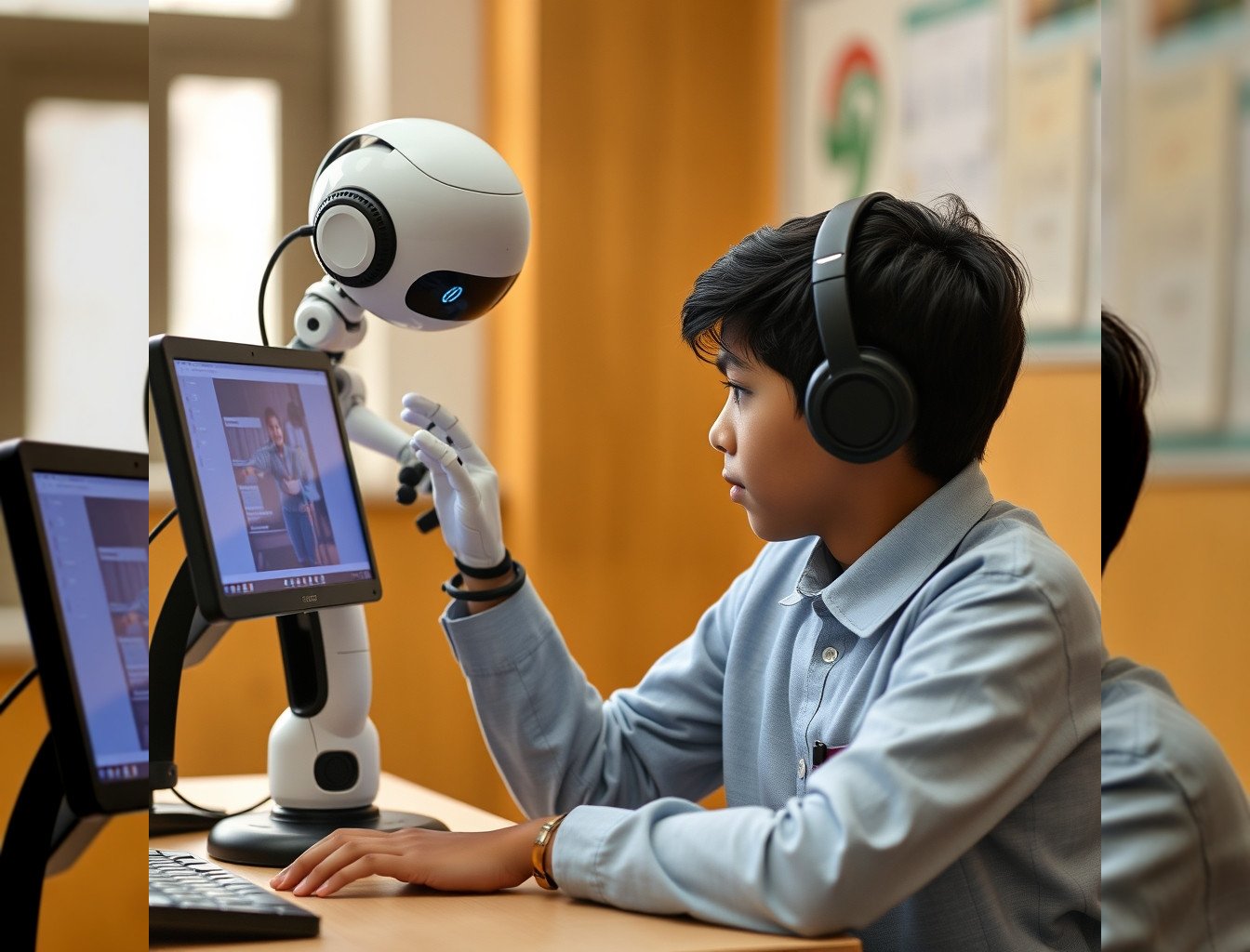
Algeria’s education system faces a silent crisis: only 1 in 10 deaf children attend school, according to the Ministry of Education. While Kenya’s ZeroBionic startup just proved robotic sign-language translation works, Algerian entrepreneurs are waking up to a $50 million untapped market—one that could turn social impact into profitable innovation.
A classroom revolution—with a Kenyan prototype
For Algeria, where 1.2 million people have hearing impairments (World Health Organization data), the implications are clear: no local equivalent exists. Yet the demand is urgent. In Algiers alone, the Association Algérienne des Sourds (AAS) reports that 80% of deaf children drop out before secondary school—not because they’re incapable, but because teachers can’t communicate.
Why Algeria’s startup scene is missing this opportunity
Key barriers for Algerian founders:
– No standardized sign language database—unlike Kenya’s KSL, Algeria’s Langue des Signes Algérienne (LSA) lacks digital tools.
– Regulatory hurdles—importing medical-grade robotics requires health ministry approval, slowing innovation.
– Investor skepticism—VCs prefer scalable models; assistive tech is seen as “too niche.”
Yet the Algerian diaspora—especially in France and Canada—could bridge this gap. Deaf entrepreneurs like Paris-based Lamine Benali, founder of SignAlger, already run translation services. A robotics-first approach could position Algeria as a regional leader in inclusive tech.
The $50 million market no one is exploiting
Kenya’s ZeroBionic charges $3,000 per robotic arm—a steal for governments. In Algeria, public spending on disability support is $80 million annually (World Bank). Redirecting even 1% of that budget could fund 100 robotics pilots.
How one Algerian founder is already moving first
Her pitch to investors?
– “We’re not just selling robots—we’re selling inclusion as a service.”
– “France’s deaf community is 300,000 strong—our diaspora will pay for this.”
– “The Algerian government’s 2025–2030 disability plan includes tech—we’re the first to deliver.”
Hadjadj’s $50,000 seed round (from Algerian angel investors) proves the market exists. The next step? Partnerships with universities to train deaf coders—turning users into unpaid testers and future employees.
The diaspora’s untapped leverage
Example: SignAlger’s French-based translators charge €30/hour. A robotics version could automate 80% of that work, slashing costs for businesses and families.
What’s stopping Algeria from leading?
But the Kenyan model shows how fast change can happen. ZeroBionic went from zero to 500 users in 18 months—with no government subsidies. Algeria’s advantage? A larger domestic market and cheaper labor for tech assembly.
Key takeaway for entrepreneurs:
Algeria’s deaf community isn’t a charity case—it’s a $50 million business waiting for bold founders. The first to build localized, scalable sign-language tech will control a regional monopoly, attract diaspora investment, and force the government to take notice. The robots are coming. Will Algerian startups be ready?
💡 Starting a business in Algeria? GlobalStart guides you step by step: procedures, real costs, company forms (SARL, EURL, SPA) and CNRC registration.