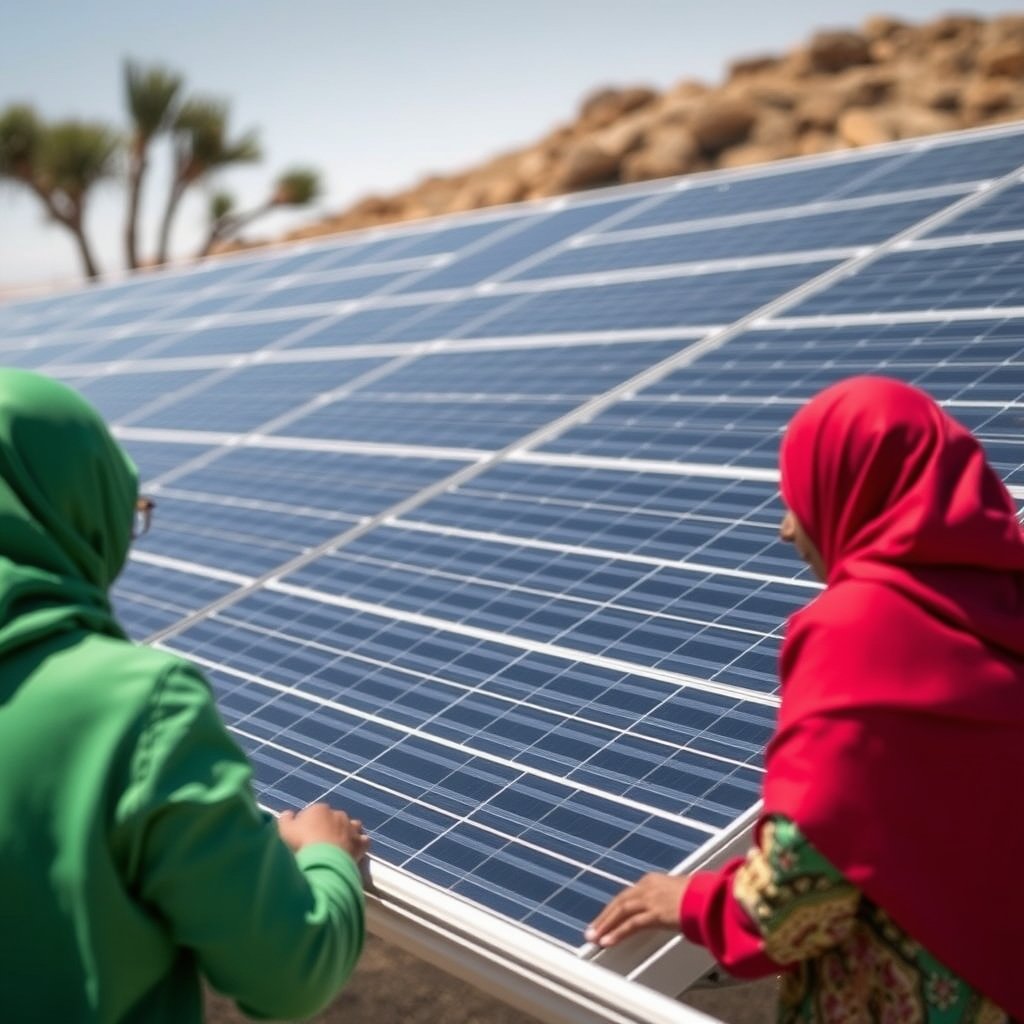
Algeria’s renewable energy sector is gaining momentum with women entrepreneurs at the forefront, according to a recent report by Tech In Africa. The publication’s list of “10 Women-Led Renewable Energy Startups in Africa” includes two Algerian ventures—Solaris Energy and Green Horizon—highlighting the country’s growing role in the continent’s green transition. For local founders and the Algerian diaspora, this recognition signals new opportunities in a sector where policy shifts and funding trends are reshaping the business landscape.
Algeria’s place in Africa’s green startup ecosystem
Tech In Africa’s report underscores Algeria’s emergence as a hub for women-led cleantech innovation, alongside countries like Kenya, Nigeria, and South Africa. Solaris Energy, founded by Dr. Amina Benkhedda, specializes in off-grid solar solutions for rural communities, while Green Horizon, led by Samia Bouzidi, focuses on solar-powered water desalination for agricultural use. Both startups have secured early-stage funding from international climate funds, including the African Development Bank’s (AfDB) Desert to Power initiative, which aims to deploy 10 GW of solar capacity across the Sahel by 2030.
For Algerian entrepreneurs, this visibility comes at a critical time. The government’s 2024 National Renewable Energy Plan targets 15 GW of renewable capacity by 2035, with solar accounting for 80% of the mix. The plan includes tax incentives for startups, such as a five-year corporate tax exemption for projects under 1 MW, and streamlined licensing for small-scale installations. However, challenges remain: grid integration bottlenecks and bureaucratic delays have slowed some projects, while access to venture capital (VC) remains limited. According to Algeria Venture Capital Association (AVCA), only 2% of the country’s $120 million VC funding in 2024 went to cleantech startups, compared to 15% in Morocco and 22% in Egypt.
Funding trends and diaspora opportunities
The inclusion of Algerian startups in Tech In Africa’s list reflects a broader shift in investor interest toward women-led green ventures. The report notes that African women-led startups in renewable energy raised $85 million in 2024, up from $32 million in 2022—a 165% increase. For the Algerian diaspora, this presents a dual opportunity: investing in local startups or launching ventures that bridge Algeria’s energy gaps with global expertise.
Yacine Khelifi, a Paris-based Algerian entrepreneur and co-founder of Sunna Design, a solar streetlight company operating in Algeria, sees potential for diaspora-led innovation. “The diaspora can play a key role in scaling these startups by providing technical know-how and access to international networks,” Khelifi said in a recent interview with Maghreb Entrepreneur. His company, which employs 40 people in Algiers and Oran, has secured contracts with Algerian municipalities to deploy solar-powered infrastructure, demonstrating the viability of public-private partnerships in the sector.
Policy and market gaps
Despite progress, Algeria’s renewable energy market faces structural hurdles. The Ministry of Energy Transition has yet to finalize regulations for energy storage, a critical component for solar projects. Additionally, the dominance of state-owned Sonatrach and Sonelgaz in the energy sector creates barriers for private players, particularly in grid access. However, the government’s recent decision to allow 100% foreign ownership in renewable energy projects—up from 49%—could attract more international investors.
For startups like Solaris Energy and Green Horizon, the next phase involves scaling operations. Dr. Benkhedda’s team is piloting a pay-as-you-go solar model in Adrar and Tamanrasset, targeting 5,000 households by 2026. Bouzidi’s Green Horizon, meanwhile, is partnering with Algerian farmers’ cooperatives to deploy solar desalination units, reducing water costs by 30% in pilot projects. Both founders emphasize the need for more local manufacturing of solar components—a gap that could create opportunities for Algerian industrialists.
Diaspora as a catalyst
The Algerian diaspora, estimated at 2.5 million people, has historically driven remittances (over $2 billion annually) but has been underrepresented in startup investment. The renewable energy sector could change that. Diaspora Bonds, a financial instrument used by countries like Ethiopia and Nigeria to channel remittances into development projects, are being explored by Algerian policymakers. If implemented, these bonds could provide startups with low-cost capital while offering diaspora investors returns tied to green projects.
Key takeaway for entrepreneurs
Algeria’s women-led renewable energy startups are gaining traction, backed by government targets and international funding. For local founders, the sector offers tax incentives and growing demand, but grid access and VC gaps remain hurdles. The diaspora can bridge these challenges by investing in or launching startups that leverage global expertise, while policymakers must finalize energy storage regulations to unlock further growth. The message is clear: Algeria’s green economy is open for business.
Sources
- Tech In Africa
💡 Starting a business in Algeria? GlobalStart guides you step by step: procedures, real costs, company forms (SARL, EURL, SPA) and CNRC registration.