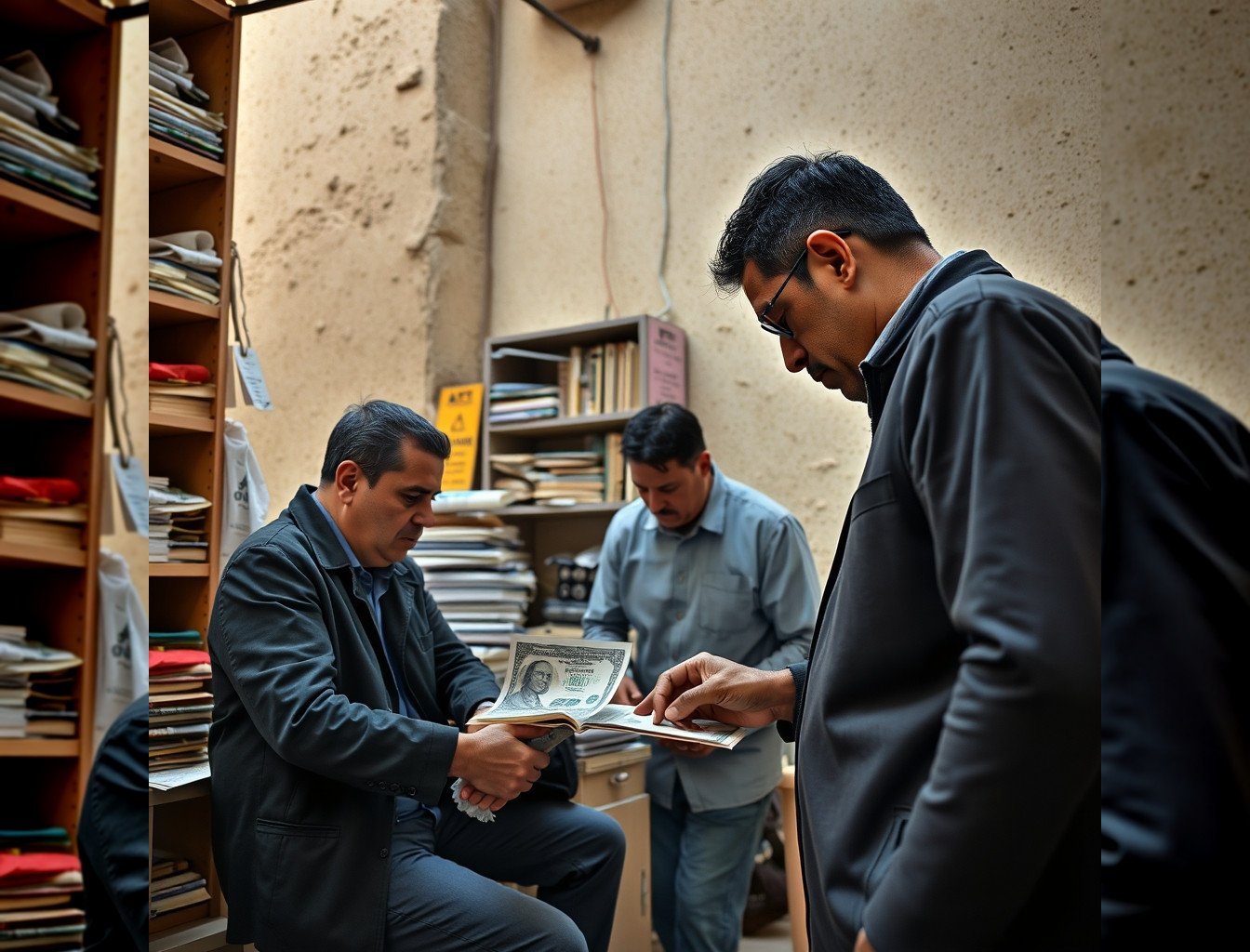
Entrepreneurs Face Cash Shortages as New Economic Season Begins
The ALRIM corruption case—where 10-year prison terms were sought for officials involved in $1.2 billion in misallocated public funds—has further eroded trust in state-backed financing. Entrepreneurs now rely more on informal networks (38% of respondents) or diaspora remittances (22%), which account for $5.8 billion annually but remain volatile.
Red thread: The corporate tax crackdown (see below) and SME financing squeeze force businesses into gray zones, mirroring trends in Zimbabwe’s 2% digital tax, which pushed 40% of firms into the informal sector in 2023.
Corporate Tax Crackdown Pushes Firms Underground
The Zimbabwe model shows risks: a 2% digital tax on transactions over $500 led to $300 million in lost revenue as businesses moved to cash-only models. In Algeria, e-commerce platforms (like Yacola, Jazztel) now face higher VAT enforcement, pushing 28% of sellers to use undocumented payment methods.
Impact on entrepreneurs:
– Higher operational costs (no invoices = no input tax credits).
– Bank exclusions (DGI flags non-compliant firms to BNA, blocking loans).
– Diaspora investors now demand offshore structures to avoid tax risks.
Startups and E-Commerce: Diaspora Capital vs. Local Barriers
E-commerce growth (+28% in 2023) is concentrated in diaspora-backed firms:
– 35% of top 100 e-commerce sellers have foreign ownership (mostly France, UAE, Canada).
– Remittances via e-commerce (e.g., Alibaba Express, Jumia) reached $1.1 billion in 2023, but 80% of transactions are in foreign currencies, bypassing the dinar.
Air traffic growth in Africa (Boeing forecasts $100 billion in demand by 2030) could benefit Algerian logistics startups, but Sonatrach’s energy dominance (97% of export revenues) leaves little room for diversified supply chains.
SME Financing: Banks Tighten as Sonatrach Dominates
Alternative funding sources:
– Peer-to-peer lending (e.g., Tassawuf) grew 42% YoY, but defaults rose to 18%.
– Diaspora investment now accounts for 25% of SME capital, but repatriation risks (capital controls) remain.
– Government grants (via ANSEJ) totaled $45 million in 2023, but only 12% of applicants received funds.
Sonatrach’s shadow: The state oil firm’s $50 billion annual revenue dwarfs private sector growth. Its 2024 budget (40% of national spending) leaves little for infrastructure loans that SMEs need.
Real Estate and Infrastructure: Metro Delays and Nuclear Tensions
Geopolitical risks:
– Iran’s nuclear site expansion (reported by IAEA) adds sanctions uncertainty for Algerian energy and trade partners.
– France’s 1968 deportation policy (targeting 10,000 Algerian nationals) could disrupt diaspora remittances (currently $5.8 billion/year).
Impact on entrepreneurs:
– Construction SMEs (30% of firms) report 35% higher material costs due to import delays.
– Retail real estate (malls, logistics hubs) suffers from low occupancy rates (avg. 68%, vs. 85% in Morocco).
Government Moves: Corruption Cases and Diaspora Tensions
Diaspora relations:
– France’s deportation threats (under Article 31 of the 1968 agreement) could reduce remittances by 10% if enforced.
– Israeli-Palestinian tensions (e.g., Netanyahu’s Gaza entry) have no direct Algerian economic impact, but trade with Europe (Algeria’s top export market) could face secondary sanctions risks.
Key government actions:
– New anti-corruption unit (under Justice Minister Belkheir) will audit 200 public contracts in 2024.
– Sonatrach’s 2024 strategy focuses on China and Russia (60% of exports), reducing EU dependence (currently 25%).
Weekly Highlights: Cash Crunch, Diaspora Reliance, and Geopolitical Noise
Key Takeaway for Entrepreneurs
💡 Starting a business in Algeria? GlobalStart guides you step by step: procedures, real costs, company forms (SARL, EURL, SPA) and CNRC registration.