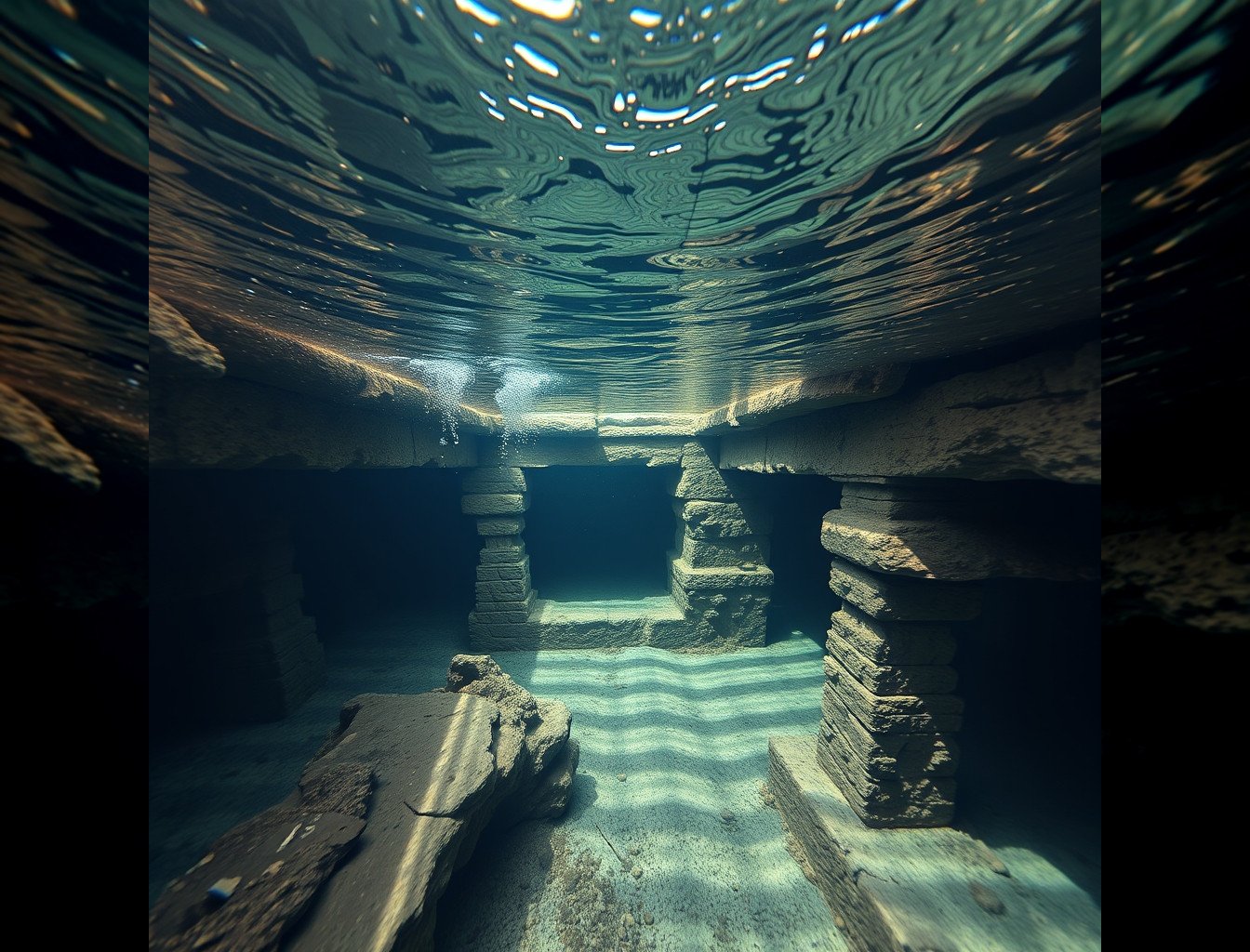
Algeria’s hunt for a lost Roman city off the coast of Tipasa is no longer just an academic pursuit. The recent underwater excavations, led by the National Centre for Maritime and Underwater Archaeological Research (CNRASM), have revealed submerged structures that could redraw the map of ancient trade routes. According to Arkeonews, the team has identified stone foundations, pottery shards, and amphorae fragments at depths of 5 to 12 metres, suggesting a port city that thrived between the 1st and 5th centuries AD. The discoveries were made using side-scan sonar and remotely operated vehicles (ROVs), tools that local startups in Algiers and Oran are now eyeing for commercial applications.
A new frontier for Algerian tech and tourism
The CNRASM project, funded by the Ministry of Culture and the Algerian National Navy, has a budget of 120 million dinars (about $880,000) for the 2024-2025 phase. This investment is not just about history; it’s a test case for Algeria’s growing underwater technology sector. Startups like Sonatrach’s subsidiary Naftal have already expressed interest in adapting ROV technology for offshore oil and gas inspections, a market worth an estimated $2.3 billion annually in North Africa. Meanwhile, tourism operators in Tipasa, a UNESCO World Heritage site, are preparing to offer guided diving tours once the site is secured. The local chamber of commerce in Tipasa reports that visitor numbers to the coastal ruins have risen by 18% since the underwater discoveries were announced in early 2025.
Diaspora investors take notice
The project has caught the attention of Algerian entrepreneurs abroad, particularly in France and Canada, where diaspora-led ventures specialise in heritage tourism and digital mapping. Omar Belkacem, a Paris-based Algerian investor who runs a cultural tourism agency, told El Watan that he is in talks with CNRASM to develop an augmented reality (AR) app that would allow visitors to “see” the submerged city as it once was. “This isn’t just about preserving history—it’s about creating a product that can be monetised,” Belkacem said. Similar AR projects in Morocco and Tunisia have generated annual revenues of $1.5 million to $3 million, according to a 2023 report by the Arab Tourism Organisation.
Regulatory hurdles and local partnerships
For entrepreneurs, the biggest challenge is navigating Algeria’s regulatory landscape. The Ministry of Culture requires all underwater archaeological sites to be protected under Law 98-04, which restricts commercial activities near heritage zones. However, the government has signalled flexibility for projects that align with its 2025-2029 tourism development plan. The Tipasa wilaya (province) has already issued permits for three local diving schools to train guides, with the first batch of 20 certified instructors expected by the end of 2025. “The key is to work with the authorities, not against them,” said Fatima Zohra, founder of a maritime logistics startup in Algiers. “The underwater archaeology sector is a gateway to other opportunities, like marine conservation and offshore renewables.”
What’s next for the site
The CNRASM team plans to expand its search area to 20 square kilometres by 2026, using funding from the European Union’s Horizon Europe programme. The EU has allocated €1.2 million to support Algerian-led underwater archaeology projects, with a focus on training local researchers. For Algerian businesses, this means access to European expertise in 3D modelling, drone mapping, and sustainable tourism. The Tipasa project could also serve as a model for other coastal sites, such as Cherchell and Béjaïa, where similar underwater ruins are suspected to exist.
Key takeaway for entrepreneurs
Algeria’s underwater archaeology sector is opening doors for tech startups, tourism operators, and diaspora investors. The Tipasa project demonstrates how heritage preservation can align with commercial opportunities, particularly in digital mapping and marine services. Entrepreneurs should focus on partnerships with local authorities and leverage EU funding to scale their ventures.
Sources
- Open Culture
- Nature
- National Geographic
- Arkeonews
💡 Starting a business in Algeria? GlobalStart guides you step by step: procedures, real costs, company forms (SARL, EURL, SPA) and CNRC registration.