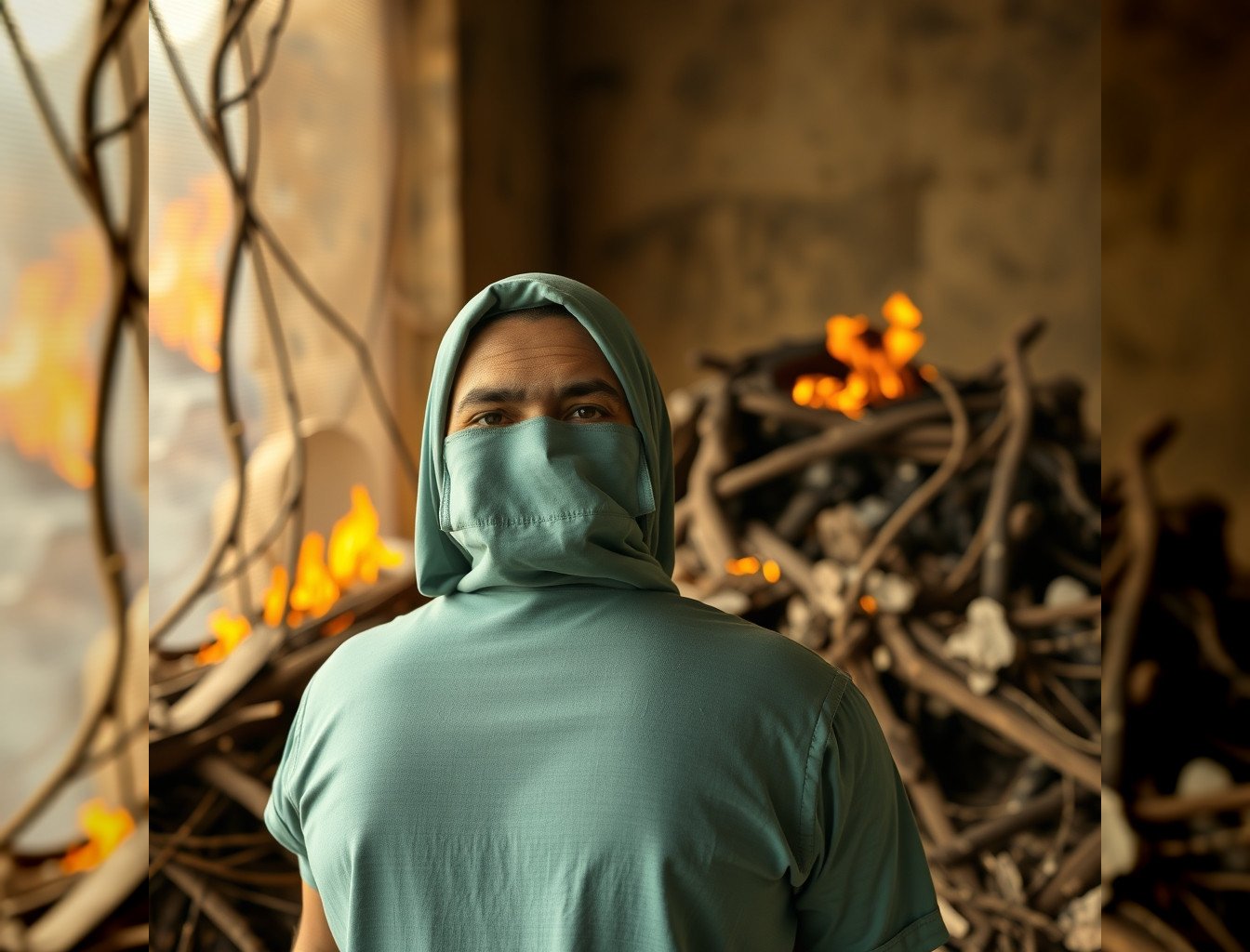
Algeria’s wildfires have scorched nearly 50,000 hectares this summer, destroying homes, roads, and livelihoods—but the economic fallout is also lighting a fire under a hidden opportunity. With reconstruction efforts underway and private-sector firms like AGROLOG Group already stepping in to supply relief goods, analysts say the crisis could unlock $1.2 billion in contracts for local businesses, from construction to agribusiness. For entrepreneurs, the question isn’t whether to engage—it’s how to position themselves before competitors do.
A $1.2B reconstruction boom—if local firms move fast
For business founders, this is a golden window. The Ministry of Public Works has already mobilized to restore water networks and roads, but local contractors—especially those with experience in disaster recovery—stand to benefit most. “The key is speed,” says Karim Benali, a construction entrepreneur based in Algiers. “State tenders for emergency repairs are often fast-tracked, but foreign firms dominate these contracts. Algerian SMEs must pre-qualify now or risk being shut out.”
The High Islamic Council (HCI) has also praised the “wave of solidarity” from Algerian businesses, signaling that corporate social responsibility (CSR) initiatives could soon become a mandatory expectation for large firms. Smaller companies that align with relief efforts—whether through donations or logistics—may gain preferential access to future public contracts.
AGROLOG Group’s relief drive signals a shift in private-sector role
“We’re not just delivering food,” says AGROLOG’s CEO, Mohamed Cherif, in an interview with Algeria Business Review. “We’re mapping damaged farmland and connecting victims with suppliers. This is about rebuilding trust—and future contracts.” The group’s involvement hints at a broader trend: private-sector firms are no longer waiting for government calls for bids. They’re proactively shaping the recovery narrative, which could translate into long-term infrastructure and agribusiness deals.
For entrepreneurs in logistics, retail, or food processing, this is a chance to partner with larger firms on relief efforts while positioning themselves for post-disaster contracts. “The companies that help now will be the ones invited to bid later,” warns Leïla Hadjadj, an economist at the Algerian Business Federation (FPA).
Hajj permits and diaspora remittances: an untapped funding source
“The diaspora is already the backbone of Algeria’s informal economy,” says Dr. Samir Djebar, a financial analyst at Université d’Alger. “But with Hajj season approaching, there’s a chance to formalize some of that support.” Entrepreneurs who create crowdfunding platforms, micro-loans for wildfire victims, or even Hajj-related tourism packages could tap into this $12B+ remittance flow.
The National Human Rights Council’s visit to Bejaia this week also underscored a growing demand for transparency in aid distribution. Diaspora-run NGOs or fintech startups that offer blockchain-tracked donations could fill this gap—if they act before larger players dominate the space.
The wildfire paradox: crisis as a catalyst for innovation
– Infrastructure repairs: The Ministry of Public Works is prioritizing modular housing solutions for displaced families. Startups specializing in prefabricated, fire-resistant homes could secure pilot contracts in fire-hit regions.
– Digital relief coordination: Most aid distribution is still paper-based, creating delays. A startup that builds a real-time relief-tracking app—integrated with municipal databases—could become indispensable.
– Agribusiness revival: With 5,000 hectares of farmland destroyed, demand for drought-resistant crops and reforestation services is surging. AGROLOG’s relief drive suggests that vertical farming and hydroponics could be the next big bet.
"This is Algeria’s moment to leapfrog," says Yacine Bouzidi, founder of Algeria GreenTech, a renewable energy startup. "The country has the capital, the diaspora, and the will—but it needs entrepreneurs to turn this crisis into a business model."
Key takeaway for entrepreneurs
Sources
💡 Starting a business in Algeria? GlobalStart guides you step by step: procedures, real costs, company forms (SARL, EURL, SPA) and CNRC registration.