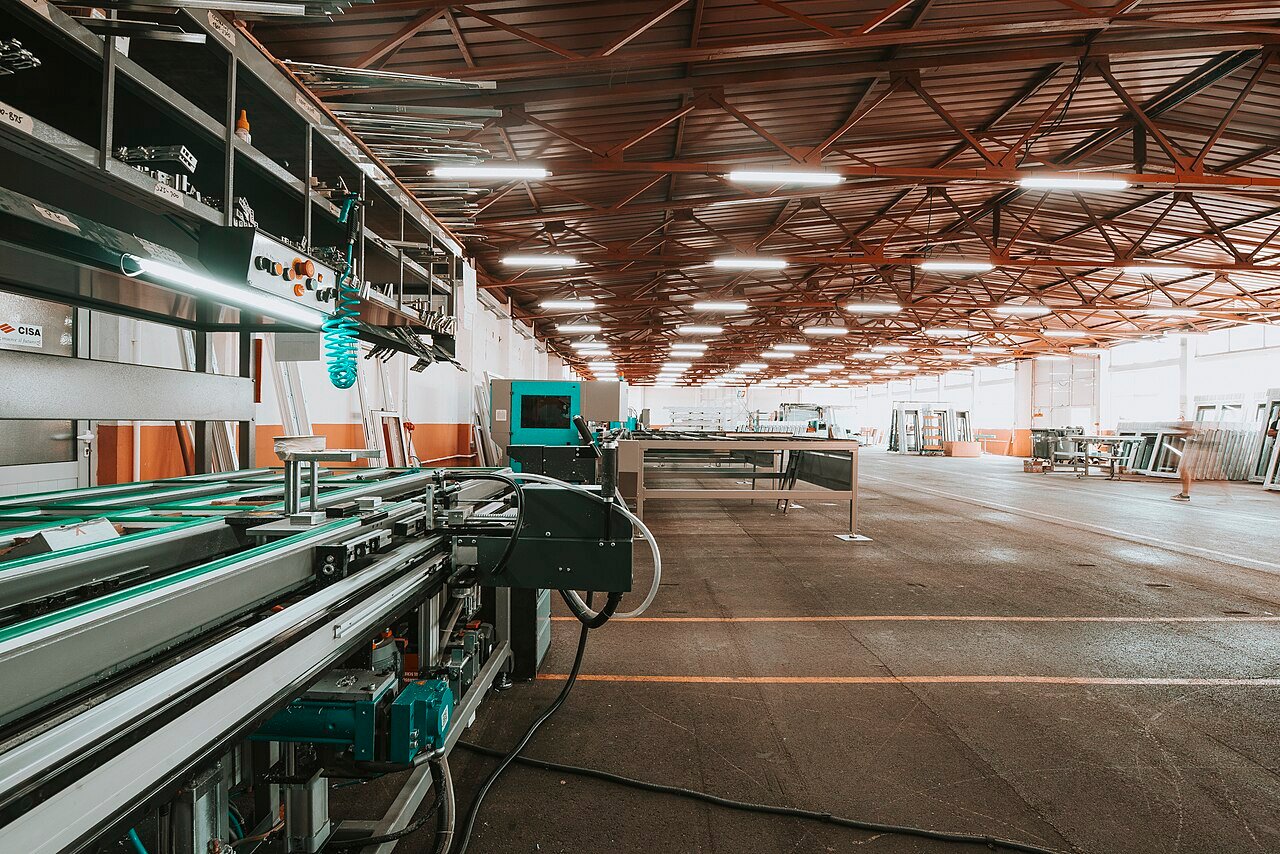
A $1.6 billion bet on local production
Turkey’s Tosyalı Group has become the face of Algeria’s industrial revival, with its new flat-rolled steel plant in Annaba now fully operational after years of investment. The facility, part of a $1.6 billion expansion announced in 2022, will produce 8.5 million metric tons annually—enough to supply domestic automotive and home appliance industries while positioning Algeria as a regional steel hub. For entrepreneurs, this marks the arrival of a critical supply chain partner, reducing reliance on imported materials and lowering costs for manufacturers.
The project’s scale reflects Algeria’s strategic push to diversify beyond hydrocarbons, with President Abdelmadjid Tebboune’s government prioritizing industrialization. Tosyalı Algeria’s operations now include the Gara Djebilet mine, where recent shipments of iron ore to its processing plants signal self-sufficiency in raw materials. “This is a game-changer for local industries,” said a source at the Algerian Federation of Industries (FPA), noting that steel prices for businesses have dropped by 15–20% since domestic production ramped up.
Automotive and appliances lead demand
The plant’s focus on automotive-grade steel aligns with Algeria’s growing vehicle assembly sector, where Renault’s Tangerang plant and local producers like SOFAS are expanding. Tosyalı’s flat steel will directly feed these operations, with deliveries to Renault’s Algerian partners already underway. Home appliance manufacturers, including brands operating in Oran and Constantine, have also secured contracts, reducing their dependency on European or Asian suppliers.
For Algerian-Qatari Steel, Tosyalı’s entry creates both competition and collaboration. The joint venture recently secured $1.6 billion in deals to expand across Africa, but analysts warn that Algeria’s domestic market—currently consuming 6 million tons annually—will see tighter margins. “Entrepreneurs must now negotiate with two major local producers instead of one,” said a steel trader in Algiers, adding that bulk buyers will benefit from price wars between the two firms.
Diaspora investments fuel expansion
The project’s success has drawn attention from the Algerian diaspora, particularly in France and the Gulf, where entrepreneurs see opportunities in Algeria’s industrial boom. Recent reports highlight Qatari and Turkish investors partnering with local firms to supply Tosyalı’s plants, creating a ripple effect in logistics and machinery sectors. “The diaspora is returning with capital, not just remittances,” noted a Paris-based Algerian business consultant, pointing to real estate and industrial park developments near Annaba.
This influx is critical for Tosyalı’s expansion, as the company faces labor shortages in specialized roles like metallurgy and quality control. The government has offered tax incentives for foreign workers, but local training programs remain underdeveloped. Entrepreneurs in the diaspora are filling gaps by setting up vocational schools and importing machinery, though bureaucratic hurdles persist.
Challenges remain for SMEs
While Tosyalı’s arrival benefits large manufacturers, small and medium-sized enterprises (SMEs) risk being priced out. The plant’s minimum order quantities—often exceeding 500 tons—disadvantage workshops and subcontractors. “Many SMEs can’t compete with these volumes,” admitted a metalworker in Blida, who now sources steel from Tunisia due to high Algerian prices.
To mitigate this, the FPA has urged the government to create a steel distribution network for SMEs, but progress has been slow. Meanwhile, Tosyalı’s focus on high-value automotive steel leaves a gap in the market for construction-grade materials, where Chinese imports still dominate. “The sector is growing, but not uniformly,” said an economist at the Algerian Institute of Economic Studies (IAES).
Key takeaway for entrepreneurs
Tosyalı Algeria’s steel plant proves that industrialization is accelerating, offering cost savings and supply chain stability for manufacturers. Entrepreneurs in automotive, appliances, and construction should leverage local partnerships to access subsidies and bulk discounts, while diaspora investors can fill labor and training gaps. However, SMEs must adapt to higher minimum orders or risk exclusion from the new industrial ecosystem. The steel sector’s expansion is a blueprint for Algeria’s broader economic shift—one that rewards agility and local collaboration.
Sources
- discoveryalert.com.au
- GMK Center
- Steel Orbis
- Shanghai Metals Market
- EUROMETAL
- SteelRadar
💡 Starting a business in Algeria? GlobalStart guides you step by step: procedures, real costs, company forms (SARL, EURL, SPA) and CNRC registration.