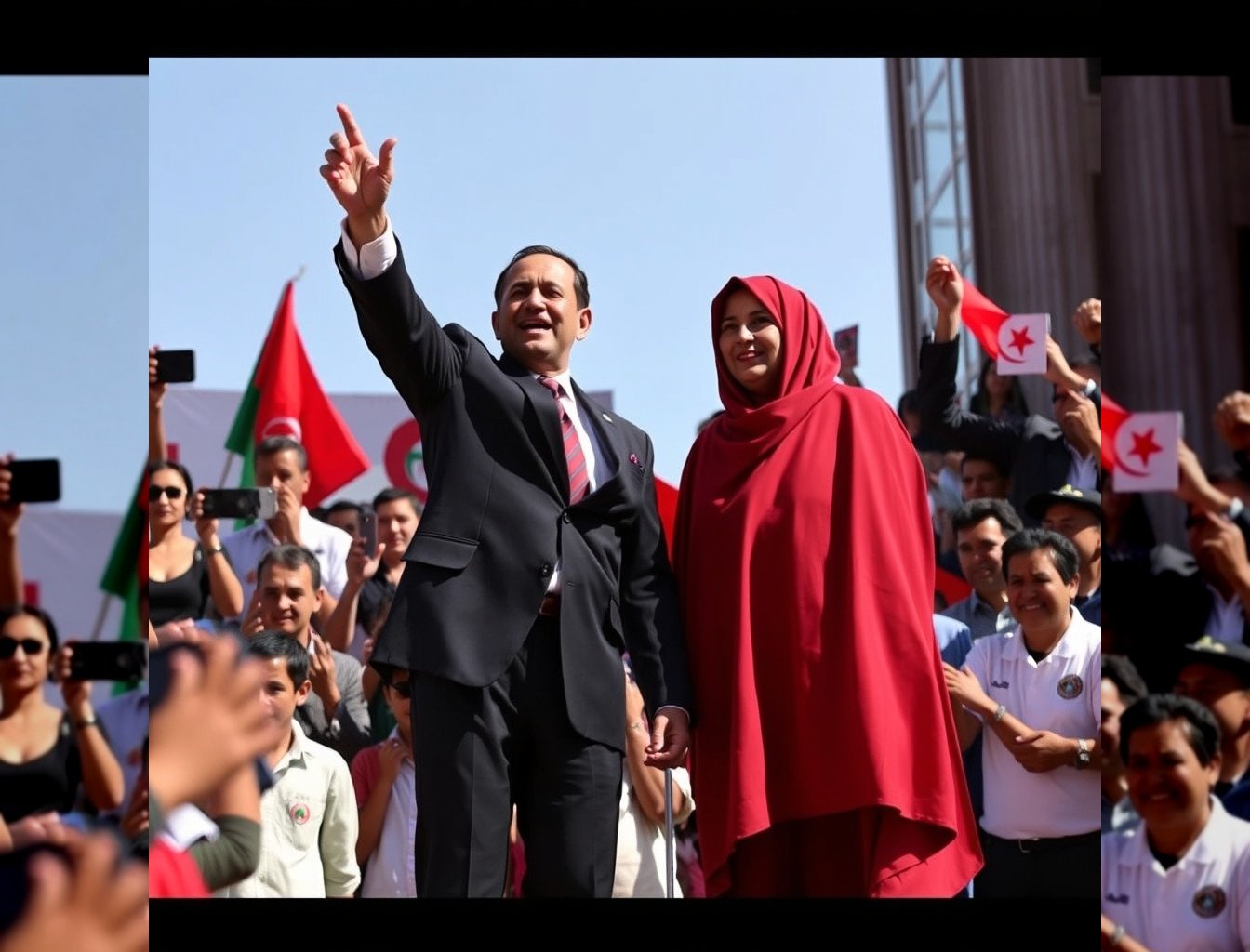
Algeria’s 2026 legislative vote delivered a decisive victory for President Abdelmadjid Tebboune, who secured nearly 95 percent of the ballot, according to results announced by the National Independent Election Authority this week. Fewer than 2.5 million of the country’s 25 million registered voters cast ballots, underscoring widespread apathy among key demographics. For entrepreneurs and founders inside Algeria and across the diaspora, the vote signals continuity rather than upheaval—but continuity carries its own implications. With the political landscape settled for the next five years, business leaders are turning their attention to policy signals already visible in recent months.
Tebboune’s reelection cements the trajectory of Algeria’s economic strategy, which since 2021 has emphasized import substitution, domestic industrialization and deeper ties with African partners. Official data show non-hydrocarbon GDP growth of 3.4 percent in 2025, driven largely by construction, agro-processing and information technology services. Yet these gains mask structural bottlenecks: foreign exchange shortages, bureaucratic delays in business registration and a banking sector still grappling with non-performing loans near 12 percent. Entrepreneurs report that the Central Bank’s relaxed capital controls in 2025 have eased dollar access for import-dependent startups, but approvals for outward direct investment remain subject to case-by-case review.
Industrial policy under Tebboune has favored state-linked conglomerates such as SONATRACH and ASMIDAL while reserving specific sectors—agro-industry, pharmaceuticals, renewables—for private participation with public tenders. In 2025, the Ministry of Industry allocated $1.8 billion in low-interest loans through the National Investment Fund to 420 small and medium enterprises across these priority areas. Data from the Algerian Chamber of Commerce and Industry indicate that 60 percent of approved funds went to founders under 40 years old, a cohort that now accounts for 27 percent of newly registered businesses. Entrepreneurs in Algiers and Oran told Reuters this week that the pace of disbursements has improved since the Fund hired external auditors to streamline compliance checks.
Young voters’ tepid turnout—just 19 percent among those aged 18 to 24—reflects skepticism toward political representation, but also frustration with the slow pace of economic reform. A survey by ISPI published in July 2026 found that 68 percent of young Algerians see entrepreneurship as the only viable path to social mobility. Startup incubators in Algiers, Constantine and Tlemcen report a 45 percent increase in applications since 2024, driven partly by government grants of up to $50,000 for scalable ventures with female founders. Diaspora investors, many based in France, Canada and the United Arab Emirates, have responded by syndicating seed rounds through Algerian private equity funds licensed by the Financial Market Authority. One Algiers-based fund manager noted that 35 percent of its 2026 capital came from diaspora sources, up from 22 percent in 2023.
Energy remains the pivot around which other sectors revolve. SONATRACH’s 2025 capital expenditure plan totals $11 billion, with $2.3 billion earmarked for upstream projects and $800 million for renewable energy pilot plants. Private companies in solar component assembly have secured land leases near Hassi R’Mel within 90 days of application—a process that previously took up to 18 months. Still, entrepreneurs caution that power purchase agreements with SONATRACH’s renewable unit remain capped at 20 years, limiting long-term financing appetite.
Tax policy offers another set of signals. Parliament approved a 2026 budget that reduces the corporate income tax rate from 26 to 22 percent for firms generating at least 30 percent of revenue from exports. Customs duties on imported machinery for qualifying sectors are suspended for 24 months, a move welcomed by founders in automotive components and medical devices. The tax authority, DGI, has also expanded its digital filing portal, cutting the average time to register a new business from 21 days to 7 days according to the Entrepreneurs’ Network of Algeria.
Regulatory fragmentation persists. While the 2025 investment law grants automatic approval for foreign majority stakes in sectors not explicitly reserved, implementation varies by wilaya. Entrepreneurs in Annaba cite faster processing than those in Bechar, where local officials still demand additional documentation. The Ministry of Investment has begun publishing annual compliance rankings of wilayas to pressure laggards, but the gap remains visible in logistics cost data compiled by the National Statistics Office: average transit time from Algiers port to inland warehouses is 5.2 days in the top-ranked regions versus 11.8 days in the lowest.
Diaspora entrepreneurs face their own hurdles. Algeria’s 2025 currency regulation still caps outward remittances from foreign-earned income at $10,000 per quarter unless pre-approved. However, a pilot program launched in early 2025 allows approved startups to access up to $50,000 annually for equipment imports if they commit to repatriate 30 percent of export revenue for three years. The first cohort of 47 ventures—including software firms in Algiers, agritech in Tizi Ouzou and fintech in Oran—have already received approvals.
Looking ahead, the continuity of Tebboune’s agenda suggests incremental openings rather than sweeping change. Entrepreneurs should expect steady progress in industrial parks around Arzew and Relizane, continued emphasis on renewable energy tenders and gradual easing of forex restrictions—provided macroeconomic conditions allow. The biggest near-term prize may be a long-awaited public-private partnership law expected in late 2026, which economists at Oxford Business Group say could unlock $8 billion in infrastructure projects.
Key takeaway for entrepreneurs: Tebboune’s reelection removes immediate political risk and keeps industrial policy, energy diversification and youth entrepreneurship at the top of the agenda. Expect faster capital disbursements and shorter business registration times, but plan for regional disparities in implementation. Diaspora investors should target sectors with explicit public tenders and budget for longer forex approval cycles.
Sources
- ISPI
- BlackPast.org
- Modern Ghana
💡 Starting a business in Algeria? GlobalStart guides you step by step: procedures, real costs, company forms (SARL, EURL, SPA) and CNRC registration.