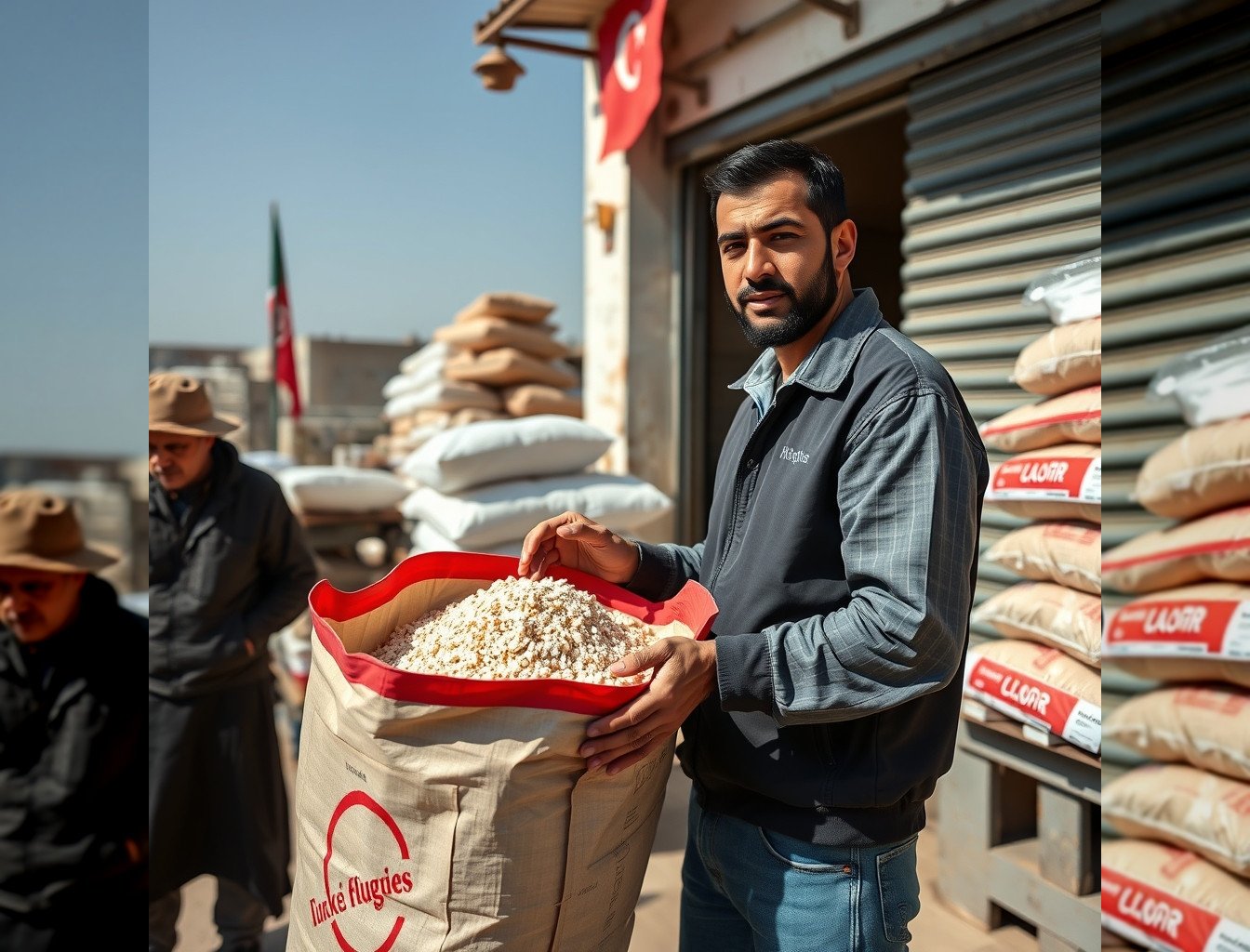
Turkey’s delivery of 2,000 tons of flour to Palestinian refugees and displaced families in Lebanon highlights a critical opportunity—and a warning—for Algerian entrepreneurs, diaspora investors, and agribusiness leaders. The shipment, coordinated by Turkey’s Disaster and Emergency Management Authority (AFAD) and distributed at the Port of Beirut, underscores the scale of humanitarian need in the region while revealing a $1.2 billion annual gap in Lebanon’s flour imports. For Algerian players, this gap represents both a market entry point and a logistical challenge tied to geopolitical risks.
A $1.2B Market Left Unserved by Sanctions and Instability
For Algerian millers and exporters, this presents a rare chance to step in. Algeria already supplies wheat to neighboring Morocco and Tunisia, but the Lebanese market remains underserved due to shipping costs, political instability, and competition from subsidized Turkish and Egyptian flour. The key question: Can Algerian businesses navigate the red tape and security risks to capture even 10% of this market?
Diaspora Networks Could Bridge the Supply Chain Gap
For example, a diaspora-owned flour distributor in Tripoli could partner with Algerian millers to bypass Lebanese customs delays. The catch? Trust and reliability. Turkish aid shipments are fast-tracked by diplomatic agreements—something Algerian businesses would need to replicate through direct negotiations with Lebanese authorities or UN agencies like UNRWA.
Security Risks and Bureaucracy: The Hidden Costs
Additionally, Lebanon’s parallel currency system (where the official dinar is worth pennies on the black market) complicates pricing. Turkish aid is often denominated in USD or euros to avoid devaluation, a strategy Algerian exporters would need to adopt. The lesson? Any entry into this market must include hedging against currency volatility and political instability.
Key Takeaway for Entrepreneurs
Sources
middleeastmonitor.com
💡 Starting a business in Algeria? GlobalStart guides you step by step: procedures, real costs, company forms (SARL, EURL, SPA) and CNRC registration.