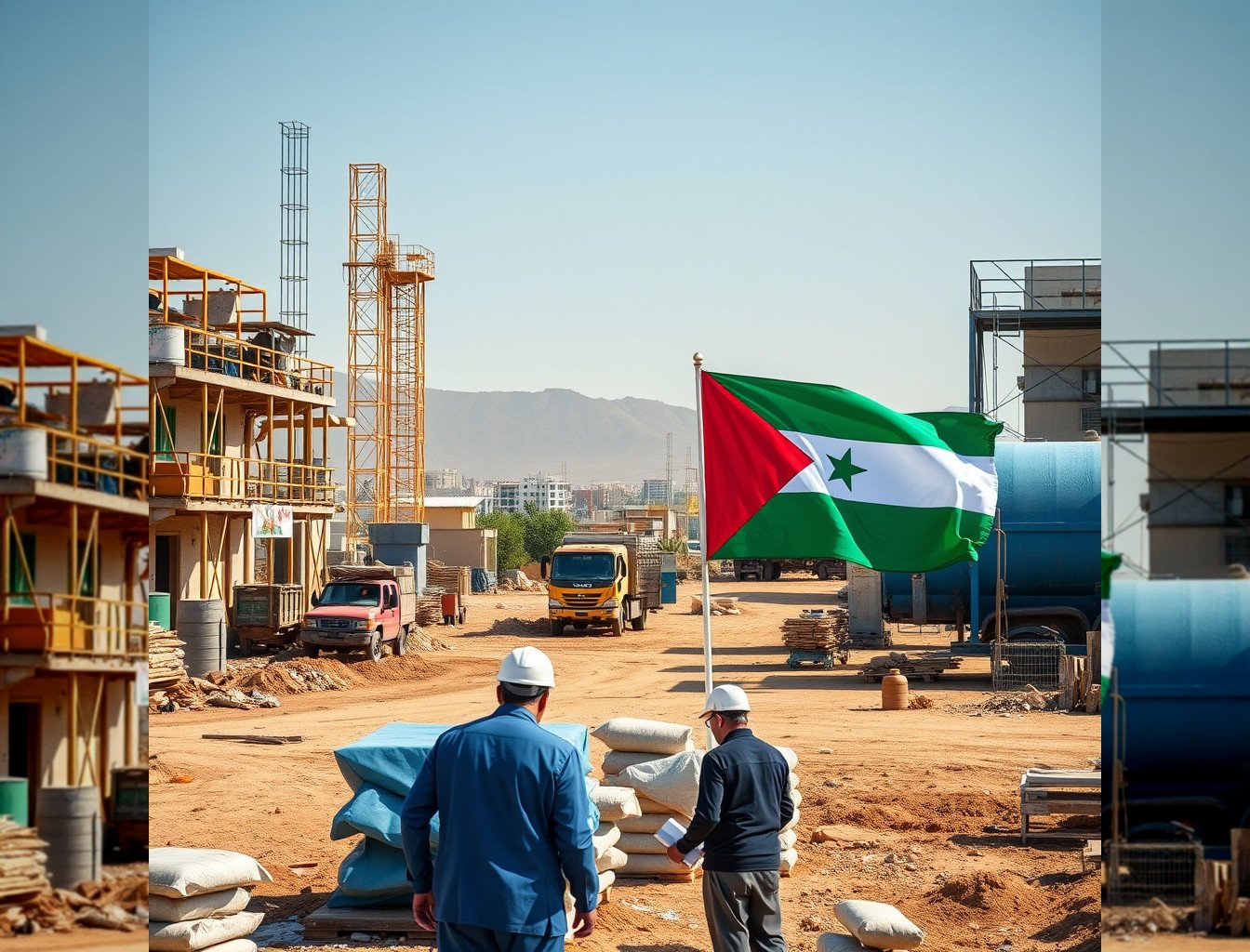
European Council President Antonio Costa’s stark warning about the collapse of the two-state solution in the West Bank carries direct economic and political risks for Algerian entrepreneurs, investors, and the diaspora—particularly those engaged in trade, remittances, or regional stability-dependent sectors. His remarks at the UN General Assembly highlight how “de facto annexation” through illegal settlements, settler violence, and forced displacement is accelerating a crisis that could reshape Middle East business dynamics.
$100 Billion Palestinian Economy at Risk—Algeria’s Trade Ties Hang in Balance
For Algerian exporters, this matters because:
– Trade routes through Jordan and Egypt—key transit points for Algerian goods—could face disruptions if Palestinian economic instability escalates.
– Remittances from the diaspora (including Algerians working in Gulf states) often pass through Palestinian financial systems, which may freeze or collapse under prolonged conflict.
– Tourism and logistics—sectors where Algerian investors have shown interest—could shrink if the PA loses legitimacy, as Costa warned.
The EU’s push for PA elections aims to restore stability, but without progress, Algerian businesses linked to Palestinian markets may see contract cancellations, delayed payments, or supply chain breakdowns.
Settler Violence and Displacement—How It Affects Algerian Investors in the Region
– Legal exposure: Any Algerian firm operating in or near settlement areas risks asset seizures or reputational damage if linked to illegal land deals.
– Insurance and guarantees: Banks and insurers may pull out of Palestinian projects, leaving Algerian investors without backup.
– Diaspora safety nets: Algerians working in Gaza or the West Bank (estimated at 5,000–10,000 in trade and services) could face eviction threats if communities are forcibly relocated.
The UN’s parallel warning about “ethnic cleansing” adds urgency. If the PA collapses, Algerian businesses with Palestinian partners may struggle to repatriate funds or enforce contracts in a lawless vacuum.
EU’s Demand for PA Elections—What It Means for Algerian Diplomacy and Business
– Diplomatic leverage: Algeria’s historical support for Palestine could help secure trade exemptions or investment protections for Algerian firms in the region.
– Aid and infrastructure deals: If the EU backs PA elections, Algerian companies in construction, energy, or healthcare could benefit from EU-funded reconstruction projects—but only if stability returns.
– Diaspora engagement: The EU’s focus on “renewed hope for the younger generation” aligns with Algerian efforts to integrate Palestinian professionals into North African economies. Algerian universities and startups could see increased applications from Palestinian students and entrepreneurs fleeing conflict.
However, if elections are delayed or blocked, Algerian investors may face lost opportunities in sectors like agriculture (where Palestinian-Algerian joint ventures exist) or renewable energy (a priority for both governments).
Sources
middleeastmonitor.com
Key takeaway for entrepreneurs
Algerian businesses tied to Palestinian markets should diversify supply chains away from West Bank-dependent routes and monitor EU-PA election timelines for signals on stability. Those in real estate or logistics must avoid settlement-linked projects to prevent legal or reputational risks. The diaspora should prepare for remittance volatility if Palestinian financial systems destabilize further.
💡 Starting a business in Algeria? GlobalStart guides you step by step: procedures, real costs, company forms (SARL, EURL, SPA) and CNRC registration.