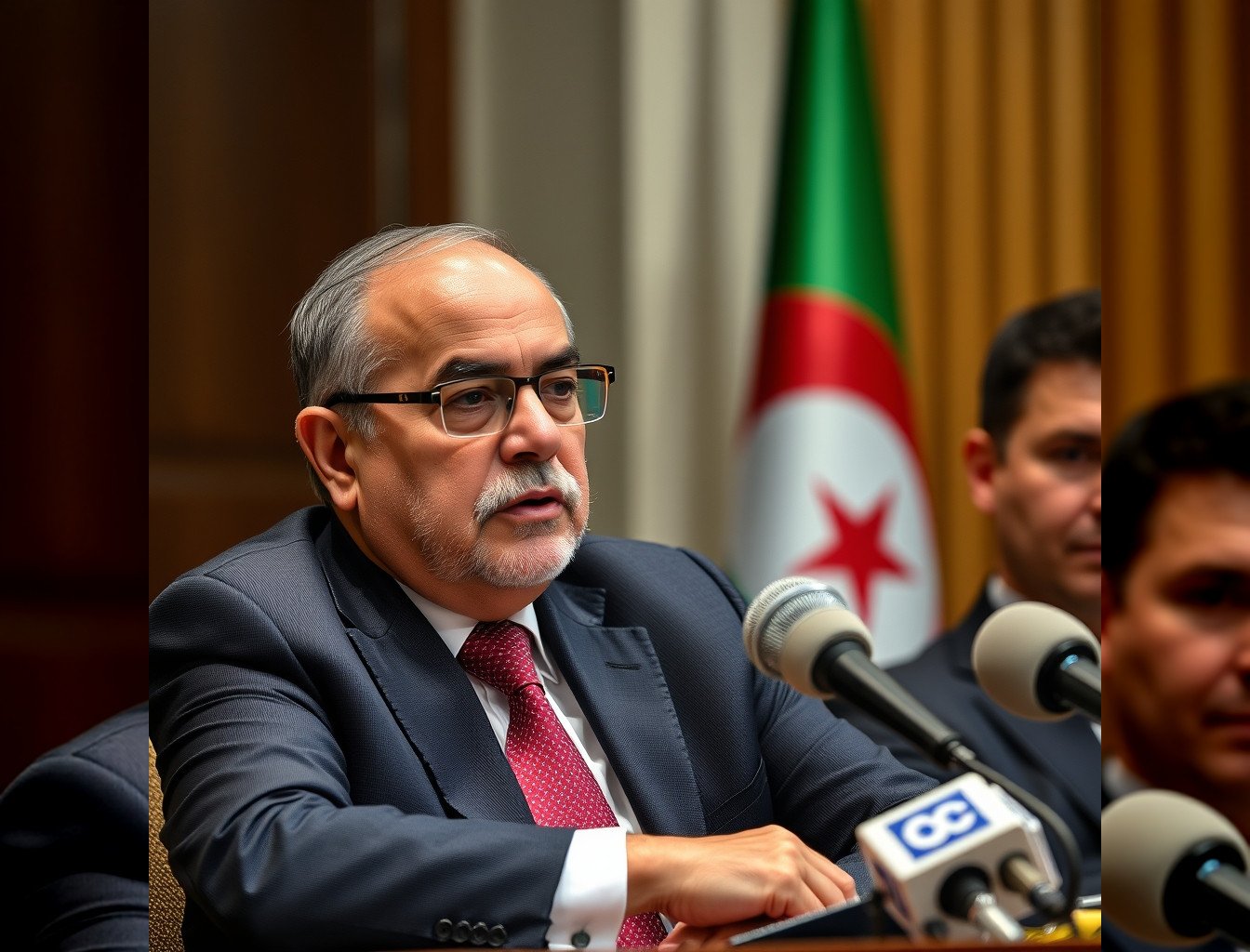
Algeria’s Foreign Minister Ahmed Attaf has delivered a blunt message in Cairo: the country’s crises must be solved by Arab nations alone, without foreign interference. His remarks, made during a visit to Egypt, carry weight for entrepreneurs, investors, and the Algerian diaspora—especially as Algeria navigates a delicate balance between regional stability and economic ambition.
A foreign policy stance with economic stakes
Attaf’s insistence on “national and inclusive” solutions reflects Algeria’s long-standing rejection of external meddling in regional conflicts. For business leaders, this stance is not just political rhetoric—it directly impacts trade, investment, and diplomatic ties.
Algeria’s economy remains heavily reliant on hydrocarbons, which accounted for over 90% of export revenues in 2025. Any instability in neighboring countries could disrupt supply chains or deter foreign partners. Attaf’s position signals Algeria’s determination to shield its economic interests from geopolitical turbulence.
Diaspora ties strengthen under diplomatic shield
The Algerian diaspora, numbering over 5 million worldwide, plays a crucial role in remittances and cross-border trade. Attaf’s emphasis on protecting national sovereignty aligns with Algeria’s efforts to safeguard these economic lifelines.
Recent data shows diaspora remittances reached $5.2 billion in 2025, a key source of foreign exchange. By reinforcing its anti-interference stance, Algeria ensures that diaspora networks operate without foreign pressure—benefiting small businesses and entrepreneurs reliant on these flows.
Investors watch for stability signals
Foreign investors in Algeria’s non-hydrocarbon sectors—renewable energy, agriculture, and tech—will scrutinize how Attaf’s remarks translate into policy. The government has pledged $10 billion in green energy investments by 2030, but political risks could deter backers.
Attaf’s Cairo speech underscores Algeria’s commitment to stability, a critical factor for foreign direct investment (FDI). In 2025, FDI inflows hit $3.8 billion, with Europe and the Gulf as top contributors. Any perception of instability could reverse this trend.
Regional trade faces a test
Algeria’s trade with Egypt, its largest Arab partner, exceeds $3 billion annually. Attaf’s remarks suggest a push for bilateral cooperation without external influence—a positive sign for exporters in manufacturing and food processing.
Yet, entrepreneurs must weigh Algeria’s diplomatic posture against economic pragmatism. While Attaf’s stance protects sovereignty, it may also limit flexibility in resolving trade disputes or securing preferential deals.
Key takeaway for entrepreneurs
Attaf’s Cairo message reinforces Algeria’s sovereignty as a cornerstone of economic policy. Entrepreneurs should monitor how this stance affects trade agreements and investor confidence. For diaspora-linked businesses, stability in remittances and cross-border transactions remains a priority. Stability in the region will determine whether Algeria’s economic diversification plans gain momentum.
💡 Starting a business in Algeria? GlobalStart guides you step by step: procedures, real costs, company forms (SARL, EURL, SPA) and CNRC registration.