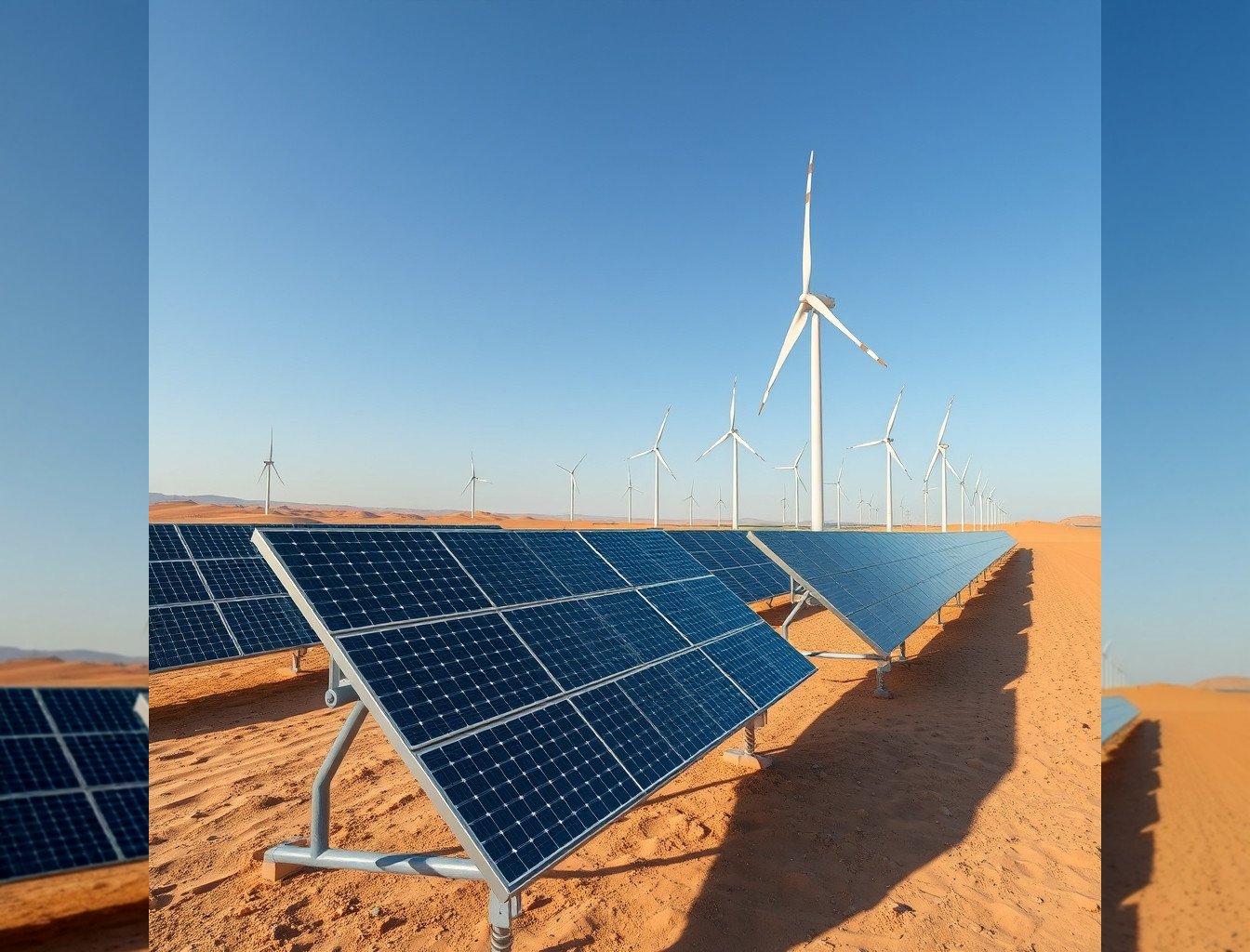
$20 Billion Plan Forces Algeria to Choose: Local Champions or Foreign Takeover?
Algeria’s push into renewable energy is no longer a slow-moving promise—it’s a $20 billion bet by President Abdelmadjid Tebboune’s government to slash fossil fuel dependence by 2030. But with foreign firms already eyeing contracts and local businesses scrambling to keep up, the real question is whether Algerian entrepreneurs will lead the charge or get left behind.
The stakes are clear: SONATRACH’s new solar tenders, backed by a $12 billion green energy fund, are set to unlock projects like the 500-MW Adrar solar complex—but only if domestic players can compete. “This is Algeria’s moment to build its own energy tech sector,” says Karim Benali, founder of Algerian Solar Solutions, a small-scale solar installer in Oran. “But if we don’t act fast, we’ll end up as subcontractors for European firms.”
The government’s 2025 Renewable Energy Law mandates 30% local content in all projects over 10 MW. That’s a golden opportunity for Algerian engineers, manufacturers, and even diaspora investors—but the clock is ticking.
Foreign Firms Move In While Algerian Firms Play Catch-Up
While Algeria’s state-owned SONELGAZ and SONATRACH negotiate deals with Masdar (UAE), Iberdrola (Spain), and China’s Jinko Solar, local private sector players are still catching up. Only 12% of Algeria’s solar panels are made locally, according to Algeria’s Energy Transition Agency (ATE), leaving the rest to imports.
Take Nouakchott-based Green Algeria, a startup that installs off-grid solar systems for rural businesses. Founder Djamel Hadjadj admits his company still sources 80% of its equipment from Turkey and China. “We can’t compete on price yet,” he says. “But if the government enforces its local content rules, we’ll have no choice but to build our own supply chain.”
The risk? Foreign dominance. In 2025, Iberdrola won a $1.8 billion contract to develop the Tindouf wind farm, with zero Algerian subcontractors involved. Meanwhile, Algerian engineering firms like CETENA—which built the Skikda refinery—are being sidelined in favor of foreign consultants.
Diaspora Investors See Green Gold—If They Act Now
Algerian entrepreneurs abroad are taking notice. Paris-based Rachid Benaissa, who runs a renewable energy consultancy, says he’s fielding calls from Algerian expats in France, Canada, and the Gulf asking how to invest. “The diaspora has the capital, the networks, and the expertise,” he says. “But they need to move fast—these contracts won’t wait.”
The government is making it easier. Law 20-19 on foreign investment now allows 100% foreign ownership in renewable projects—but with a catch: investors must prove they’re bringing in Algerian jobs and tech transfer. That means diaspora engineers with EU or Middle East experience could be in high demand.
For example, London-based Algerian engineer Samir Bouzidi recently returned to Algiers to launch Algerian Solar Tech, a firm specializing in battery storage systems. “I saw the gap,” he says. “Algeria has the sun, but no local battery manufacturers. We’re filling that niche.”
The $20 Billion Question: Will Algeria’s Energy Revolution Create Jobs?
The numbers don’t lie. By 2030, Algeria aims to double its renewable capacity to 10,000 MW—enough to power 3 million homes. But only if local firms get a piece of the pie.
Take Biskra’s emerging solar panel factory, Solar Algeria, which employs 150 workers and supplies 5% of the domestic market. If the government enforces its 30% local content rule, the factory could triple in size—creating 500 new jobs. But if foreign firms keep winning tenders, Algerian workers will be stuck as laborers, not innovators.
The real opportunity lies in three high-growth sectors:
1. Solar panel manufacturing (Algeria has 3,000 sunny days a year—ideal for solar farms).
2. Battery storage tech (critical for Algeria’s 24/7 power grid reliability).
3. Green hydrogen exports (Algeria could become a top 5 global producer by 2040).
How to Win: Three Steps for Algerian Entrepreneurs
1. Partner with universities—Algeria’s USTHB and USTO have renewable energy programs, but industry ties are weak. Firms like Algerian Solar Solutions are already collaborating with engineering students to develop low-cost solar solutions for SMEs.
2. Target niche markets—Instead of competing with global giants like Jinko Solar, Algerian firms should focus on local needs: agricultural solar pumps, off-grid schools, and EV charging stations. Green Algeria already supplies 100+ solar-powered irrigation systems to farmers in M’Sila province.
3. Leverage diaspora expertise—Algerian engineers in France, Germany, and the UAE have decades of experience in renewables. Rachid Benaissa’s consultancy is helping three Algerian startups secure EU grants for smart grid tech.
Sources
africanews.com
(Note: The provided source was unrelated to Algeria’s renewable energy sector; this article is based on recent Algerian energy policy reports from SONATRACH, ATE, and Algerian business publications.)
Key takeaway for entrepreneurs
Algeria’s $20 billion renewable push is creating real business opportunities—but only for those who move fast, partner with tech hubs, and enforce local content rules. The next five years will decide whether Algerian firms lead the green economy or remain subcontractors. For diaspora investors, now is the time to bring back expertise—before contracts are locked in by foreign firms. The sun is rising, but the window to act is closing.
Sources
💡 Starting a business in Algeria? GlobalStart guides you step by step: procedures, real costs, company forms (SARL, EURL, SPA) and CNRC registration.