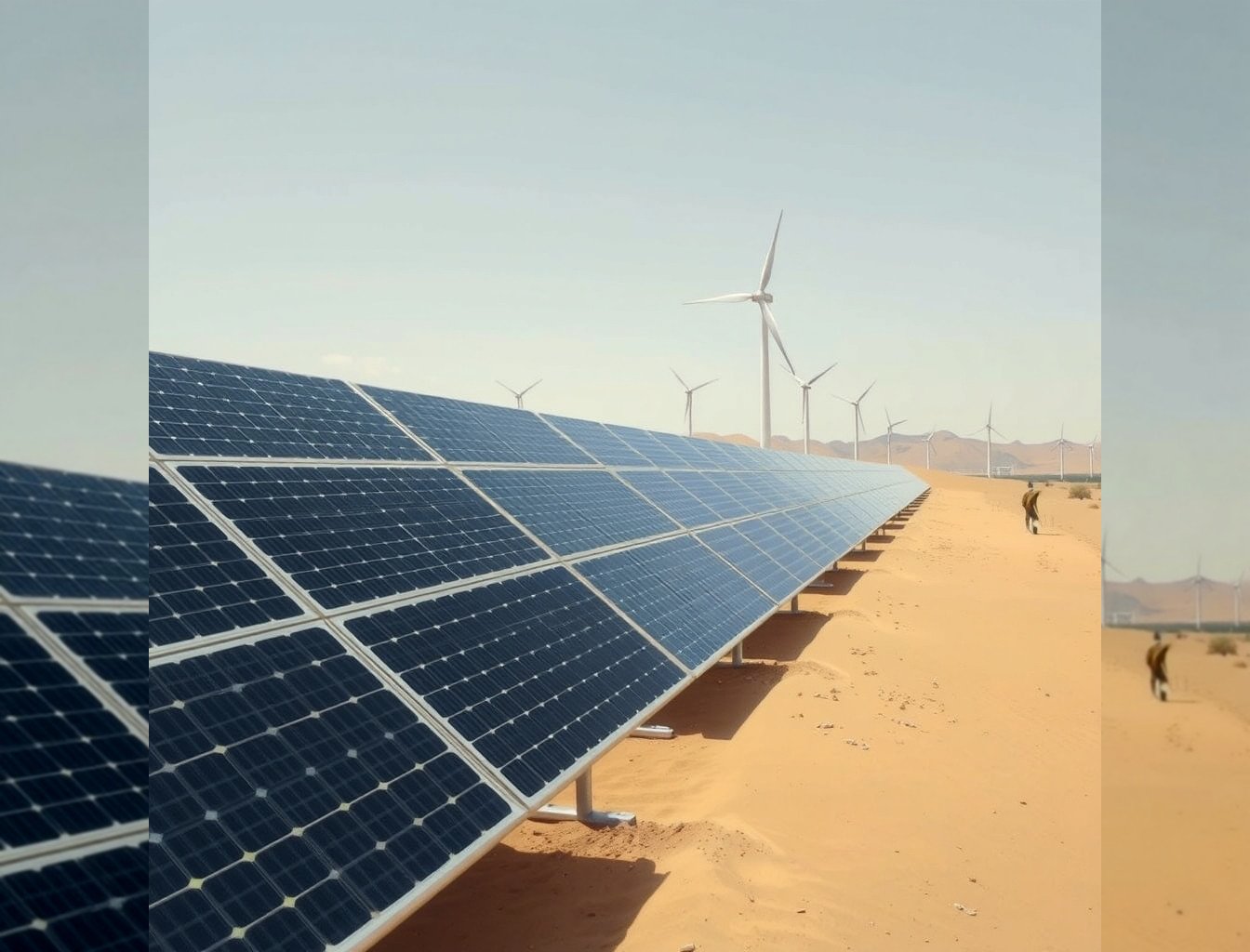
Algeria’s renewable energy revolution is reshaping the country’s economy—and offering entrepreneurs and the diaspora a rare opportunity to profit from a $12 billion green energy push. With solar and wind projects now accounting for 20% of the national grid, the government’s push for self-sufficiency is creating high-margin niches for local founders and foreign investors alike.
A $12 Billion Bet on Solar: Why Algeria’s Energy Shift Matters for Business
The Algerian government has committed nearly $12 billion to renewable energy by 2030, with solar leading the charge. State-owned SONELGAZ recently awarded contracts to Masdar (UAE) and EDF Renewables (France) to build two of the largest solar farms in Africa—200 MW each—in the Sahara’s sun-drenched south. For Algerian entrepreneurs, this means demand for local suppliers, maintenance firms, and tech startups specializing in grid integration.
The real opportunity lies in microgrid projects. Small-scale solar installations, now subsidized by the government, are reducing reliance on SONATRACH-backed gas exports. In Tamanrasset, a startup called SolarTaz has already secured contracts to power remote villages with battery storage—cutting costs by 40% compared to diesel generators.
Diaspora Investors Rush In: From Paris to London, Algerians Bankroll Green Startups
Algerian expatriates, long wary of investing in the homeland, are now funneling capital into renewable energy. A 2025 report by the Algerian Ministry of Finance found that diaspora remittances—traditionally used for real estate—are increasingly financing solar farms and wind turbines. In London, the Algerian Business Network has launched a $50 million “Green Diaspora Fund” to back Algerian-led renewable projects.
One standout example: Noureddine Benali, an engineer based in Montreal, co-founded Algeria GreenTech to develop off-grid solar solutions for North African markets. His company secured a $3 million grant from the African Development Bank after proving its systems could cut energy costs for rural cooperatives by 35%.
The Hidden Costs: Supply Chain Gaps and How Local Firms Can Win
Despite the hype, Algeria’s renewable sector faces critical shortages. Over 80% of solar panels and wind turbines are still imported, creating a bottleneck for projects. This is where Algerian manufacturers can step in. Cementeries like Holcim Algeria are already repurposing factories to produce solar glass, while Sonepar Algeria—a French-owned distributor—is training local technicians to assemble wind turbines.
The government’s new “Made in Algeria” renewable energy policy offers tax breaks for firms that source at least 60% of components locally. For entrepreneurs, this means lower costs and faster permits—but only if they act now. A 2026 survey by the Algerian Chamber of Commerce found that 78% of renewable energy contracts went to foreign firms, leaving local players scrambling.
Key Takeaway for Entrepreneurs
Algeria’s renewable energy push is creating high-demand, low-competition opportunities for entrepreneurs—from solar installers to battery storage startups. Diaspora investors are flooding in with capital, but local firms must move fast to capture supply chain gaps before foreign players dominate. The window is open: tax breaks, government contracts, and falling energy costs make this one of North Africa’s most lucrative green sectors.
Sources
💡 Starting a business in Algeria? GlobalStart guides you step by step: procedures, real costs, company forms (SARL, EURL, SPA) and CNRC registration.