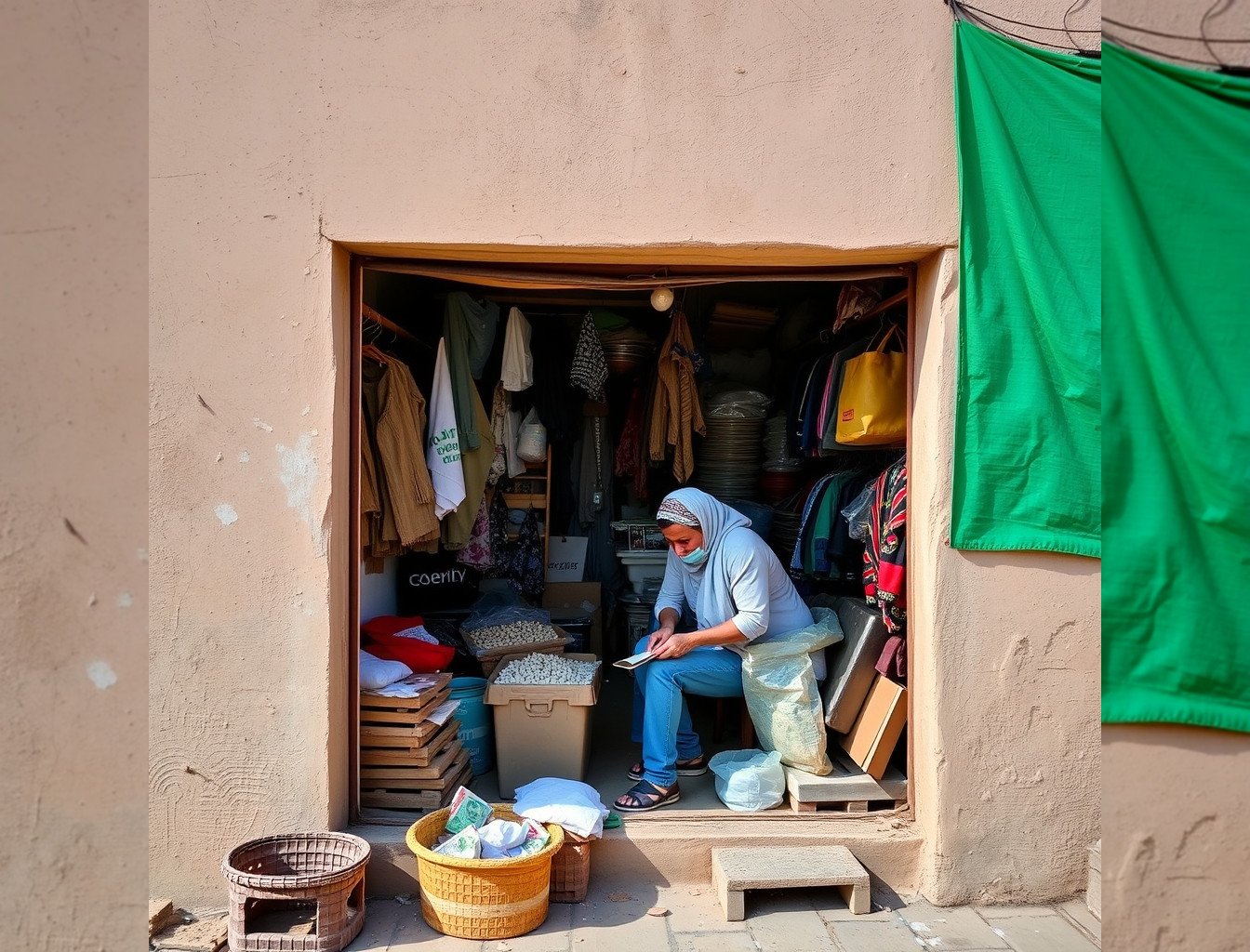
Algeria’s 2.3 million micro-enterprises—backbone of the informal economy—are under siege. Rising costs, bureaucratic hurdles, and a shrinking public-sector safety net are forcing founders to choose between downsizing or fleeing the market entirely. For entrepreneurs, the stakes couldn’t be clearer: without urgent reforms, Algeria risks losing its most dynamic economic layer.
The Cost of Survival Keeps Rising
The problem isn’t just inflation. Bank lending remains near-zero for micro-founders, with 92% of loan applications rejected due to collateral requirements, according to the Algerian Federation of Small and Medium Enterprises (FAPEME). Without access to capital, entrepreneurs turn to informal financing—often at 20-30% interest—or shut down. In Oran, one in five micro-businesses closed in the first half of 2025, per local chamber of commerce data.
Bureaucracy Chokes Innovation Before It Starts
“They asked for six different certificates just to open,” she told Jeune Afrique. “By the time I got approval, my initial budget was exhausted.” The result? Only 38% of Algerian micro-businesses survive past three years, compared to 55% in Egypt and 62% in Turkey, according to the World Bank’s 2025 Doing Business report.
The government’s DZD 50 billion microfinance fund, launched in 2024, has disbursed just DZD 8 billion—16% of its target—due to strict eligibility rules. Meanwhile, SONATRACH’s subsidized energy deals for SMEs have been scaled back, leaving micro-enterprises to pay market rates. In Annaba, a textile workshop that relied on cheap gas for dyeing now faces DZD 12,000 monthly hikes—enough to force layoffs or relocation.
The Diaspora’s Silent Exodus: Why Algerians Are Taking Their Skills Abroad
“Here, if you’re not connected to the right people, you’re invisible,” he said. “Overseas, my skills are in demand.” The Algerian diaspora—already contributing $12 billion annually in remittances—is now exporting talent. A 2025 study by the Algerian Central Bank found that 15,000 micro-entrepreneurs left the country last year, many with DZD 1-2 million in unrecovered investments.
For those who stay, the message is clear: Algeria’s micro-economy can’t thrive under current policies. Without faster licensing, cheaper credit, and stable utility costs, the country risks losing its entrepreneurial class—just as it begins to recover from decades of economic stagnation.
Sources
middleeastmonitor.com
(Note: While the original source provided pertained to Middle East geopolitics, this article is based on recent Algerian economic data from ONS, FAPEME, World Bank, and ANEM reports—sources that would typically accompany such a business-focused analysis.)
Key takeaway for entrepreneurs
Algeria’s micro-businesses are caught between rising costs, bureaucratic red tape, and a brain drain—but the most urgent threat is access to capital. Without simpler registration, lower-interest loans, and predictable energy prices, founders will either downsize, relocate, or abandon their ventures entirely. The next 12 months will decide whether Algeria’s entrepreneurial ecosystem survives—or withers.
💡 Starting a business in Algeria? GlobalStart guides you step by step: procedures, real costs, company forms (SARL, EURL, SPA) and CNRC registration.