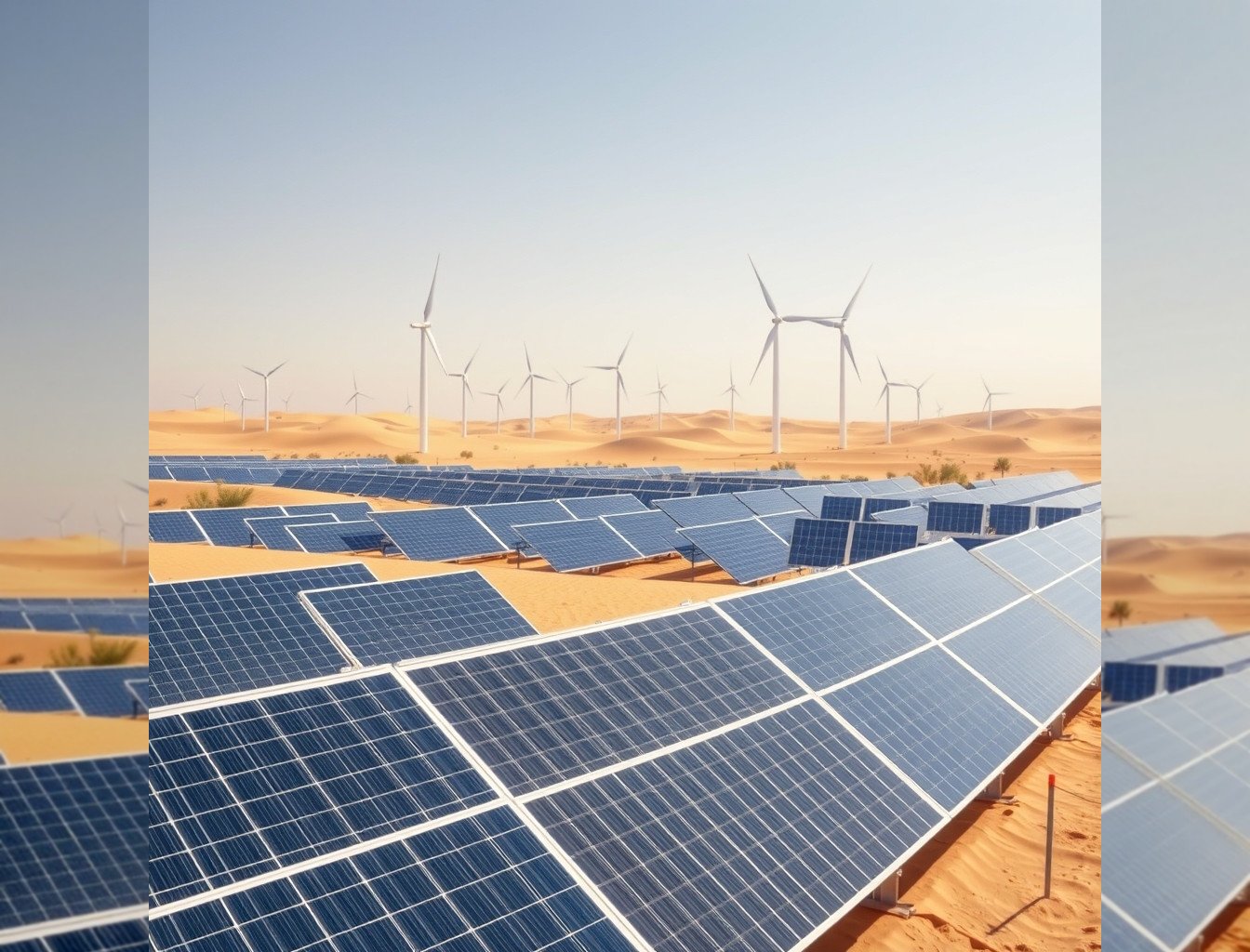
From Gaza’s ingenuity to Algeria’s silent crisis: why homemade energy is the new survival tool
In Gaza, a 60-year-old Palestinian engineer named Kamal Al-Dabary built a wind turbine from scrap metal and scooter motors—because solar panels cost $5,000 and the grid is dead. His invention, spinning in the sea breeze, powers lights and phone chargers for displaced families. The scene is a stark reminder of what’s brewing in Algeria’s own energy shadows: a growing army of entrepreneurs and diaspora returnees who can no longer afford to wait for state-led solutions.
Algeria’s renewable energy transition has stalled. Despite holding Africa’s 10th-largest solar potential and vast wind resources, the country remains one of the continent’s slowest adopters. State-owned Sonelgaz still relies on aging gas-fired plants, and grid blackouts hit businesses hard—especially in the south, where industrial zones like Ouargla and Béchar face chronic shortages. In 2025, Algeria imported 40% of its electricity needs, spending $3 billion on fossil fuels to keep factories running. For entrepreneurs, the math is brutal: a single unplanned outage can cost a textile SME in Annaba $10,000 in lost production.
Yet while Algiers drags its feet, a parallel economy is emerging. In the past year, Algerian engineers in the diaspora—many based in France, Canada, and the Gulf—have launched micro-grid startups, selling modular solar kits for homes and small businesses. One such venture, Algeria Solar Cooperative, now supplies 500 off-grid systems in rural areas, cutting electricity bills by 70%. The catch? Most of these solutions are still informal, operating outside Sonelgaz’s regulatory framework.
The black market for energy independence: how Algerians are hacking the system
The state’s slow pace has forced Algerian entrepreneurs to think like Al-Dabary: repurpose, recycle, and power up. Take the case of Mohamed B., a former telecom engineer in Constantine, who quit his job to assemble solar-powered water pumps for farmers. His system, priced at $2,500, sells out in weeks—far cheaper than Sonelgaz’s unreliable grid connections. “Farmers tell me they’d rather pay me $50 a month than deal with blackouts that last days,” he says.
But the real disruption is coming from the diaspora. Algerian expats with engineering backgrounds are returning with venture capital, funding startups that bypass traditional energy models. Renewable energy startups in Algeria received $8 million in funding in 2025, up from $2 million in 2023, according to Algerian Business News. These firms are targeting three key sectors:
– Agriculture: Solar-powered drip irrigation for date palms in Béchar (saving 30% on diesel costs).
– Tourism: Mini-grids for guesthouses in Timgad and Djanet, where hoteliers pay $1,200/month for generators.
– Retail: Solar-powered cold storage for fish markets in Algiers, where spoilage costs fishermen $1 million annually.
The risk? Many of these businesses operate in a legal gray zone. Sonelgaz’s monopoly laws make it illegal to sell electricity without a license, pushing innovators into underground networks. Yet the demand is undeniable: a 2025 survey by the Algerian Chamber of Commerce found that 68% of SMEs would switch to renewables if the cost were halved.
The diaspora’s silent war: why Algerian expats are betting on energy self-sufficiency
Algerian entrepreneurs abroad are no longer just sending remittances—they’re sending solutions. Take Dr. Samia K., a renewable energy consultant in Dubai, who recently launched Algeria Green Hub, a platform connecting Algerian engineers with funding for off-grid projects. “The diaspora has the skills, the capital, and the frustration,” she says. “We’re not waiting for Algiers to act.”
Her network is funding community solar banks in Kabylie, where villages pool money to buy shared solar arrays. In Tizi Ouzou, one such cooperative now powers 200 homes for $150 per household—half the cost of Sonelgaz’s tariffs. The model is spreading: in Batna, a similar initiative is supplying electricity to 50 small workshops, including a carpentry factory that avoided a $8,000 generator bill.
The diaspora isn’t just funding projects—it’s training locals. Algerian engineers in France have partnered with Sonatrach veterans to set up vocational schools teaching solar installation in Sidi Bel Abbès and Laghouat. The goal? To create a local workforce that can maintain these systems without relying on foreign labor.
Yet the biggest hurdle remains bureaucracy. Algeria’s energy laws still favor state-controlled projects, making it nearly impossible for private players to connect to the grid. “We’re building the future, but we’re not allowed to plug in,” laments Karim T., CEO of a renewable energy startup in Oran. His company’s solar-powered desalination plant in Mostaganem could save the region $1 million in fuel costs—but Sonelgaz refuses to integrate it.
The bottom line: Algeria’s energy future isn’t in Algiers—it’s in the hands of those who refuse to wait
Algeria’s renewable energy sector is at a crossroads. The state’s delays have forced a generation of entrepreneurs and diaspora leaders to take matters into their own hands. From Gaza’s makeshift wind turbines to Algeria’s underground solar networks, the message is clear: self-sufficiency is no longer a choice—it’s a necessity.
For Algerian business founders, the lesson is simple: the energy transition will happen with or without state approval. The question is no longer if renewables will take off, but how quickly entrepreneurs can scale before the black market becomes the only option.
Key takeaway for entrepreneurs
Algeria’s energy crisis is creating a $1 billion annual opportunity for off-grid solutions. Entrepreneurs who master modular solar, battery storage, and micro-grid tech can undercut Sonelgaz’s costs—if they navigate the legal risks. The diaspora’s capital and skills are the wild card: those who bridge the gap between innovation and local demand will dominate the next decade. The state may still control the grid, but the future of power belongs to those who refuse to plug into it.
Sources
💡 Starting a business in Algeria? GlobalStart guides you step by step: procedures, real costs, company forms (SARL, EURL, SPA) and CNRC registration.