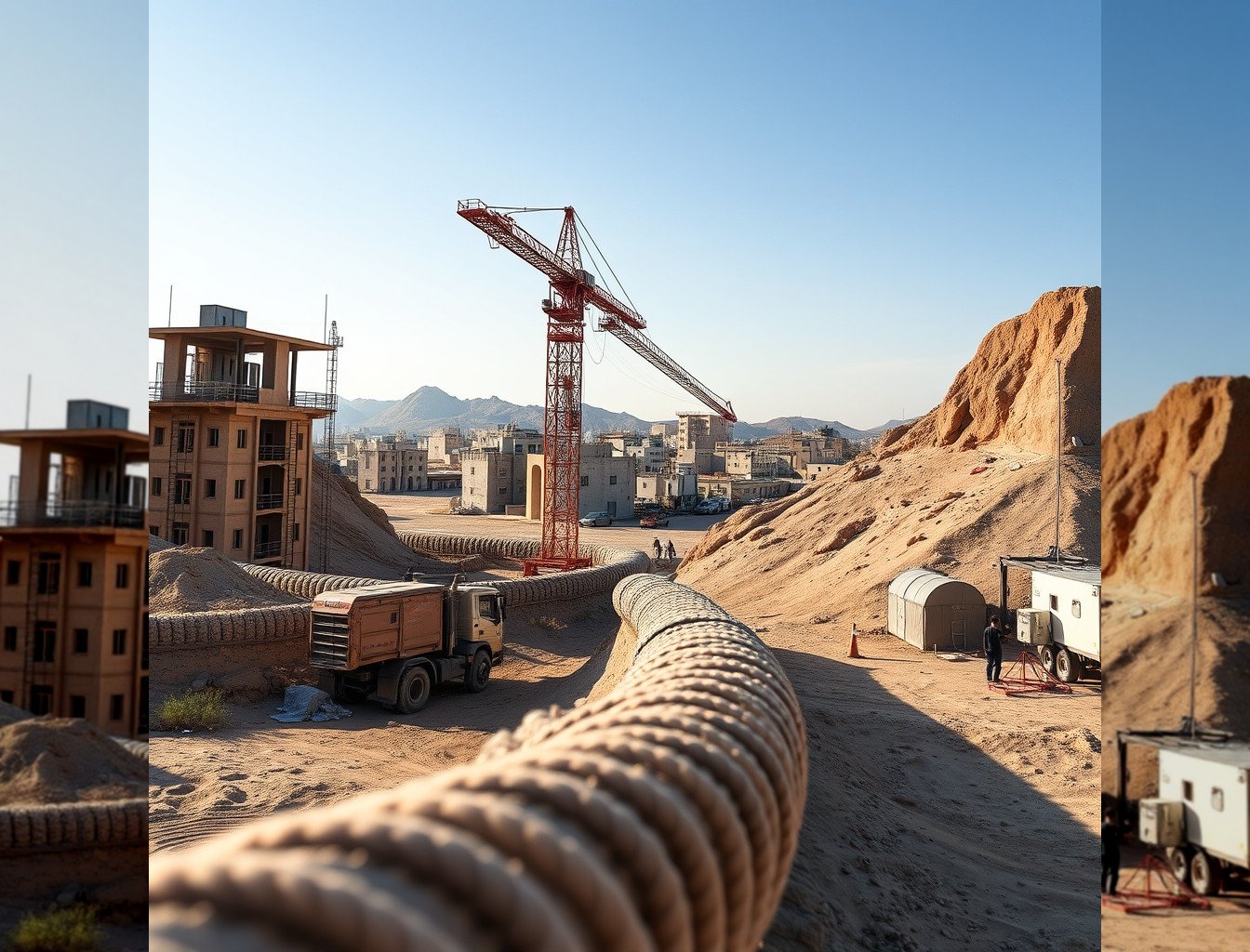
1. MINING & ENERGY: TWO PROJECTS, TWO DIFFERENT RISKS
Meanwhile, PTTEP (Thailand) secured a gas drilling licence in Algeria’s Saharan basins, part of a $1.2 billion joint venture with Sonatrach. The licence covers Block 402, with first gas expected by 2026. For gas-to-power entrepreneurs, this is a direct signal: Algeria’s LNG export push (targeting 10 Mtpa by 2027) may absorb excess domestic gas, reducing flaring risks for mid-sized producers.
Red thread: Both projects hinge on foreign currency access—zinc and gas revenues must convert to dinars at a protected exchange rate (1 USD = 135 DZD), limiting repatriation flexibility for foreign investors.
2. DISAPORA CRUNCH: FRANCE’S MIGRATION CLAMPDOWN HITS ALGERIAN ENTREPRENEURS
A 2023 French interior ministry report shows 45% of Algerian deportations involved self-employed individuals, often in informal trade or gig economy roles. Formal businesses—like Algerian-French IT consultancies—are less affected, but visa delays for skilled hires (e.g., engineers, accountants) have risen by 30% since January.
Red thread: France’s crackdown mirrors Algeria’s 2022 “economic patriotism” decree, which prioritizes local hires in key sectors. Diaspora entrepreneurs must now formalize operations faster to avoid disruptions.
3. INVESTMENT REFORM: ANGOLA’S OIL PLAYBOOK VS. ALGERIA’S BUREAUCRACY
The IMF mission reviewing Algeria’s reforms flagged three bottlenecks:
1. Land acquisition: Average delay = 9 months (vs. 3 months in Angola).
2. Foreign currency access: Investors still wait 60 days for dinar conversion approvals.
3. Tax incentives: 30% of approved projects fail to secure promised exemptions due to regional bureaucracy.
For entrepreneurs, the Angolan model suggests:
– Joint ventures with state firms (like Sonatrach) still dominate, but private equity (e.g., in renewables) is growing.
– Dubai and Morocco now host 35% of Algerian diaspora investments, partly due to faster setup times.
Red thread: Algeria’s $20 billion 2024-2028 investment plan relies on attracting 10,000 new firms, but Angola’s success hinged on legal certainty—something Algeria’s reforms have not yet delivered.
4. MILITARY VS. CIVIL SPENDING: WHY ALGERIA’S WILDFIRES EXPOSE A BUDGET PARADOX
For entrepreneurs in agribusiness or eco-tourism, this means:
– Insurance premiums for rural properties have doubled since 2022.
– Government tenders for fire-prevention tech (drones, early-warning systems) are rising, but local firms lack the capital to bid.
Red thread: Algeria’s $1.5 billion annual military procurement (including Su-34 jets from Russia) contrasts with underfunded infrastructure. Entrepreneurs in defense-adjacent sectors (e.g., IT for military logistics) face less competition than in civil sectors.
5. GEOPOLITICS SPIN-OFFS: NIGER COUP AND TUNISIA DENIALS RESHAPE ALGERIA’S SECURITY BUSINESS
Meanwhile, Algeria denied a “secret military agreement” with Tunisia, but defense trade between the two countries tripled in 2023 (reaching $80 million). For security-sector entrepreneurs:
– Cybersecurity firms (e.g., Algerian IT consultancies) are being recruited for state contracts amid rising hacking risks.
– French tech firms (e.g., Thales, Airbus) remain blocked from Algerian defense tenders, creating opportunities for local players.
Red thread: Algeria’s 2024 defense budget includes $500 million for “strategic partnerships”—likely targeting Saudi Arabia and UAE for dual-use tech (e.g., satellite communications).
6. EDUCATION & LANGUAGE: ENGLISH IN PRIMARY SCHOOLS—BUT FOR WHOM?
For entrepreneurs:
– Tech startups (e.g., edtech, translation services) will see demand rise, but local talent shortages persist.
– Multilingual firms (Arabic-French-English) will have first-mover advantage in ECOWAS trade deals.
Red thread: The Algerian dinar’s devaluation (now 1 USD = 135 DZD) makes importing English-language textbooks costlier, but digital solutions (e.g., Algerian e-learning platforms) are growing.
7. ECONOMIC UPDATE: DINAR’S RECORD LOW AND THE DOLLAR SQUEEZE
For entrepreneurs:
– Dollar-denominated contracts (e.g., oil services, IT exports) are more valuable—but repatriation delays remain.
– Local currency financing (e.g., bank loans in dinars) is cheaper (rates at 5.5%) but inflation (8.2%) erodes returns.
Red thread: Algeria’s $100 billion foreign reserves are not infinite—IMF projections warn of $15 billion depletion by 2026 if reforms stall.
KEY TAKEAWAY FOR ENTREPRENEURS
Actionable insight: The Angola model proves legal certainty > capital. Algeria’s investment reforms are a start, but entrepreneurs must push for faster approvals—or operate in parallel markets (e.g., Dubai hubs, Morocco bases). The dinar’s devaluation is a double-edged sword: cheaper imports for exporters, but higher costs for importers—pick your side early.
Sources
- AP News
- World Bank Group
- The Arab Weekly
- AZoMining
- Bangkok Post
- Morocco World News
💡 Starting a business in Algeria? GlobalStart guides you step by step: procedures, real costs, company forms (SARL, EURL, SPA) and CNRC registration.