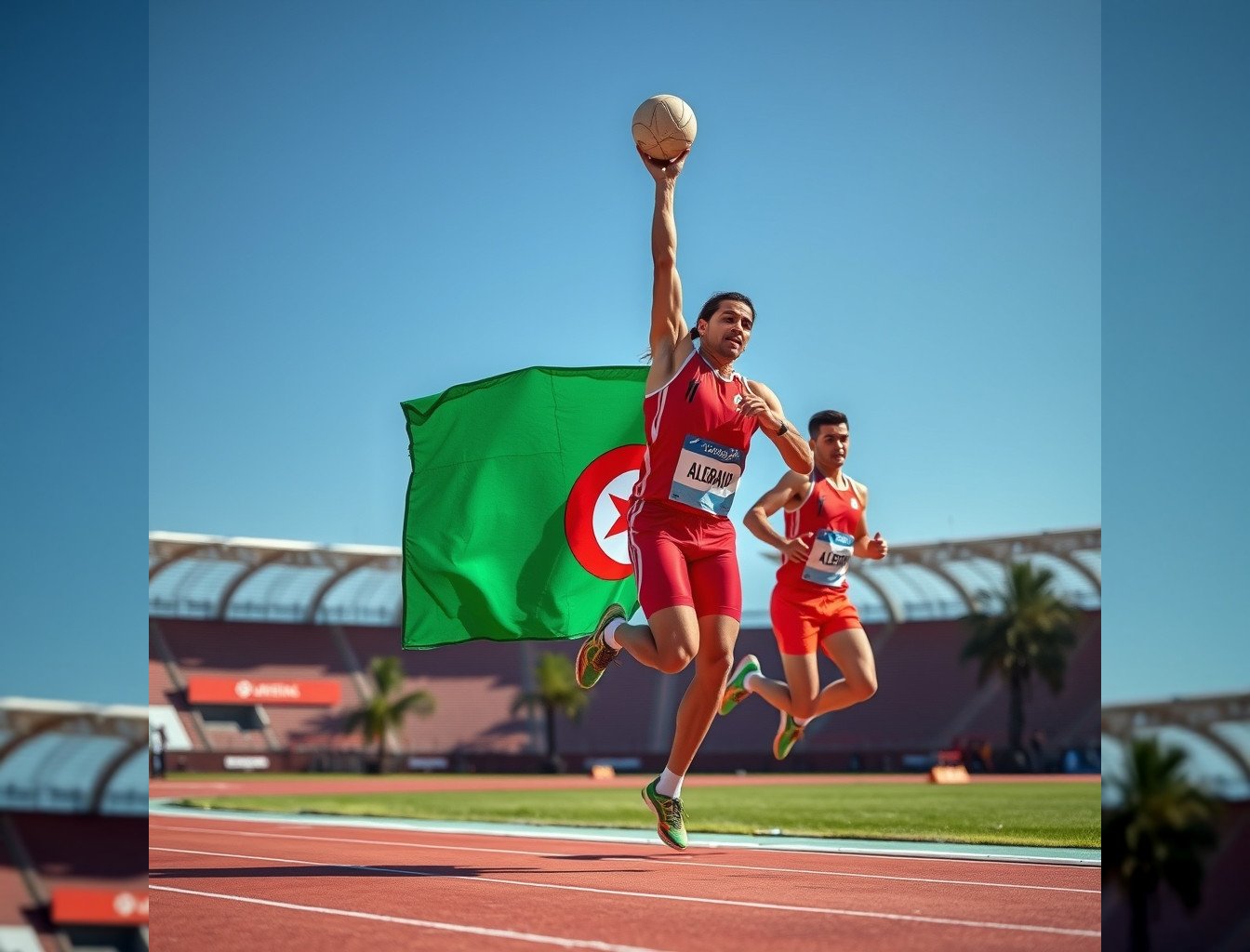
Algeria’s success on the international stage—from Olympic podiums to World Cup qualifiers—is reshaping the business of sports across the Maghreb and Europe. Over the past two years, Algerian athletes have claimed more medals at the Olympics, expanded their presence in European leagues, and attracted new investment into local sports infrastructure. For entrepreneurs, investors, and the Algerian diaspora, this momentum signals an untapped market: the business of Algerian talent.
From medals to market value
Algeria’s Olympic medal tally reached 20 in August 2024, according to the Alliance of Mediterranean News Agencies (AMAN). This milestone comes after a focused push by the Algerian Ministry of Youth and Sports to professionalize Olympic disciplines—not just boxing and athletics, but swimming, judo, and weightlifting as well. Behind the numbers is a deliberate strategy: increase government funding for training centers in Oran, Algiers, and Constantine, and partner with private clinics for athlete health and recovery.
The results are visible in European soccer too. In June 2026, FOX Sports reported that Algeria fielded a record number of dual nationals—players born or raised in France, Belgium, and Spain—at the World Cup qualifiers. These athletes, like Riyad Mahrez and Saïd Benrahma, have become assets not just on the pitch, but off it. Their high profiles are driving sponsorships back to Algeria: in 2025, mobile operator Djezzy signed a five-year deal with the Algerian Football Federation to promote the national team across North Africa and Europe.
For entrepreneurs in Algeria, this is more than pride—it’s proof. A local sports marketing startup in Algiers, for instance, raised $250,000 in seed funding in 2025 after securing rights to stream youth football tournaments. According to the company’s founder, Nassim Belkacem, “Every time an Algerian player scores in Ligue 1, our app downloads jump by 15% in Oran and Annaba. That’s a clear demand for content and services tied to Algerian identity.”
Dual nationality dilemma becomes business opportunity
The tension between representing Algeria or a European nation—highlighted by Worldcrunch in April 2025—is no longer just a diplomatic issue. It’s a strategic lever. With dual-national players like Youcef Atal (convicted in France in January 2024 over a social media post related to the Gaza war) navigating identity and loyalty, clubs and federations are rethinking talent pipelines.
Atal’s case, while controversial, has accelerated negotiations between the Algerian Football Federation and Ligue 1 clubs in France to formalize “cultural ambassador” programs. These programs allow dual nationals to train with Algerian youth teams during international breaks, creating a parallel talent ecosystem. For Algerian entrepreneurs, this means new opportunities in sports academies, visa facilitation services, and cross-border athlete management.
In 2025, a startup called Maghreb Talent Bridge launched an online platform connecting Algerian coaches with European clubs looking for North African players. The platform, which takes a 5% commission on transfers, processed 42 athlete signings in its first six months—mostly from France to smaller Algerian clubs in Tlemcen and Béjaïa. Its CEO, Leila Messaoudene, told local media that “the Atal case proved that dual nationals want to stay connected to Algeria. They’re not just players—they’re bridges.”
Infrastructure bets on future stars
The launch of preparations for the African School Games in Annaba in 2025 isn’t just a sporting event—it’s a real estate and construction opportunity. The games will be held at the newly renovated Annaba Olympic Complex, a $120 million project funded by the Algerian government and co-financed by OPEC’s fund for international development. The complex includes a 40,000-seat stadium, indoor arenas, and dormitories for 2,000 athletes.
Private investors are already circling. A consortium led by Algeria’s Citel Group announced a $45 million hospitality project near the stadium, including hotels and conference centers aimed at youth sports tourism. According to Citel’s CEO, “Annaba will become a training hub for African youth athletes. We’re building not just rooms—we’re building a sports ecosystem.”
Similarly, in Oran, the city’s sports medicine clinic—partnering with the University of Sciences and Technology Mohamed Boudiaf—has become a regional referral center. In 2025, it treated 1,200 athletes from Tunisia and Morocco under a cooperation agreement with their respective federations. The clinic’s director, Dr. Amina Taleb, says demand is so high that the facility is exploring a public-private partnership to expand capacity.
Diaspora ties fuel new ventures
The Algerian diaspora, especially in France, Belgium, and Canada, is increasingly investing in sports ventures back home. In 2025, a group of Franco-Algerian investors launched “Algeria Sport Capital,” a fund targeting small and medium-sized sports businesses in Algeria. The fund, backed by $1.8 million from diaspora contributions, focuses on gym franchises, e-sports arenas, and athlete academies in cities like Sétif and Tizi Ouzou.
One of its first investments was in a women’s boxing gym in Algiers, where Imane Khelif—who won gold in Paris 2024 and is targeting Los Angeles 2026—trained as a teenager. The gym’s owner, former boxer Yacine Ziani, said the investment allowed him to upgrade equipment and offer free sessions for underprivileged girls. “This isn’t charity—it’s a business,” Ziani told a local paper. “Khelif proved that Algerian women in sports can be winners. Now we’re building the infrastructure to make it sustainable.”
What this means for the economy
The sports sector in Algeria is still small—estimated at $350 million annually, or less than 0.5% of GDP—but it’s growing at 8% per year, according to a 2025 report by the National Institute of Statistics. The government has matched this growth with policy changes: in 2023, it exempted sports equipment from VAT; in 2024, it allowed foreign ownership of up to 49% in sports academies.
For foreign investors eyeing Algeria, sports offers a non-oil, high-visibility sector with clear ROI. The dual-national pipeline, for instance, reduces scouting costs for European clubs while keeping Algerian talent rooted locally. And with the African School Games in Annaba, investors can tap into Africa’s fastest-growing youth market—where 60% of the population is under 25.
Key takeaway for entrepreneurs
Algeria’s sporting success is creating measurable business opportunities: local media startups, athlete academies, and hospitality projects tied to events like the African School Games. Diaspora investors are funding niche ventures—gyms, e-sports, and talent platforms—while government policies now support foreign participation. The message is clear: investing in Algerian athletes today means owning a piece of Algeria’s next growth story.
Sources
- Inside The Games
- FOX Sports
- The New Arab
- Association of National Olympic Committees (ANOC)
- Middle East Research and Information Project
- Alliance of Mediterranean News Agencies (AMAN)
💡 Starting a business in Algeria? GlobalStart guides you step by step: procedures, real costs, company forms (SARL, EURL, SPA) and CNRC registration.