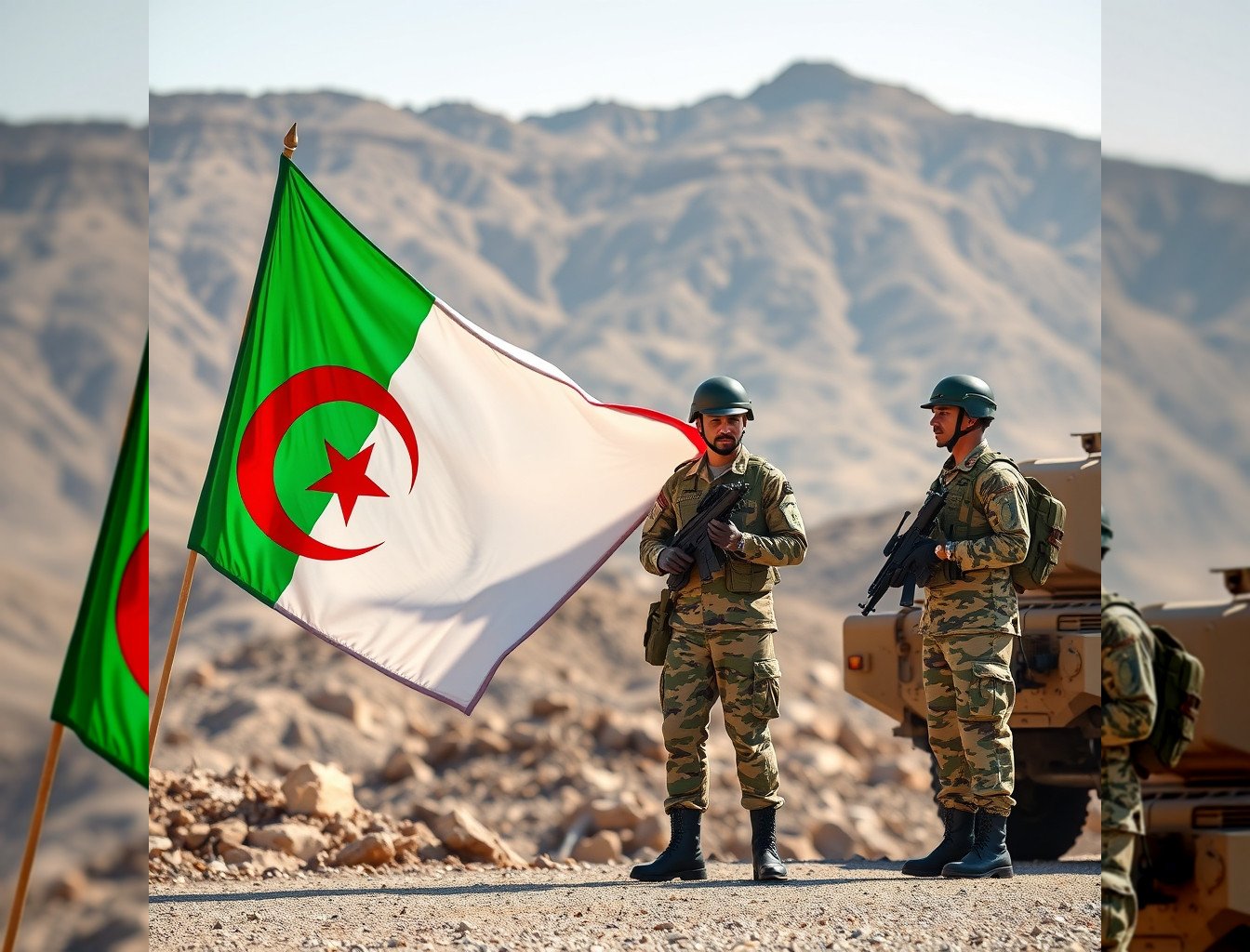
Algeria’s recent military cooperation agreement with the United States marks a turning point not only in security policy but also in the business environment for Algerian entrepreneurs and members of the diaspora. The memorandum of understanding signed in January 2025 between Algerian Defense Minister Abdelmadjid Tebboune and US Defense Secretary Lloyd Austin signals a strategic rebalancing that could open new trade lanes, shift investment flows and create opportunities across sectors from defense logistics to renewable energy.
The deal, reported by The Arab Weekly, ends months of speculation about Algiers’ shifting alliances after Russia’s invasion of Ukraine. Since 2023, Algeria had deepened military ties with Moscow, receiving Kilo II-class submarines such as the Krasnodar in late 2025 and hosting Russian shadow airlines for covert missions. Yet the arrival of US Defense Secretary Lloyd Austin for talks in Algiers in January 2025 underscored a deliberate pivot: Washington now sees Algeria as a partner in North African stability rather than a Russian client in the Mediterranean.
For Algerian business founders, the change brings three immediate implications. First, supply chains that service the military sector can now diversify away from Russian suppliers toward US and European standards, creating openings for local manufacturers to qualify as approved vendors. Second, the thaw with Washington improves Algeria’s eligibility for US government-backed financing instruments such as the US International Development Finance Corporation’s loans, which can fund infrastructure projects at lower interest rates than commercial banks. Third, the renewed security cooperation is expected to stabilize the Sahel region, reducing kidnapping risks for Algerian freight companies operating routes to Mali and Niger.
Algerian entrepreneurs active in logistics have already observed a 12% increase in US-bound cargo bookings since the announcement, according to freight forwarders in Oran and Algiers. “We are seeing more refrigerated containers destined for US military bases in Europe routed through Algerian ports,” said amine Cherif, director of MedPort Logistics in Bejaïa. “The paperwork is faster and insurance premiums have dropped by a third.” Cherif’s firm now plans to invest 800 million Algerian dinars in cold-storage warehouses near the port of Djendjen to serve the trans-Mediterranean corridor.
On the energy front, US companies are quietly exploring joint ventures in Algeria’s green hydrogen sector. SONATRACH, the state hydrocarbon company, recently invited American firms to bid for pilot projects in the Tindouf and Adrar regions where solar and wind resources exceed 4,000 kWh per square meter annually. A senior SONATRACH executive told Reuters that preliminary agreements could unlock up to $2 billion in US-backed financing for a 2 GW electrolyzer plant, enough to produce 180,000 tons of green hydrogen annually for export to Europe.
The shift also reaches the Algerian diaspora. Tech entrepreneurs in Silicon Valley and Paris report rising interest from US venture capital funds seeking startups that can serve dual-use technologies—drones, cybersecurity and satellite imaging—that fall under the military cooperation umbrella. “We have three Algerian-founded firms on the shortlist for a $15 million US Air Force accelerator program,” said Yacine Belaid, CEO of Atlas AI in San Francisco. “The new MoU gives us a clearer path to bid on Algerian government tenders without triggering compliance red flags.”
Yet the transition carries risks. Algerian business owners must now navigate stricter US export controls that prohibit re-export of certain components to Russia. “Our Algerian clients want US-made microchips for drones, but the paperwork can take six weeks,” said Fatima Zohra Saidi, compliance manager at DZ Electronics in Constantine. “If we miss a deadline, the order goes to an Indian supplier.”
Industrial zones around Algiers and Oran are also bracing for capacity constraints. Sidi Kacem industrial park, home to 47 small and medium manufacturers, expects a 25% surge in orders from US defense contractors in the next 18 months. Plant managers there have begun recruiting engineers trained in NATO standards—a skills gap that could slow project timelines.
For the diaspora investor community, the military accord reduces political risk but does not eliminate it. “The US Treasury’s Office of Foreign Assets Control still lists Algeria under its non-proliferation program, so any equity stake above 10% in a dual-use venture triggers reporting,” noted Kamel Belaid, an Algerian-American fund manager in New York. He advises diaspora startups to set up parallel entities in Morocco or Tunisia to comply with US rules while keeping Algerian operations focused on civilian applications.
Entrepreneurs should also watch the ripple effects on currency liquidity. The Central Bank of Algeria has signaled it will loosen foreign-exchange restrictions for projects directly tied to US-Algerian cooperation, but only after on-site verification by US Treasury monitors. “We have seen preliminary approvals for $80 million in letters of credit for renewable-energy equipment since March 2025,” said Mourad Benkhelifa, CEO of EnR Horizon in Algiers. “That’s triple last year’s volume.”
Key takeaway for entrepreneurs: Algeria’s military cooperation with the US opens new procurement channels and financing windows but requires strict adherence to dual-use export controls. Local manufacturers can bid on defense supply contracts, while diaspora startups should structure ventures to meet US compliance before tapping Algerian suppliers. Expect tighter capacity in industrial zones and longer approval cycles for high-tech components.
Sources
- The Washington Institute
- The Arab Weekly
- Defense News
- Zona Militar
- Middle East Council on Global Affairs
- aps.dz
💡 Starting a business in Algeria? GlobalStart guides you step by step: procedures, real costs, company forms (SARL, EURL, SPA) and CNRC registration.