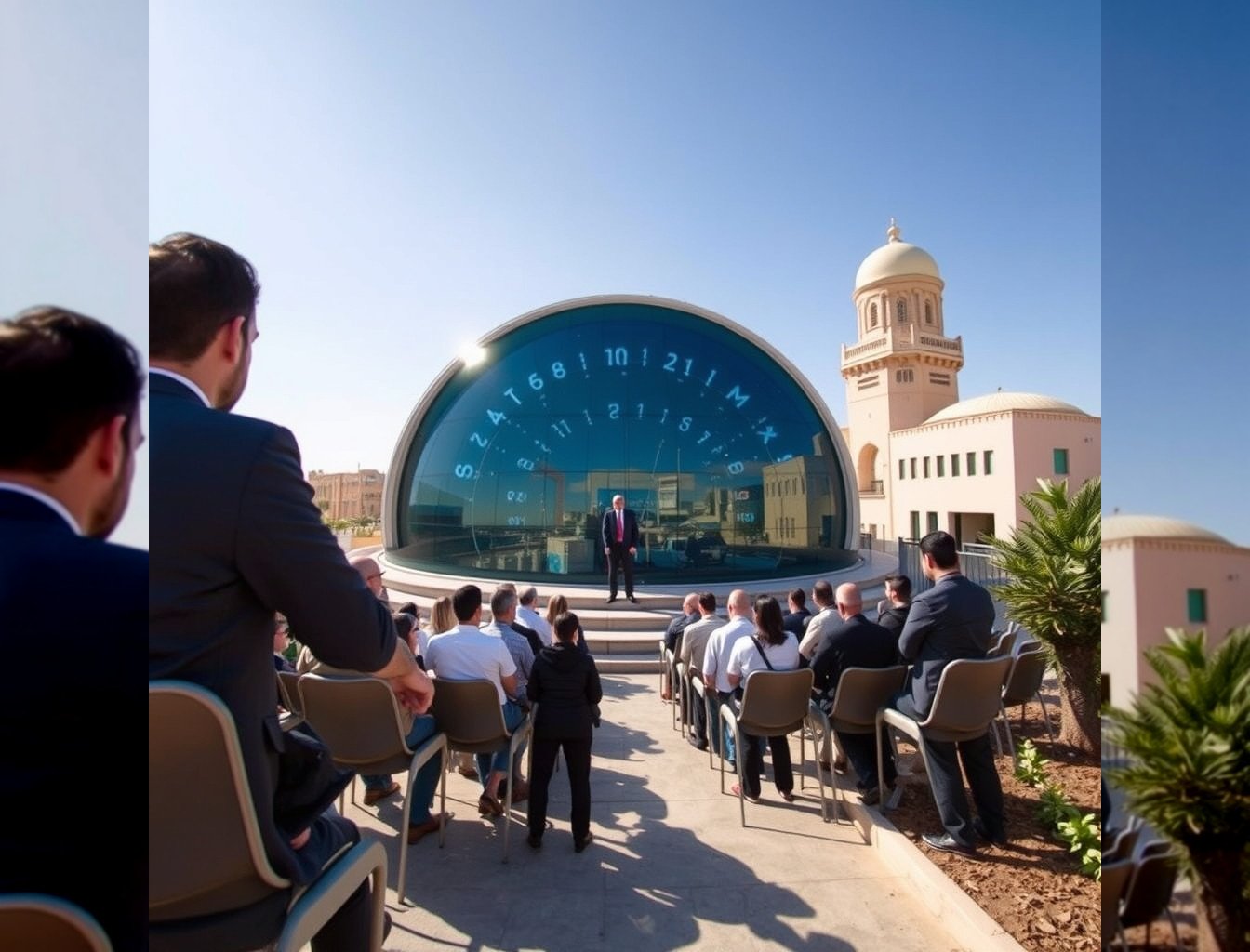
President Abdelmadjid Tebboune inaugurated Algeria’s first dedicated AI and cybersecurity startup cluster at the Sidi Abdellah Technology Hub on April 23 this year, marking a sharp pivot toward high-tech entrepreneurship after decades of hydrocarbon-led growth. The move follows a 2025 directive from the Ministry of Knowledge Economy and Startups to allocate 5 billion Algerian dinars (around $37 million) toward the project, with the government promising tax breaks and customs exemptions for imported equipment.
The cluster, run by state-owned technology agency ANDI, will house 40 startups focused on artificial intelligence, machine learning and digital security. ANDI director Dr. Nacera Bensahnoune told local media this month that the facility includes a 1 MW data center and a cyber-range for simulated attacks, designed to train Algerian engineers and entrepreneurs in real-world conditions. “We want Sidi Abdellah to become the regional hub for AI talent, not just an office park,” Bensahnoune said.
Figures suggest the push is overdue. Algeria’s startups raised only $18 million in venture capital in 2025, compared with $156 million in Morocco and $412 million in Egypt, according to the African Tech Startups Funding Report published by Partech Africa this year. The gap stems from Algeria’s reliance on oil and gas, which still account for 90 percent of export earnings, according to the IMF’s latest Article IV report. Entrepreneurs say access to seed capital remains the biggest bottleneck. “Banks are still hesitant to lend to tech,” said Amina Touati, founder of Algiers-based AI recruitment platform IntelaQ. “The state’s new incentives will help, but we need faster disbursements.”
The Sidi Abdellah cluster is not the first attempt at tech diversification. In 2020, the government launched the “Next Algeria” plan, earmarking $10 billion over five years for startups and digital infrastructure. Yet implementation has lagged. By 2025, only 43 percent of the plan’s promised funds had been disbursed, according to a report by the Court of Audit. Critics blame slow bureaucracy and a lack of private-sector participation. “The state cannot build the ecosystem alone,” said Yacine Tlemçani, co-founder of Oran-based cybersecurity firm CyberDZ. “We need venture funds, business angels and clearer rules on foreign ownership.”
One concrete advantage for founders is the cluster’s proximity to Algeria’s largest technical universities: École Nationale Polytechnique and École Nationale Supérieure d’Informatique. Students at both institutions can now intern in the cluster, creating a pipeline of talent. Dr. Bensahnoune said the first cohort of 60 interns began training in May 2026 under mentorship from 12 resident startups. “We’re starting small, but the goal is to scale,” she said.
For Algerian entrepreneurs abroad, the move offers a potential bridge back home. Djamel Lounis, who runs a Montreal-based AI firm for logistics optimization, said he is exploring a partnership with the cluster to tap Algerian talent without relocating. “Remote collaboration is already feasible,” Lounis said. “What I need is clarity on tax treatment for diaspora-led startups.”
The government has promised a second, larger cluster in Constantine by 2027, focusing on fintech and agritech. But delays in tender processes have raised doubts. In January 2026, the Council of Ministers approved a tender for the Constantine project, but no timeline for bids has been published by the Ministry of Post, Telecommunications, Technology and Digital Economy.
Meanwhile, the Sidi Abdellah cluster is already drawing foreign interest. The Italian Embassy in Algiers hosted a delegation of Italian AI startups in June 2026 to explore collaboration, according to a statement from the embassy. “We see Algeria as a gateway to Africa,” said Marco Rossi, CEO of Rome-based AI firm DeepTrace. “The cluster’s infrastructure can serve as a test bed for European firms.”
Entrepreneurs caution that Algeria’s rigid labor laws and currency controls could still hobble growth. The dinar has been devalued twice since 2023, making imports of servers and GPUs more expensive for startups. “Hardware costs are rising,” said Touati. “We need more flexible import rules.”
Despite the hurdles, the cluster signals a long-delayed recognition that Algeria’s economic future depends on brains, not just barrels. The government’s own figures show that each job created in oil and gas generates $250,000 in annual GDP, while tech startups generate $80,000 per job—lower in absolute terms but scalable across sectors. If the cluster succeeds, it could redefine Algeria’s role in Africa’s digital economy.
Key takeaway for entrepreneurs: Algeria’s new AI startup cluster at Sidi Abdellah offers tax breaks, infrastructure and talent pipelines, but founders must brace for slow capital disbursement and import bottlenecks. Diaspora entrepreneurs can explore remote partnerships with resident startups, but should seek clarity on tax treatment and foreign ownership rules before committing.
Sources
- Brookings
- The Arab Weekly
- Middle East Institute
- Jurist.org
- Atlantic Council
- northafricapost.com
💡 Starting a business in Algeria? GlobalStart guides you step by step: procedures, real costs, company forms (SARL, EURL, SPA) and CNRC registration.