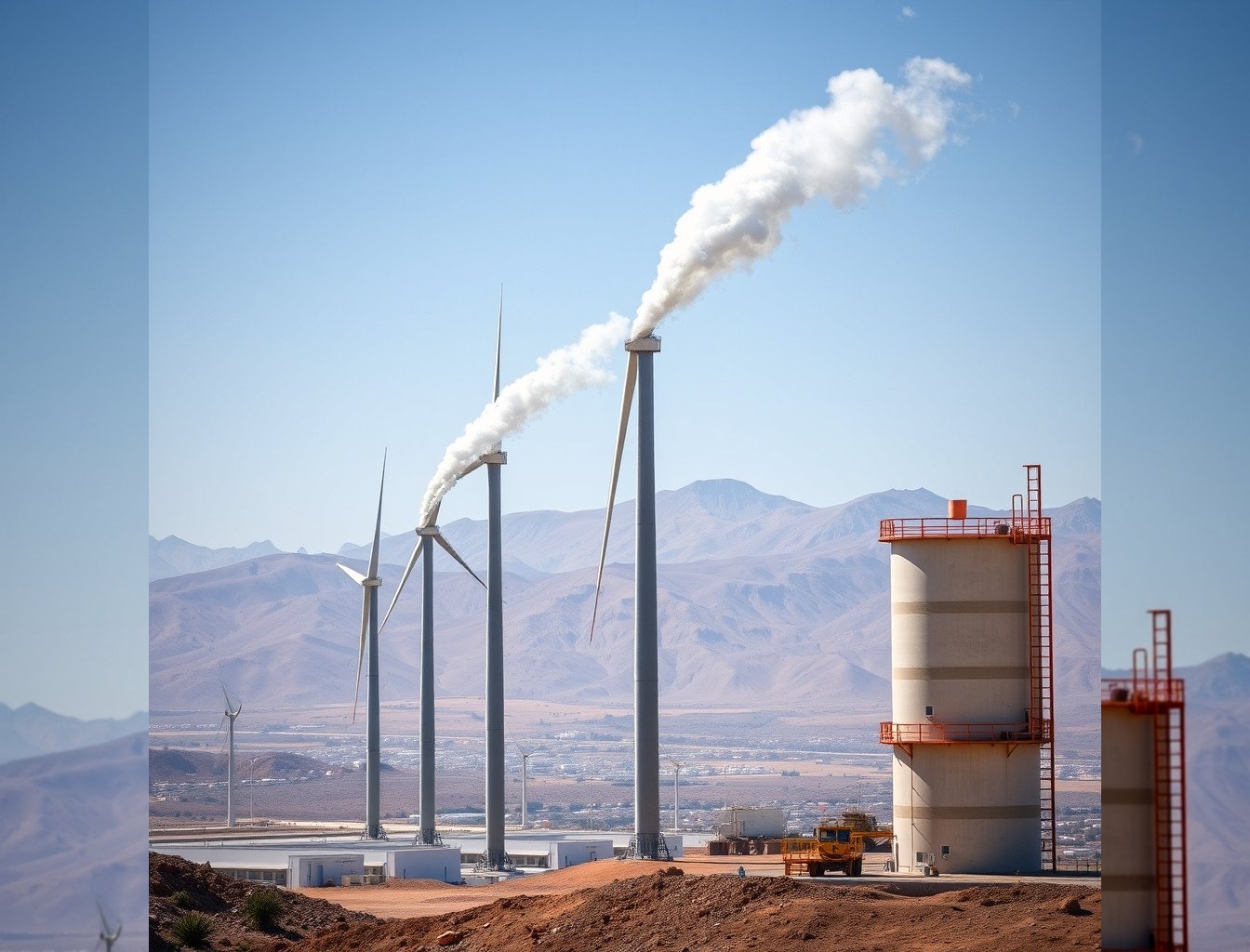
Algeria’s energy transition remains stalled as fiscal vulnerabilities deepen, exposing structural contradictions in a model still dependent on hydrocarbon revenues. Despite ambitious policy declarations, renewable energy deployment lags behind targets, while state finances grow increasingly fragile due to revised oil price assumptions. The gap between rhetoric and implementation underscores a broader economic paradox: a government clinging to hydrocarbon dominance even as global markets shift, and a private sector navigating between state-backed opportunities and rising reputational risks.
Hydrocarbon dependence locks in fiscal risks
Algeria’s economic strategy hinges on oil and gas, yet the sector’s volatility is now a liability. The state’s 2026 budget projections assume lower oil prices than previously forecasted, a shift that tightens fiscal space. Public procurement budgets shrink as a result, forcing austerity measures that ripple through infrastructure and social spending. The North Africa Post warns of “bleak economic prospects” unless hydrocarbon revenues stabilize, a scenario growing less likely as global demand softens.
Sonatrach, the national oil company, faces additional pressure from a $290 million liability to a UK energy firm, a financial drag in an already constrained environment. Meanwhile, the company’s expansion into protected areas—documented by Daraj—raises environmental and legal risks, further complicating its role as a state anchor. The contradiction is stark: Algeria’s energy transition policies exist on paper, but the state’s financial survival still depends on extracting and exporting fossil fuels.
Grid and land constraints stifle renewable energy projects, despite policy push. Foreign investors in solar and wind face reputational hazards, with land acquisition disputes and grid connection delays creating uncertainty. The Middle East Institute notes Algeria’s “path for renewable sector development” remains uncharted, as bureaucratic hurdles and state control over key assets deter private participation. Without foreign capital or domestic urgency, the transition stalls.
Import substitution and state-led industrialization
Pharmaceuticals and industrial manufacturing offer rare bright spots in Algeria’s economic outlook. Local production of critical supplies—including insulin, following a deal with Novo Nordisk—reduces reliance on imports. State-backed financing and import substitution policies create opportunities for domestic manufacturers, particularly in sectors like piping, where Algerian billionaire Abderrahmane Benhamadi’s Condor Group has secured a German partnership.
The shift aligns with broader trends: a car shortage in Algeria, highlighted by The Economist, reflects both supply chain disruptions and deliberate localization efforts. Industrial piping, a niche but growing sector, benefits from rising demand for infrastructure projects, including the Algerian-Qatari-German hospital under construction. These projects signal state prioritization of strategic industries, though their success depends on sustained public investment.
Yet the model carries risks. Foreign investors in renewable energy must navigate not just fiscal austerity but also reputational damage. Algeria’s image abroad—tarnished by counter-terrorism legislation and allegations of repression—deters some partners. The Carnegie Endowment’s 2013 analysis on “The Price of Stability” remains relevant: economic liberalization is possible only if political constraints ease.
Security, sovereignty, and global perceptions
Algeria’s economic outlook is overshadowed by security concerns and diplomatic tensions. Counter-terrorism laws, criticized by MENA Rights Group, have expanded to target peaceful dissent, raising alarms over civil liberties. The UN has flagged repression of families of the disappeared, while the U.S. increasingly views Algeria as a “repressive state” and terrorism sponsor, complicating trade and investment.
Diplomatic incidents—from a brawl between Algerian and Argentinian soccer fans in Times Square to an assault on an Algerian-American in Boston—highlight a broader trend: nationalism and sovereignty are prioritized over economic engagement. The U.S. tariff rate on Algerian goods remains a point of friction, though exact figures are unclear. Meanwhile, Algeria’s gas exports to Europe are framed as a potential solution, yet Sonatrach’s environmental record undermines its credibility as a sustainable partner.
Security legislation also affects entrepreneurs. Foreign businesses operating in Algeria must weigh the risks of association with a state perceived as repressive. The 5G rollout, though accelerating infrastructure investment, does little to address the underlying issue: Algeria’s economic model remains vulnerable to external shocks, and its global reputation discourages the long-term partnerships needed for diversification.
Medical research and niche industrial gains
Algeria’s scientific and industrial advancements are concentrated in narrow sectors. A study on Algerian nettles (Urtica pilulifera and Urtica urens) published in Wiley Online Library exemplifies a niche focus: research into phenolic content and multifunctional activities, but without clear commercial applications. Meanwhile, the healthcare sector sees high-profile investments, such as the Qatar-Algeria-Germany hospital, yet these remain exceptions in an otherwise fragmented system.
Industrial manufacturing expands through foreign partnerships, but progress is uneven. The Condor Group’s German deal in piping reflects targeted state efforts to modernize, yet broader industrial policy lacks coherence. Entrepreneurs in pharmaceuticals and industrial sectors benefit from import substitution, but the absence of a renewable energy boom—despite policy commitments—reveals deeper structural issues.
Key takeaway for entrepreneurs
Sources
- The North Africa Post
- Carnegie Endowment for International Peace
- MENA Rights Group
- People's World
- New York Post
- USAFacts
💡 Starting a business in Algeria? GlobalStart guides you step by step: procedures, real costs, company forms (SARL, EURL, SPA) and CNRC registration.