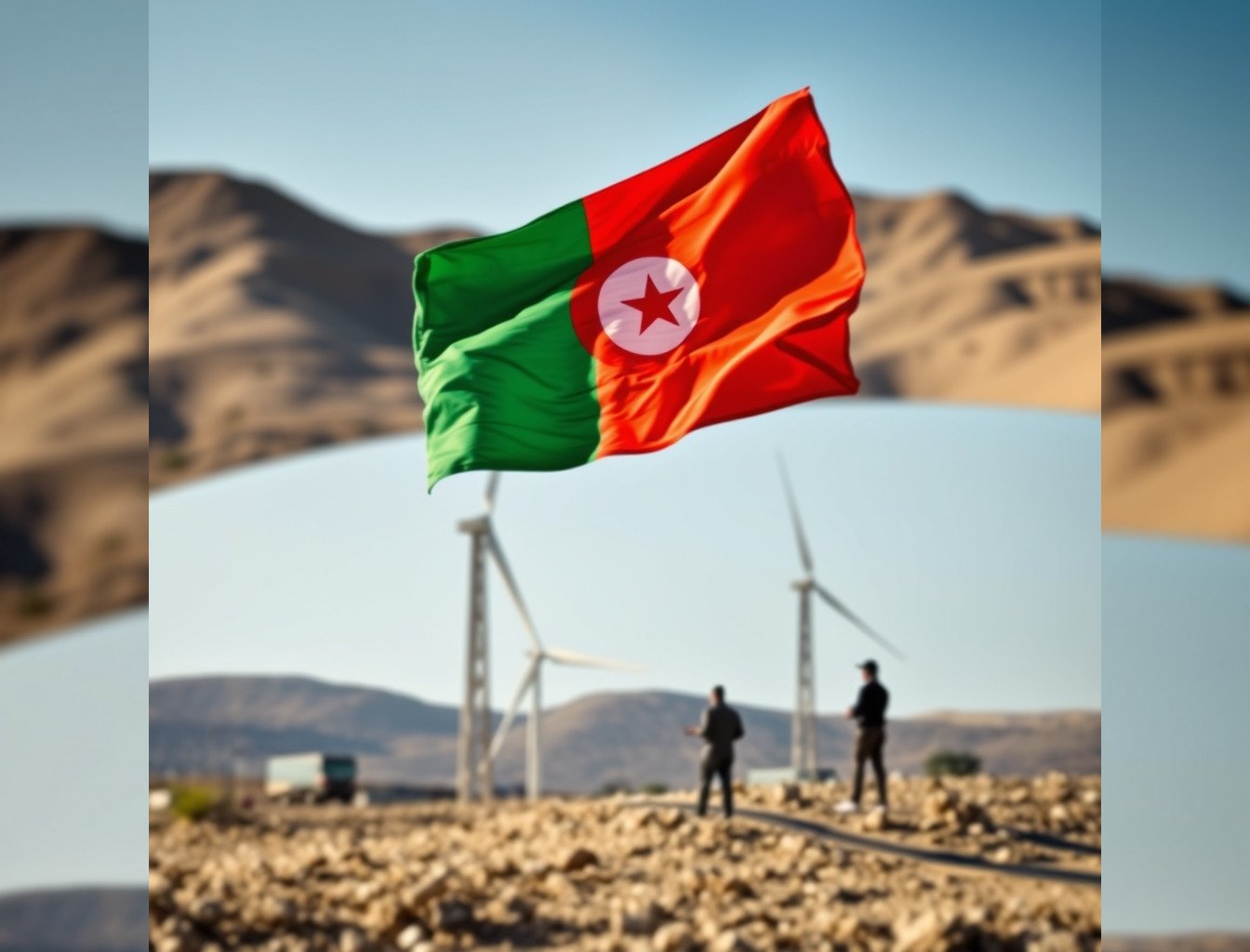
Energy & Infrastructure: Solar Push, Water Desalination, Maritime Logistics
Algeria’s energy diversification strategy gained momentum this week with three developments linking solar exports, hydrocarbon partnerships, and infrastructure resilience.
Algeria’s Minister of Energy and Mines, Mohamed Arkab, reiterated the country’s ambition to become a regional hub for solar energy exports, citing an estimated 3,000 hours of sunshine annually and a target of 15% renewable energy in the national grid by 2030. The statement followed the conclusion of the 13th session of the Algerian-Russian Joint Intergovernmental Commission in Moscow, where both sides agreed to expand cooperation in oil, gas, and renewable energy development. Russia’s involvement includes proposed investments in solar farms linked to industrial zones, particularly in the south.
Azerbaijan and Algeria also announced exploratory talks to deepen energy ties, with a focus on hydrogen and renewable integration into existing hydrocarbon infrastructure. Azerbaijan’s State Oil Company (SOCAR) has prior experience in renewable projects in Northern Africa and may explore joint ventures in Algeria’s Ghardaïa and Ouargla regions, where solar irradiance exceeds 2,500 kWh/m²/year.
In water infrastructure, President Abdelmadjid Tebboune announced a $5.4 billion plan to build 16 seawater desalination plants by 2027, aiming to produce 2.5 million m³/day of potable water. The plan targets coastal cities including Oran, Algiers, and Annaba, with the first facility in Tipaza expected to be operational by Q4 2025. This initiative aligns with Algeria’s 2023–2030 water security strategy, which allocates $37 billion to water projects. Entrepreneurs in desalination technology, logistics, and maintenance services may find opportunities in tenders expected within 12 months.
Maritime logistics also received attention as TASAC, Algeria’s state-owned shipping company, showcased its expanded capacity during a two-day exhibition in Algiers. TASAC operates 23 vessels, including two roll-on/roll-off ferries and six container ships, and has increased its fleet’s deadweight tonnage from 500,000 to 750,000 tons over the past two years. The company invited foreign investors to participate in port infrastructure projects, including the expansion of the Port of Djen Djen, which will accommodate ships up to 200,000 deadweight tons upon completion in 2026. Foreign firms are invited to bid for dredging, terminal management, and cold chain logistics contracts.
Tax, Investment, and Legal Framework: Mild Reforms with Persistent Restrictions
Algeria’s revised investment legal framework was presented to business leaders this week, introducing adjustments to corporate tax incentives but maintaining sector-specific restrictions.
Key changes include a 5-year tax holiday for projects investing over $10 million in manufacturing, renewable energy, or agro-industrial zones, down from the previous $15 million threshold. The minimum investment for eligibility remains $500,000. However, foreign ownership ceilings in sectors such as media, telecom, and pharmaceuticals remain capped at 49%, with exceptions requiring ministerial approval. The hydrocarbon sector retains a 51% state participation requirement for all new exploration projects.
The Algerian Investment Promotion Agency (APIA) reported that 212 new investment applications were submitted in Q2 2024, totaling $2.7 billion, a 12% increase from Q1. Of these, 68% were domestic. The most active sectors were construction (34%), renewable energy (22%), and food processing (15%). APIA confirmed that 18 projects worth $1.1 billion were approved during the quarter, down 8% from Q1 due to extended due diligence in renewable energy applications.
Entrepreneurs should note that while the tax holiday has been expanded, the approval process for foreign-owned ventures in strategic sectors remains opaque. APIA’s average approval time is 90 days for domestic investors and 120 days for foreign investors.
Diaspora Policies: Citizenship Revisited, Dual Loyalty Debates
Algeria’s approach to its diaspora and citizenship laws generated policy headlines this week.
President Tebboune dismissed the Minister of National Community Abroad, Abdelkader Kara, for refusing to renounce French citizenship. This move signals tightening enforcement of Algeria’s 2005 nationality law, which prohibits dual citizenship for public officials and military personnel. The dismissal follows a government review aimed at tightening control over public sector appointments.
In France, the debate over national identity resurfaced after Algerian football fans at a Paris match chanted foreign national anthems, prompting calls from French officials for stricter integration policies. The incident has reignited discussions on Algeria’s 2021 citizenship reform, which allows dual citizenship in certain cases but retains restrictions for public office holders.
Entrepreneurs in the diaspora should note that while dual citizenship remains possible for private business activities, public sector roles are now off-limits to dual nationals. This may affect Algerian expatriates considering returning to work in Algeria’s public institutions or state-linked enterprises.
Technology & Innovation: Startup Ecosystem Gains Traction
Algeria’s technology ecosystem saw two key developments this week aimed at nurturing startups and digital innovation.
Flat6Labs Algeria and the International Finance Corporation (IFC) launched StartAlgeria, a $5 million seed fund targeting early-stage startups in fintech, healthtech, and cleantech. The fund will provide grants of up to $50,000 per startup and access to mentorship from regional entrepreneurs. Applications open in October 2024, with the first cohort of 10 startups expected in Q1 2025.
Separately, Algeria and Italy held a joint meeting in Algiers to discuss the development of a Maghreb innovation ecosystem. Both countries agreed to establish a bi-national tech accelerator in Oran, focusing on artificial intelligence, cybersecurity, and agritech. Italy’s government will provide a $3 million grant over three years, while Algeria will allocate land and infrastructure for the accelerator. The agreement follows a memorandum signed in June 2024 to strengthen bilateral ties in digital transformation.
New digital platforms launched this week include E-Sidati, a government-backed portal offering e-services for student registration, and InnovAlgérie, a private initiative connecting entrepreneurs with investors and corporate partners. Both platforms are operational, with InnovAlgérie reporting 2,300 registered startups and 450 active investment leads as of September 2024.
Elections and Political Shifts: Islamists Decline, Reform Signals
Two political developments this week suggest shifts in Algeria’s electoral landscape.
The decline of Islamist parties was highlighted in local coverage of election campaigns, where Islamist candidates struggled to mobilize support using traditional slogans. Analysts attributed this to public fatigue with political Islam across the Maghreb and the government’s emphasis on economic reform. The ruling National Liberation Front (FLN) and its allies maintained dominance in 15 of 17 wilayas where local elections were held.
Separately, Algeria’s position on Western Sahara was discussed in the context of potential agreements with Morocco and the Polisario Front. Algeria reiterated its support for the United Nations-backed political process but did not announce new policy changes. The Sahrawi refugee camps in Tindouf continue to receive international aid, with UNICEF Algeria noting a $2.1 million contribution from the European Union’s Directorate-General for European Civil Protection and Humanitarian Aid (DG ECHO) for education programs.
Regional Ties: Tunisia, AI, and Energy Cooperation
Algeria’s relations with Tunisia and other Maghreb countries advanced on two fronts: artificial intelligence and energy.
At the Maghreb AI summit in Algiers, Algeria, Tunisia, Morocco, and Mauritania agreed to establish a joint AI research center in Tunis. The center will focus on healthcare, agriculture, and public administration, with an initial budget of $8 million funded equally by the four countries. Algeria will contribute computing infrastructure, while Tunisia will provide the land and administrative staff.
In energy, Bangladesh’s Prime Minister Sheikh Hasina met with Algeria’s Energy Minister to discuss enhanced cooperation in LNG supply and renewable energy. Bangladesh, facing energy shortages, seeks to diversify suppliers beyond Qatar and the UAE. Algeria, with excess LNG capacity, offered to supply up to 1 million tons annually starting in 2026, subject to terminal upgrades.
Balance of the Week
– Energy: Algeria expanded solar ambitions with Russian and Azerbaijani partners; announced $5.4 billion desalination plan.
– Investment: Tax incentives eased slightly; approval times extended for foreign ventures.
– Diaspora: Dual citizenship enforcement tightened for public officials.
– Technology: $5 million seed fund launched; Italy partnership on AI accelerator.
– Politics: Islamist parties lose ground; Western Sahara stance unchanged.
– Regional: Maghreb AI center agreed; Bangladesh seeks Algerian LNG.
Key Takeaway for Entrepreneurs
Algeria’s policy adjustments—solar incentives, desalination spending, and seed funding—create opportunities in energy, water tech, and early-stage startups. Tax breaks now apply to projects above $10 million, but sector restrictions remain, especially in media and telecom. Diaspora entrepreneurs should monitor dual citizenship rules if targeting public sector roles. Foreign firms in maritime logistics and desalination are invited to bid on port and plant projects, with tenders expected within 12 months.
Sources
- University World News
- Unicef
- dailynews.co.tz
- ASHARQ AL-AWSAT English
- thearabweekly.com
- Simmons & Simmons
💡 Starting a business in Algeria? GlobalStart guides you step by step: procedures, real costs, company forms (SARL, EURL, SPA) and CNRC registration.