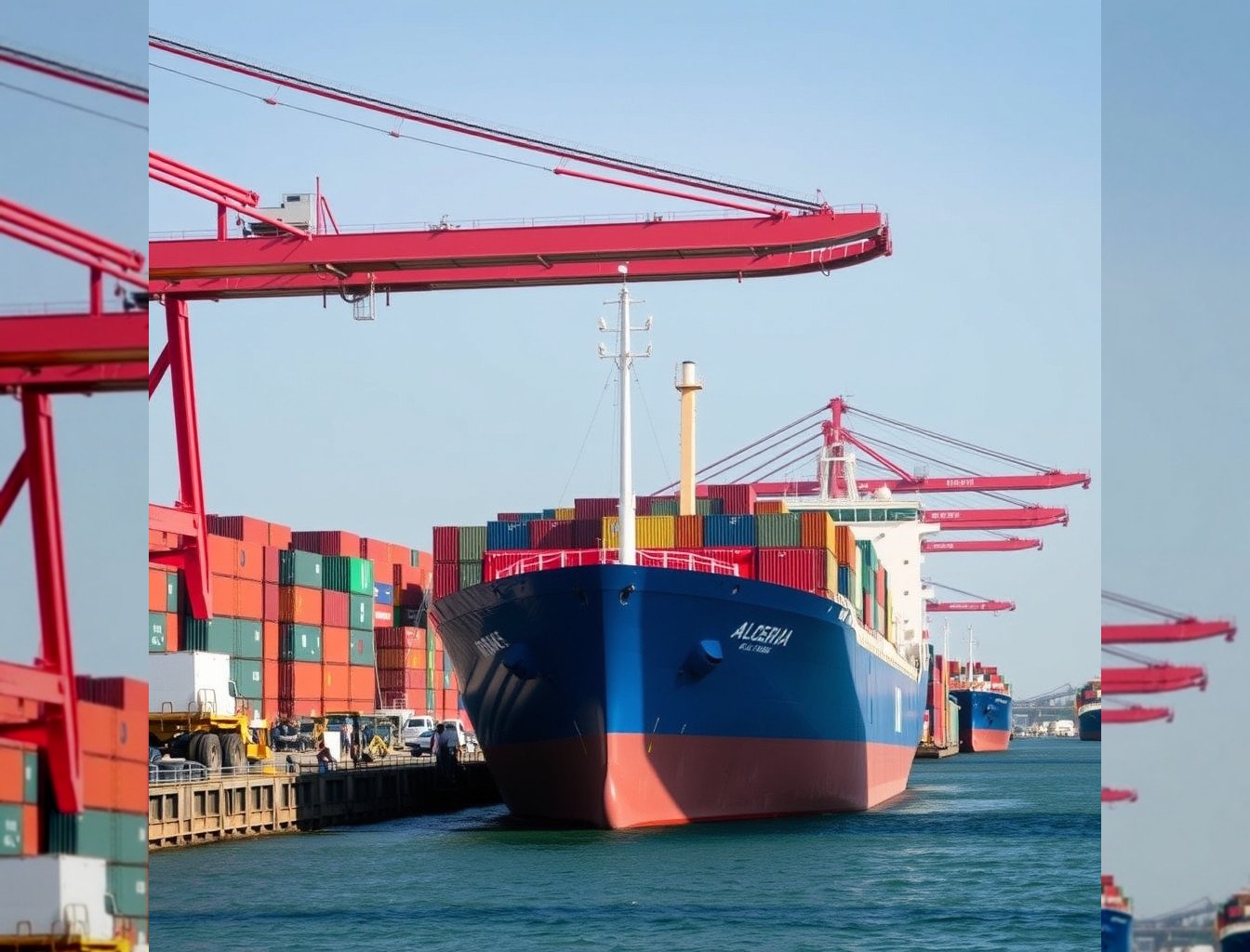
French-Algerian trade tensions are easing after Algiers withdrew a major port contract from China, signaling a strategic pivot that could reshape investment flows between Algeria, France, and beyond. The move concerns the Hamdania port project near the capital, a deal estimated by analysts at more than $3 billion. Sources close to the Ministry of Transport told Reuters recently that the agreement had been reallocated to a French-led consortium, ending months of friction with Paris over perceived Chinese expansion in North African ports.
The decision follows high-level talks in Algiers last month, during which President Abdelmadjid Tebboune and French officials discussed bilateral trade and regional security. A senior Algerian diplomat, speaking on condition of anonymity, confirmed to The Arab Weekly that the port withdrawal was part of a broader reassessment of foreign partnerships to “balance economic sovereignty with pragmatic cooperation.”
For Algerian entrepreneurs and founders in France, this shift signals a renewed window for cross-border ventures. Business leaders in Marseille and Paris report increased inquiries from Algerian investors seeking joint ventures in logistics, supply chain, and digital infrastructure. “French ports are looking for fresh capital and expertise,” said Yacine Mellouk, founder of Algiers-based transport consultancy LogiAlgeria. “The Hamdania case shows Algiers is open to European partners again.”
The port pivot also reflects Algeria’s broader economic strategy amid falling hydrocarbon revenues. In 2025, Algeria’s trade surplus narrowed to $12 billion from $24 billion in 2023, according to Banque d’Algérie data. With oil and gas contributing just 55% of state revenue, down from 70% in 2020, authorities are prioritizing diversification. Port infrastructure is central to this plan, linking Algeria’s landlocked regions to Europe and West Africa.
The Hamdania port project, originally awarded to China Harbour Engineering Company (CHEC) in 2023, was valued at $3.2 billion and expected to handle 2.5 million containers annually upon completion. But geopolitical pressure mounted after France raised concerns over debt sustainability and strategic control. A French government source told Le Monde this week that Paris had engaged directly with Algiers to propose alternative financing through the European Investment Bank and French development agencies.
Announced in 2025, the revised tender process now includes a consortium led by CMA CGM, the Marseille-based shipping giant, alongside local firms such as Groupe Cevital and Groupe Saidal. The group will bid under a public-private partnership model, with 40% equity from international investors and 60% from Algerian state entities. A tender document seen by APN outlines a 30-year concession, with a five-year grace period for construction.
Algerian entrepreneurs in France see dual opportunities. First, the port will reduce logistics costs for Algerian exporters targeting Europe, especially in agri-food and automotive components. Second, it opens doors for tech-enabled supply chain startups. “Ports are becoming data hubs,” said Aicha Bensalem, CEO of Algiers-based supply chain startup CargoFlow. “We’re developing AI tools to optimize container tracking between Hamdania and Marseille. The timing is ideal.”
Yet challenges remain. Analysts at Oxford Business Group warn that bureaucratic delays could slow implementation. “Past port projects in Algeria have faced regulatory hurdles,” said OBG senior editor Karim Ouali. “The success of Hamdania will depend on streamlining customs, land allocation, and local partnership agreements.”
The shift also signals a recalibration in Algeria’s foreign policy. In 2025, Algeria signed a $4 billion energy cooperation deal with France’s TotalEnergies, while reducing new contracts with Chinese firms in critical infrastructure. Observers link this to President Tebboune’s stated goal of balancing relations with Europe and the West amid rising global tensions.
For the Algerian diaspora, especially in France, the port announcement carries symbolic weight. Many second- and third-generation entrepreneurs have long sought bridges between both countries. “This is more than a port,” said Farid Zidani, founder of diaspora investment network Algerians of the World. “It’s a signal that Algeria is ready to co-invest with Europeans in transformative sectors. Our community can now mobilize capital and know-how without fear of political friction.”
The Hamdania project remains in early stages, with financial closure expected in late 2026. Until then, entrepreneurs in Algeria and France are positioning themselves to participate as suppliers, investors, or tech partners. Local chambers of commerce in Annaba and Oran have scheduled forums in October 2026 to present subcontracting opportunities.
Key takeaway for entrepreneurs: The Hamdania port shift opens a $3.2 billion infrastructure market to French-Algerian joint ventures, with 40% foreign ownership allowed. Algerian startups in logistics tech and supply chain solutions should prepare proposals for subcontracting and digital integration contracts expected in 2026. Diaspora investors can engage through public-private partnerships, leveraging EU-backed financing and local partnerships with firms like CMA CGM or Cevital.
Sources
- AL24 News
- The Arab Weekly
- Middle East Council on Global Affairs
- Tehran Times
💡 Starting a business in Algeria? GlobalStart guides you step by step: procedures, real costs, company forms (SARL, EURL, SPA) and CNRC registration.