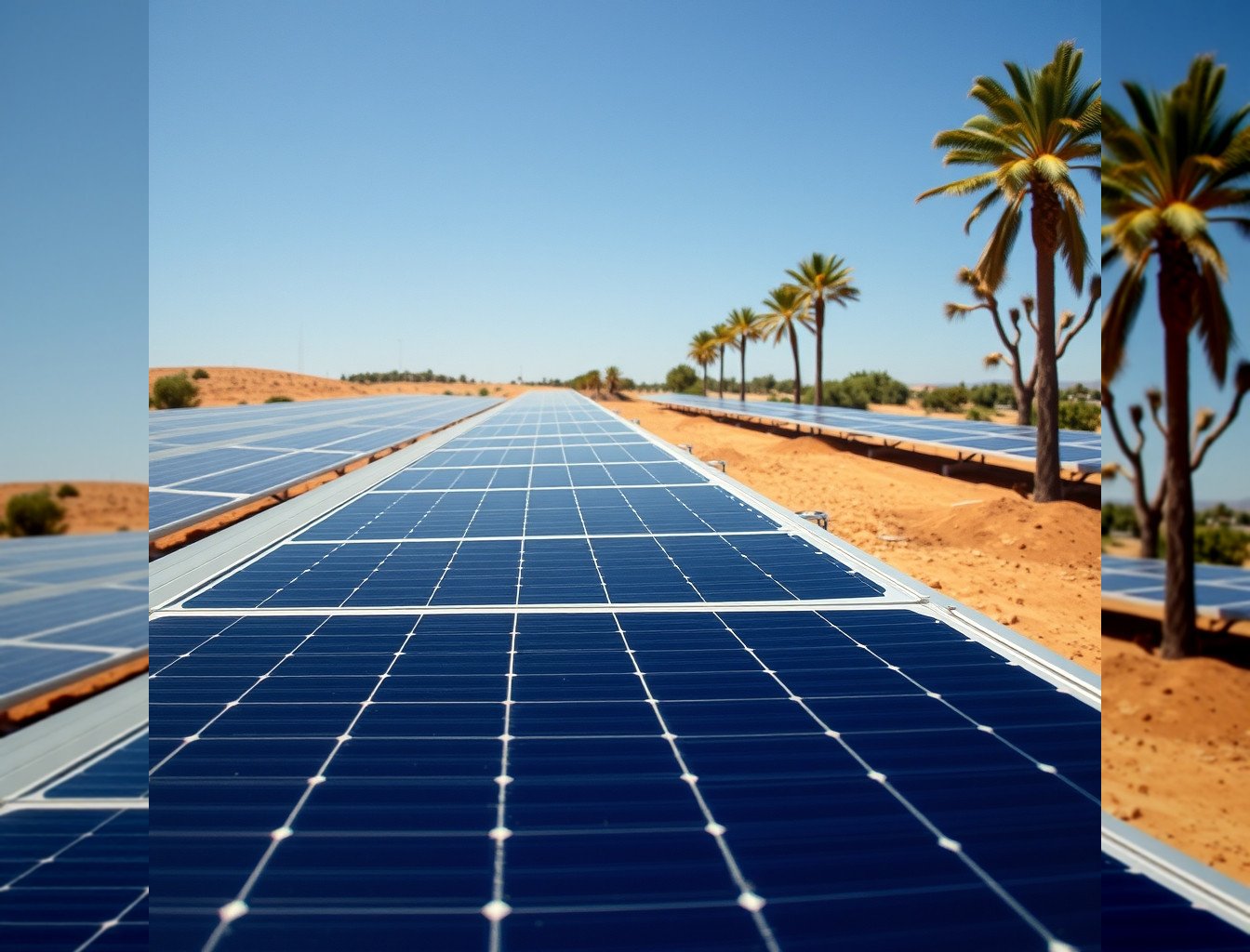
Solar and gas: Algeria’s energy pivot accelerates
Algeria’s renewable energy push gathered momentum this week with two major developments. On the policy front, Algeria reaffirmed its commitment to export green hydrogen to Europe, positioning itself as a key partner in Germany’s supply chain. The government also confirmed a five-year $60 billion energy investment plan. However, gas sector realities tempered optimism: gas production remains constrained by technical and logistical issues, despite Algeria’s comparative advantage in the European market.
Germany’s focus on North African green hydrogen has solidified Algeria’s role as a potential supplier. The German energy ministry has identified Algeria as a priority partner for hydrogen imports under its 2030 strategy. Algeria’s existing gas infrastructure—pipelines to Spain and Italy—offers a potential conversion pathway for green hydrogen blending. The $60 billion investment plan, while not fully detailed, is expected to target renewable energy projects, grid upgrades and hydrogen pilot plants.
At the same time, Algeria’s gas production plateaued near 130 billion cubic meters annually, according to the Ministry of Energy and Mines. The figure has not increased since 2020, despite rising European demand following the Ukraine war. State-owned Sonatrach reported a 2.3% decline in gas exports to Europe in the first half of 2024 compared to the same period in 2023. The drop is attributed to maintenance delays at LNG facilities in Skikda and Arzew.
For entrepreneurs, the dual track—gas stagnation and green hydrogen ambition—creates uneven opportunity. Solar developers can apply for tenders under the 2030 renewable energy roadmap, which aims for 30% of electricity from renewables by 2030. The National Agency for the Promotion and Rationalization of Energy Use has opened a new round of 1 GW solar tender for private investors. Bidding closes in October 2024. Meanwhile, gas-dependent industries may face tighter export quotas and price volatility.
SME financing: Banking sector under strain
The Algerian banking sector remains fragile, with a Moody’s report this week warning of rising non-performing loans (NPLs). The agency expects NPLs to reach 12% of total loans by year-end, up from 10.4% in 2023. The deterioration is driven by delays in government payments to contractors, corporate insolvencies in the construction sector and tighter liquidity conditions.
The Central Bank of Algeria has maintained its key rate at 3.5% since March 2023, but liquidity shortages persist in the interbank market. Commercial banks have cut their lending to SMEs by 4.2% in the first half of 2024, according to the Ministry of Finance. The decline follows a 2023 directive requiring banks to increase their core capital by 30% by 2025, forcing some lenders to prioritize stability over growth.
For founders, access to credit remains uneven. Startups in tech and renewable energy report better terms than those in construction or import-substitution sectors. The government’s Tassili program for young entrepreneurs disbursed 12.7 billion dinars ($95 million) in the first six months of 2024, with 78% allocated to projects under three years old. However, bureaucratic delays and collateral requirements continue to limit uptake.
Maghreb politics: Western Sahara tensions persist
The UN Security Council voted this week to endorse Morocco’s autonomy plan for Western Sahara, a move Algeria has consistently opposed. The resolution calls for “serious and credible” negotiations but does not mandate a referendum. Algeria’s foreign ministry reiterated its support for the Polisario Front and called for a resumption of talks under UN auspices, without specifying a timeline.
The diplomatic impasse affects cross-border trade. Algeria’s exports to Morocco declined by 22% in the first half of 2024, reaching 1.8 billion dinars. The closure of the border since 1994 has redirected Moroccan agricultural goods through Spain, increasing transit costs for Algerian importers.
For entrepreneurs in the Maghreb region, the stalemate limits regional integration. The Arab Maghreb Union, founded in 1989, remains inactive. Intra-Maghreb trade accounts for less than 3% of total trade, compared to over 20% in the EU and ASEAN. Only Tunisia and Algeria have maintained a functioning trade corridor, with bilateral trade reaching $2.3 billion in 2023.
Vocational training and cybersecurity: Skills gaps widen
Algeria adopted a new National Cybersecurity Strategy (2025–2029) this week, allocating 3.8 billion dinars ($28 million) for training programs and infrastructure. The strategy targets 15,000 certified professionals by 2029, up from 4,200 in 2024. The plan includes partnerships with the EU’s Cybersecurity Competence Centre and private firms such as Huawei Algeria.
In a parallel move, the Algerian police launched a digital platform to streamline reports of lost identity cards, passports and driver’s licenses. The service, available via the Ministry of Interior’s website, aims to reduce processing times from 15 days to 48 hours. Over 8,000 requests were submitted in the first two weeks of operation.
For founders, the cybersecurity push creates two opportunities. First, demand for cybersecurity audits and compliance services is rising among banks and telecoms, sectors required to meet new NIS2-like regulations. Second, vocational training institutes are expanding short courses in cloud security and ethical hacking, with tuition fees averaging 45,000 dinars ($330) per certification.
Scientific research: Space, meteorites and collaboration
China launched Algeria’s AlSat-3A satellite on the Ceres-1 rocket from a sea platform in the Yellow Sea, marking Algeria’s third satellite in the Tianqi constellation. AlSat-3A carries an optical payload with 1-meter resolution and is intended for land surveying and disaster monitoring. The satellite was developed jointly by Algeria’s Space Agency (ASAL) and China’s Chang Guang Satellite Technology.
Separately, Algerian and international researchers published findings on a 1-billion-year-old Martian meteorite discovered in the Sahara. Designated Northwest Africa 15567, the sample shows unique mineralogical features not previously observed in Martian meteorites. The study was led by the University of Science and Technology Houari Boumediene and co-authored by French and German institutions.
For entrepreneurs in tech and research, the satellite launch underscores Algeria’s growing space sector. ASAL has opened tenders for ground station upgrades and data processing services, with budgets up to 1.2 billion dinars ($9 million). The meteorite research, while academic, has sparked interest from private mineral exploration firms seeking opportunities in the Tassili n’Ajjer region, a UNESCO World Heritage site.
Government reforms: Constitutional changes and language recognition
Algeria’s constitutional reforms, approved in a national referendum on November 1, 2022, entered a new phase this week with the reinstatement of presidential term limits and official recognition of Tamazight (Berber) as a national language. The changes were published in the Official Journal on June 7, 2024.
The reforms limit the president to two five-year terms, effective immediately. The previous 2020 constitution had removed term limits. The government also approved a national plan to promote Tamazight in public administration, education and media, with a budget of 8.5 billion dinars ($63 million) for 2024–2026.
For entrepreneurs, the language policy may affect compliance in sectors such as education technology, publishing and customer service. State tenders for digital content and e-learning platforms now require Tamazight localization. The Ministry of Education has announced a 15% increase in Tamazight teaching positions for the 2024–2025 academic year.
Justice and human rights: Retrials and deportations
A mass retrial opened in Algiers this week for 120 defendants accused of violence in Kabylie during protests in 2021. The retrial follows a 2023 ruling by the Supreme Court annulling previous verdicts due to procedural irregularities. Amnesty International has called for the exclusion of death penalty charges and guarantees against torture.
In a separate case, Tunisia deported an Algerian political dissident to Algeria despite an order from the African Commission on Human and Peoples’ Rights to halt the transfer. The dissident, a dual national, faces charges of “undermining national unity.”
For entrepreneurs, legal risks in Algeria remain high in sectors tied to public order. Foreign investors in telecoms, media and civil society organizations report increased scrutiny of content and staff. The government has not revised its cybercrime law since 2021, leaving room for broad interpretation.
Archaeology and culture: Berber heritage gains formal recognition
Algeria submitted a dossier to UNESCO this week to inscribe Berber mausoleums from antiquity as a World Heritage site. The dossier, prepared by the Ministry of Culture, focuses on the Mausoleum of King Juba II in Tipasa and the Royal Mausoleums of Numidia in Sétif.
The move follows the constitutional recognition of Tamazight and a national strategy to promote Amazigh culture. The government allocated 2.1 billion dinars ($15.6 million) in 2024 for restoration projects in the Aurès, Kabylie and M’Zab regions.
For entrepreneurs in tourism and hospitality, the UNESCO bid could boost cultural tourism. Algeria recorded 1.2 million international tourists in 2023, up from 550,000 in 2021. The majority visited Roman sites such as Djemila and Timgad, but Berber heritage sites have seen a 19% increase in guided tour bookings since 2022.
Sports: Integrity and diplomacy
Algeria and Egypt this week deepened cooperation on sports integrity, signing a memorandum with INTERPOL and the International Olympic Committee (IOC). The agreement covers match-fixing prevention, anti-doping and athlete protection. Algeria’s Ministry of Youth and Sports also hosted a workshop on sports betting regulation, attended by representatives from 12 African federations.
In a separate development, Algeria’s football legend Lakhdar Belloumi was named a UNESCO Goodwill Ambassador for Sports and Peace. Belloumi, a 1982 World Cup player, remains a prominent figure in Algerian sports diplomacy.
For entrepreneurs in sports tech and betting, the integrity push may lead to new regulatory frameworks. The Algerian Football Federation has announced plans to launch a digital platform for fan engagement and integrity reporting by 2025.
Key takeaway for entrepreneurs:
Solar energy tenders are open with 1 GW capacity, offering direct investment entry points. Access to bank credit remains constrained by sector-specific risks, particularly in construction and imports. The constitutional recognition of Tamazight creates compliance costs for digital and education ventures. Space and cybersecurity sectors are expanding, with state tenders expected in the next 12 months. Legal risks in content and public affairs remain high due to ongoing cybercrime and media regulations.
Sources
- AL24 News
- ASHARQ AL-AWSAT English
- Renewables Now
- SteelRadar
- The Banker magazine
- Al Jazeera
💡 Starting a business in Algeria? GlobalStart guides you step by step: procedures, real costs, company forms (SARL, EURL, SPA) and CNRC registration.