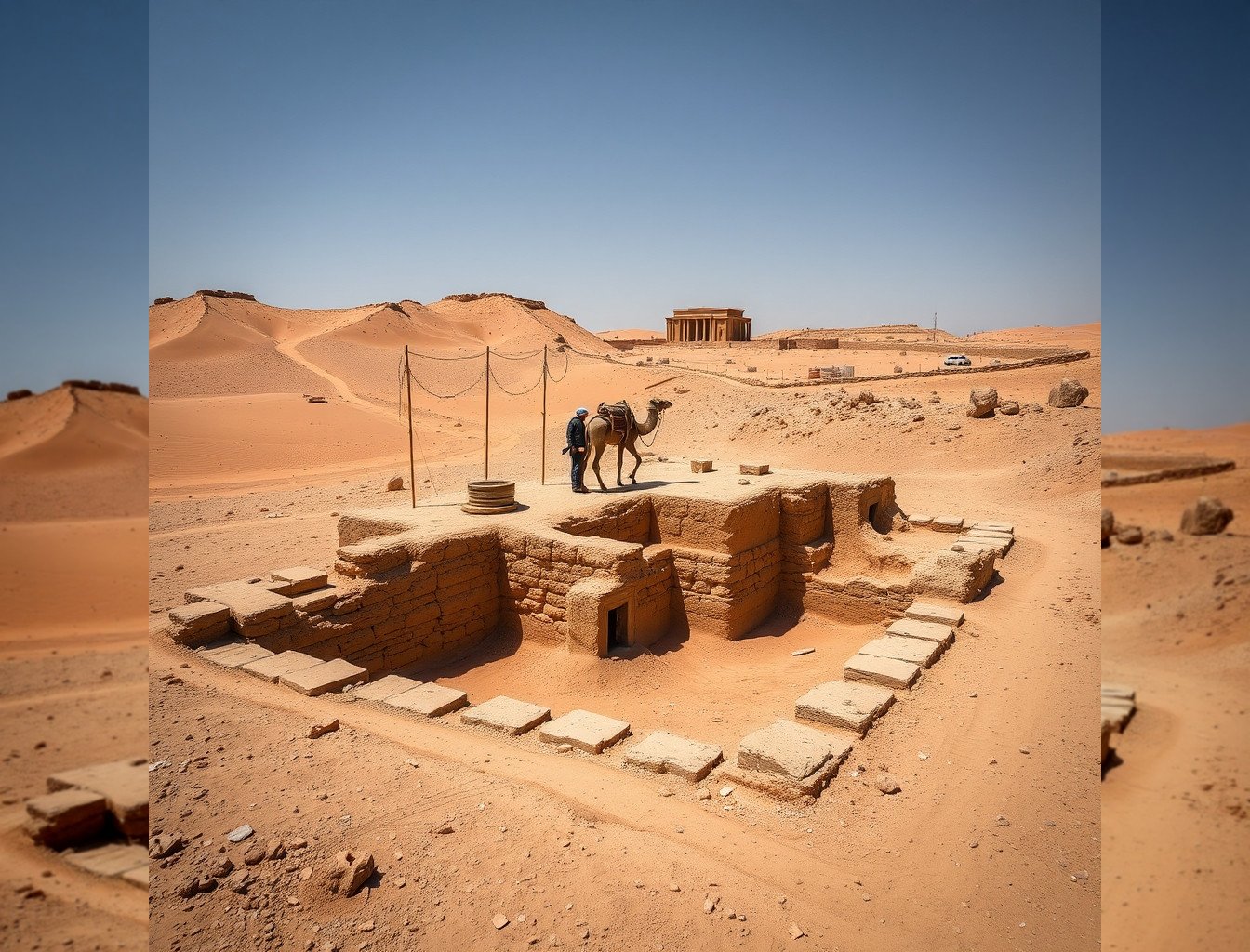
Recent archaeological discoveries in the Algerian Sahara are exposing long-hidden chapters of the country’s past, offering unexpected economic and cultural opportunities. According to Encyclopedia Britannica, researchers working in remote regions of the Sahara have uncovered artifacts and structures dating back millennia, providing new evidence of early human settlements and trade networks.
The finds include intricate pottery, stone tools, and remnants of ancient dwellings that suggest the Sahara was once a corridor for commerce and migration. These discoveries challenge earlier assumptions about the region’s aridity and highlight its historical role as a crossroads between North and sub-Saharan Africa. For entrepreneurs, the renewed academic and public interest in Algeria’s prehistoric heritage presents a chance to develop tourism, education, and cultural industries.
Archaeologists recently uncovered a 5,000-year-old settlement near Tassili n’Ajjer, a UNESCO World Heritage site known for its rock art. The site includes well-preserved storage pits and tools, indicating advanced agricultural practices. Tassili n’Ajjer’s existing tourism infrastructure—already attracting thousands of visitors annually—could expand with guided tours focusing on these new discoveries. Local guides, hospitality businesses, and craft producers could tailor offerings to history enthusiasts, creating jobs and diversifying income in a region traditionally dependent on oil revenues.
Another significant find is near the Tadrart Acacus mountains, where researchers identified remnants of a Neolithic community that traded goods across the Sahara. The presence of seashells and polished stones from distant regions suggests long-distance commerce as early as 3000 BCE. This underscores Algeria’s historical position as a trade hub, an angle that could inspire modern entrepreneurs to revive or reinterpret ancient commercial routes. Products like handcrafted jewelry inspired by Neolithic designs or storytelling apps about prehistoric trade could tap into niche markets.
For the Algerian diaspora, the discoveries offer a fresh narrative of national identity that may strengthen emotional and economic ties to the homeland. Entrepreneurs abroad could launch cultural enterprises—such as online platforms selling Algerian-made goods, language schools teaching Tamazight (Berber) with a focus on archaeological context, or heritage consulting for museums—to bridge Algeria’s past with global audiences. The diaspora’s investment in local startups could also fund preservation projects, creating a sustainable model for cultural entrepreneurship.
The Algerian government has shown interest in leveraging heritage for development. Recent statements from the Ministry of Culture indicate plans to establish new heritage trails and visitor centers near key sites. This policy shift could open tender opportunities for private investors to build infrastructure, from eco-lodges to digital archives. Startups specializing in sustainable tourism or augmented reality experiences could partner with public institutions to monetize the discoveries.
Economically, the timing is opportune. Algeria’s non-oil sectors are growing, with tourism contributing just 1% to GDP in 2025—far below regional peers like Morocco (8%) and Tunisia (7%). The Sahara’s archaeological appeal could help rebalance the economy by attracting high-spending cultural tourists. Meanwhile, the discoveries reinforce Algeria’s soft power, potentially boosting demand for Algerian products abroad.
The challenge remains in balancing preservation with development. Entrepreneurs must collaborate with archaeologists to ensure excavations and commercial activities do not harm fragile sites. Ethical tourism models, such as visitor limits or revenue-sharing with local communities, could set a precedent for responsible growth.
Key takeaway for entrepreneurs
Archaeological discoveries in the Algerian Sahara open new markets in cultural tourism and heritage-based products. Local and diaspora founders can develop guided tours, sustainable lodging, and digital heritage platforms near Tassili n’Ajjer and Tadrart Acacus. Public-private partnerships with Algeria’s Ministry of Culture may provide funding opportunities for startups in heritage preservation and experiential travel.
Sources
- Encyclopedia Britannica
💡 Starting a business in Algeria? GlobalStart guides you step by step: procedures, real costs, company forms (SARL, EURL, SPA) and CNRC registration.