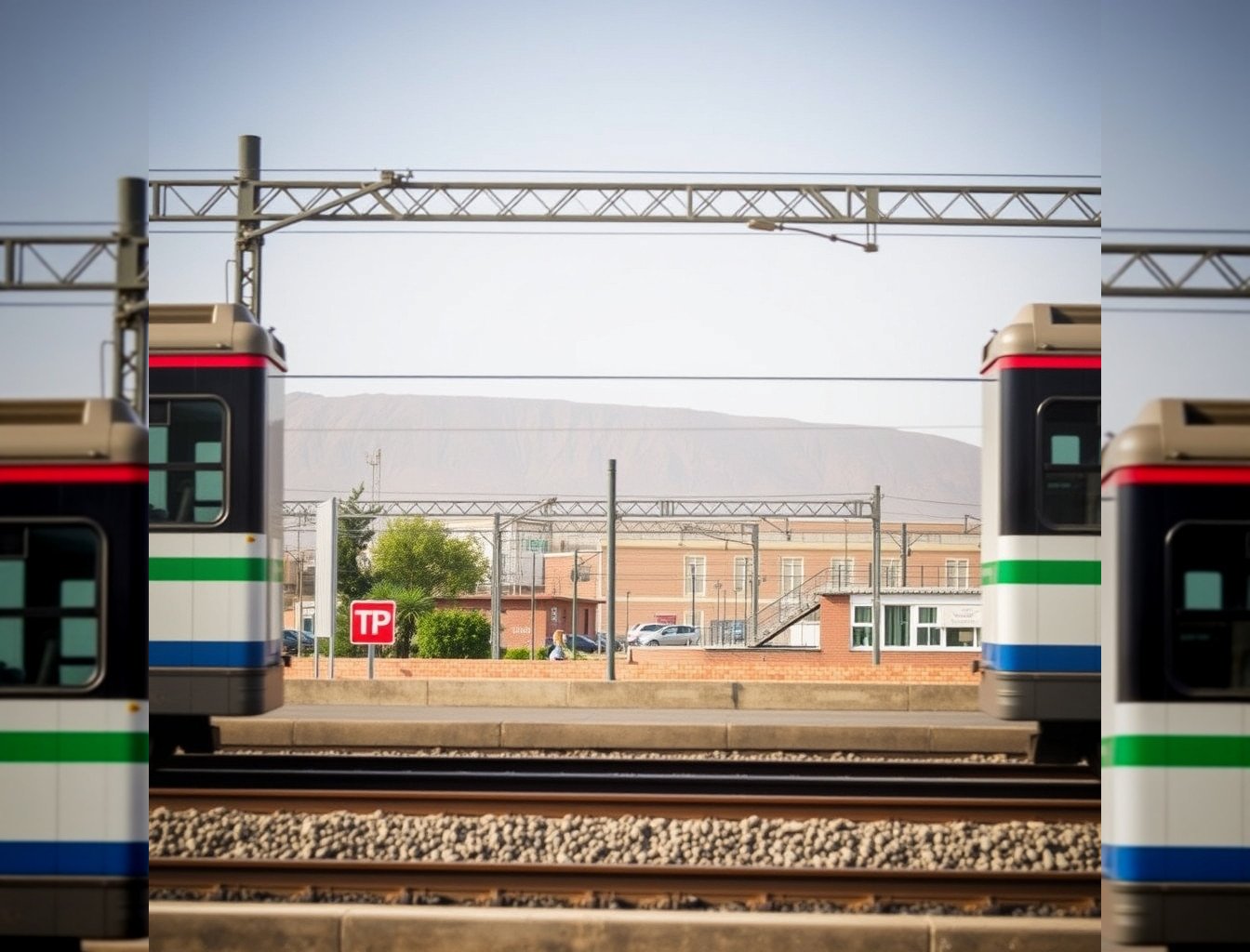
Infrastructure and transport
Algeria secured USD 878 million in funding from the African Development Bank (AfDB) for a trans-Saharan railway project. The line will connect Algeria’s south to Niger and Nigeria, improving freight and passenger capacity across the Sahel. The funds follow a 2023 AfDB pledge of USD 1.2 billion for North-South corridors in Africa. The project is part of Algeria’s national railway expansion, which aims to increase rail freight from 15 million tonnes in 2023 to 30 million tonnes by 2030. The line will run through Tamanrasset and Adrar, regions where water scarcity and rural depopulation remain key constraints for logistics and business.
The railway funding coincides with traffic disruptions reported in Kansas City during the FIFA World Cup’s Argentina vs. Algeria match, underscoring the symbolic link between Algerian mobility abroad and domestic infrastructure priorities.
Healthcare under pressure
Medical student protests continued in Algiers, Oran, and Constantine this week, citing shortages of teaching staff, hospital beds, and basic medicines. The Algerian Ministry of Health reported a 14% increase in public hospital admissions for respiratory infections in October compared with September. The rise follows a 22% cut in the 2024 health budget for non-urgent care, reallocated to emergency and infectious disease programs. Nurses’ unions estimated a 28% vacancy rate in public hospitals across 12 governorates. Mental health services remain concentrated in Algiers, with only 15 public psychologists available per 100,000 inhabitants nationwide.
Youth employment: policy shifts and digital divides
Algeria’s unemployment rate for 15–24-year-olds stood at 29.1% in Q3 2024, unchanged from Q2. Youth employment policy remains focused on public-sector hiring quotas, with 112,000 new government jobs allocated in 2024, down from 150,000 in 2023. Private-sector job creation in digital services grew by 8.4% year-on-year, driven by call centers and fintech. Female youth unemployment was 36.7%, versus 24.2% for males. A pilot program in Oran and Annaba provided 4,500 young workers with six-month coding bootcamps, linked to 62 startups. The program reported a 72% placement rate into tech roles.
Water stress and new risk metrics
Researchers at the University of Ouargla and Ghardaïa published a study on Oued Souf using an integrated weight water quality index (IWQI) combined with toxic element simulation. The study found arsenic levels in groundwater exceeded WHO limits by 3.8 times in some wells, with high correlation to agricultural runoff. The model projected a 12% decline in groundwater recharge by 2035 under current irrigation patterns. The Algerian National Agency for Hydraulic Resources (ANRH) announced a USD 420 million program to drill 200 new wells and expand desalination in the Souf region.
Women’s leadership: gains and setbacks
Voter turnout in Algeria’s municipal elections dropped to 20.79%, the lowest since 1990, reflecting public discontent with political representation. Women accounted for 23.4% of candidates, up from 19.7% in 2021, but only 5.6% were elected. A pilot in Blida trained 210 women in local governance, with 14 securing council seats. In aviation, Captain Amina Boussofara became the first Algerian woman to qualify for a commercial airline captaincy at Air Algérie, following a 2023 gender-targeted training pipeline.
Diplomatic positioning in the Middle East
Minister of Foreign Affairs Ahmed Attaf met OIC Secretary-General-elect in Jeddah, reaffirming Algeria’s support for Palestinian statehood. Algeria hosted Uganda’s Minister of State for Regional Affairs for talks on border security and trade. Algeria also welcomed the US-Iran agreement to halt military operations in the Gulf, framing it as consistent with Algeria’s policy of strategic autonomy aimed at preventing regional escalation.
Business climate and company formation
Algeria’s first specialized tire manufacturing company, Eurl Rouiba Pneus, will exhibit at CITEXPO in Algiers next month, targeting a 3% share of the domestic market within 24 months. The company received USD 18 million in financing from the National Investment Fund (FNI), with a 70% Algerian ownership structure. Algeria and India signed a USD 1.2 billion agreement for a solar panel factory in Ghardaïa, expected to produce 500 MW annually by 2027. The project includes a 200 MW rooftop component for public buildings.
Innovation and industrial diversification
Tanzania and Algeria signed a USD 45 million memorandum to build three cashew processing plants in Mbeya, Dodoma, and Lindi. The plants will process 25,000 tonnes of raw cashews annually, creating 1,200 jobs. Algeria will supply machinery and training through its state-owned engineering firm, Sonatrach Industries. The initiative aims to raise Tanzania’s cashew value-added share from 12% to 30% by 2026.
Heritage and tourism
UNESCO extended protected status to Ghadames’ old town for another 10 years, citing its 3,000-year-old urban fabric. The oasis of Djanet reported a 17% increase in foreign visitors in Q3 2024, driven by direct charter flights from Europe. The southern tourism agency launched a USD 22 million marketing campaign targeting ecotourism and cultural heritage routes.
Balance of the week
– Infrastructure: AfDB approved USD 878 million for trans-Saharan rail.
– Healthcare: Student protests over staff and medicine shortages.
– Youth: 29.1% youth unemployment; tech bootcamps place 72%.
– Water: Oued Souf study finds arsenic 3.8 times WHO limits.
– Women: 5.6% of elected council seats; first female Air Algérie captain.
– Diplomacy: Attaf meets OIC; Algeria backs US-Iran ceasefire.
– Business: Eurl Rouiba Pneus to exhibit; USD 1.2 billion India solar deal.
– Innovation: USD 45 million Tanzania cashew deal; 1,200 jobs.
– Heritage: Ghadames protected; Djanet tourism up 17%.
Key takeaway for entrepreneurs: Public investment in transport and energy remains high, with USD 878 million rail funding and USD 1.2 billion solar project. Private-sector opportunities are emerging in digital services, with 72% placement rates for coding bootcamps, and agro-industrial processing, as shown by the USD 45 million Tanzania cashew deal. Water scarcity and youth unemployment continue to shape risk assessments and labor availability in southern regions.
Sources
- APS English
- ISPI
- Daily Sabah
- Middle East Institute
- CaixaBank Research
- Ad-hoc-news.de
💡 Starting a business in Algeria? GlobalStart guides you step by step: procedures, real costs, company forms (SARL, EURL, SPA) and CNRC registration.