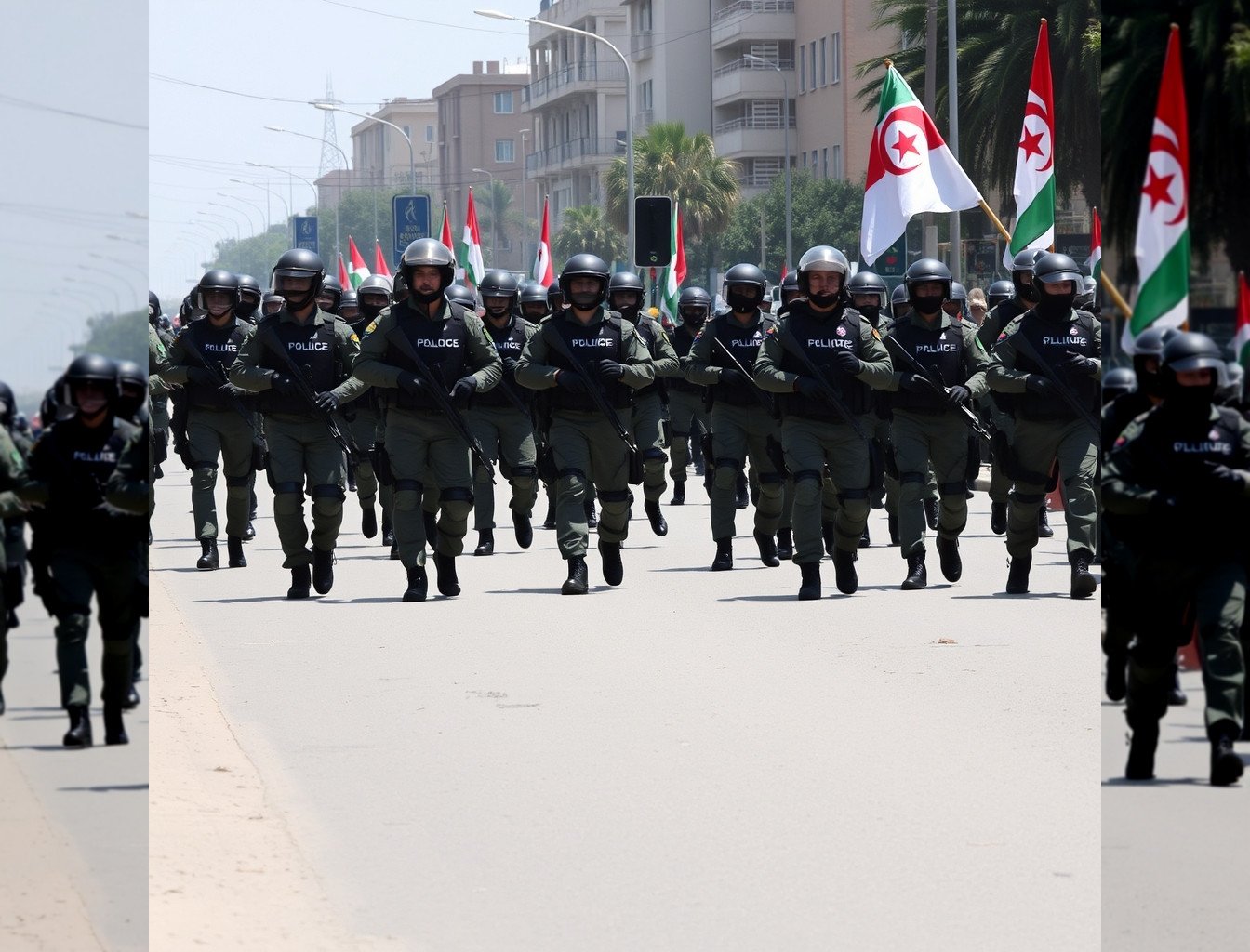
Algerian protesters face a decisive moment as authorities prepare a police crackdown following weeks of judicial reform demonstrations. According to Reuters, police forces have intensified presence in major cities including Algiers, Oran, and Constantine, where recent protests have drawn thousands demanding changes to the justice system. The move comes after weeks of escalating tensions between demonstrators and state security services, raising concerns among business founders and the Algerian diaspora about the stability of the country’s economic environment.
The protests, led by activists and opposition groups, have focused on calls for judicial independence and an end to political interference in legal proceedings. Last month, demonstrations surged in response to a decision by President Abdelmadjid Tebboune to reshuffle key judicial posts, which protesters view as an attempt to tighten control over the judiciary. The government has framed the reforms as necessary to modernize the legal system, but critics argue they consolidate power within the executive branch.
For entrepreneurs, the escalation poses immediate risks to business operations and investor confidence. Algeria’s economy, already burdened by low oil prices and high unemployment, is closely tied to political stability. Foreign investors and local business founders often cite instability as a deterrent to long-term commitments. Recent judicial protests could reinforce perceptions of systemic fragility, potentially delaying investment decisions and slowing down projects in sectors such as energy, construction, and technology.
The crackdown warning also carries implications for the Algerian diaspora, many of whom maintain economic and family ties to the country. Remittances from Algerians abroad reached $2.5 billion in 2020, according to the World Bank, making them a vital source of foreign exchange. If unrest intensifies, remittance flows could be disrupted, affecting household incomes and local consumption. Entrepreneurs with cross-border ventures may also face difficulties in managing assets or repatriating funds due to banking or regulatory constraints during periods of instability.
Local business leaders have expressed mixed reactions. Some small and medium-sized enterprises (SMEs) in Algiers have already reported delays in securing permits and contracts, citing bureaucratic slowdowns linked to the protests. Others in sectors like manufacturing and logistics are bracing for potential supply chain disruptions if transportation routes become targets of unrest. Industrial zones near major cities have increased private security measures, adding to operational costs for founders already grappling with rising utility prices and currency restrictions.
The Algerian government has framed the crackdown as a necessary measure to maintain public order and protect state institutions. Interior Minister Kamel Beldjoud stated recently that security forces are acting within the law to prevent what he described as “illegal gatherings” that threaten national cohesion. However, human rights organizations have raised alarms about arbitrary detentions and restrictions on freedom of expression, which could further strain Algeria’s international reputation and trade relations.
For international partners, particularly in Europe and neighboring Maghreb countries, the situation adds uncertainty to existing trade agreements. Algeria’s trade balance remains heavily dependent on hydrocarbons, which account for over 90 percent of export earnings. Any downturn in investor sentiment could delay much-needed diversification efforts in renewable energy and digital sectors. Entrepreneurs engaged in import-export activities are closely monitoring customs clearance times and port operations in Algiers and Oran, where delays could erode profit margins.
The coming days will be critical in determining whether the protests escalate into wider disruptions or if a negotiated resolution can be reached. The Algerian League for the Defense of Human Rights has called for dialogue, warning that excessive force could radicalize youth and deepen social divides. For business founders, the priority remains securing operational continuity while navigating an unpredictable legal and political landscape.
Key takeaway for entrepreneurs:
Protests against judicial reforms in Algeria risk disrupting business operations in major cities and delaying investment approvals. Entrepreneurs with ties to Algeria should monitor security updates and consider contingency plans for supply chains and remittances. Judicial instability may deter foreign investors, complicating efforts to diversify the economy beyond hydrocarbons.
Sources
- Reuters
💡 Starting a business in Algeria? GlobalStart guides you step by step: procedures, real costs, company forms (SARL, EURL, SPA) and CNRC registration.