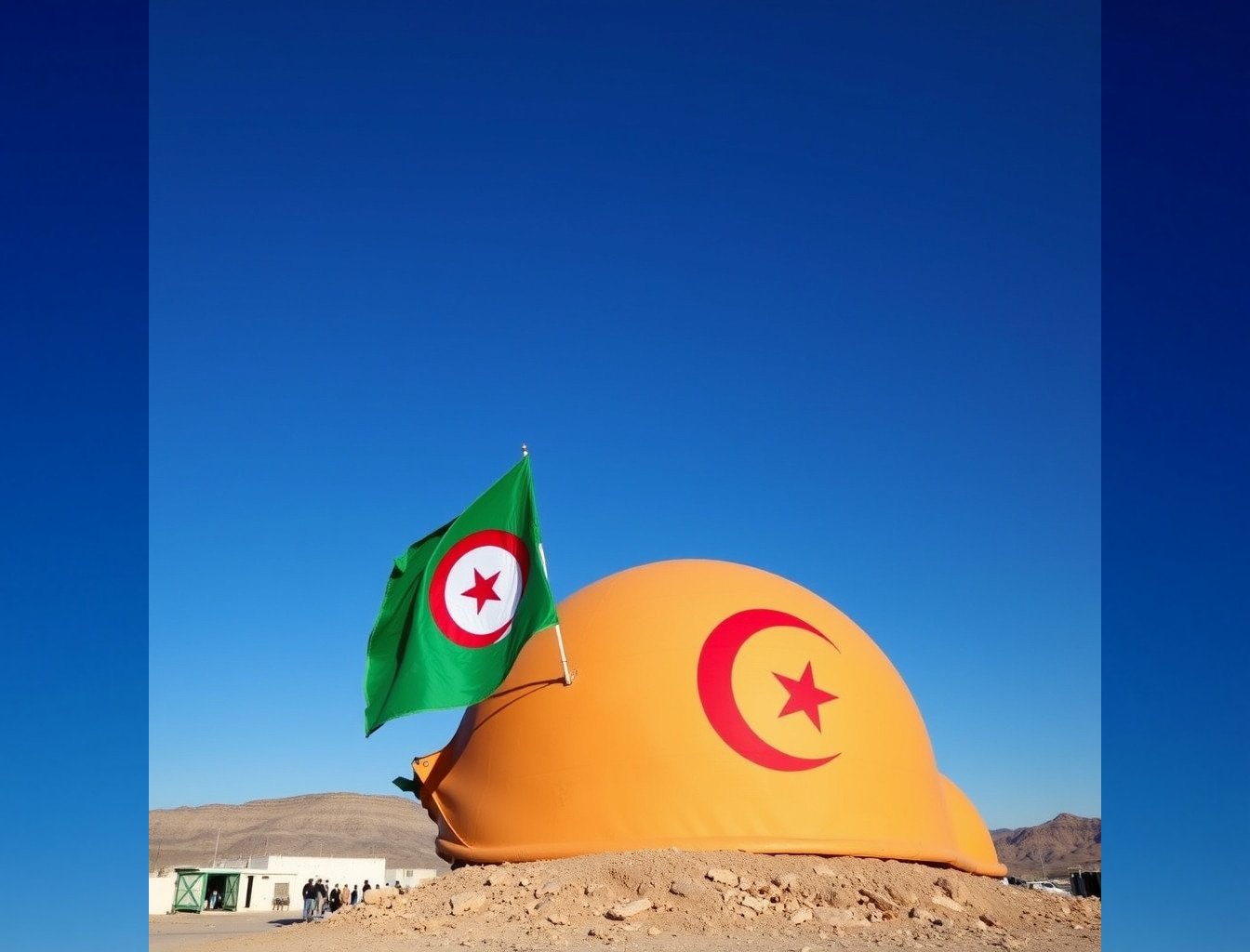
A Strategic Lever for Algerian Businesses
Algeria’s geographic position as a bridge between Africa, Europe, and the Mediterranean is no longer just a geographic fact—it’s becoming a deliberate economic and diplomatic strategy. This week, Council of the Nation member Abdelkader Salem reinforced that message at the 12th Global Conference of Young Parliamentarians in Samarkand, Uzbekistan. His argument: Algeria’s location is a rare asset in an era where global supply chains are fracturing and regional blocs are tightening.
For Algerian entrepreneurs, this isn’t just about politics. It’s about access. The country’s ports—Annaba, Oran, and Algiers—already handle over 30 million tons of cargo annually, but officials are now pushing to turn these into hubs for cross-continental trade. The question isn’t whether Algeria can play this role—it’s how quickly businesses can capitalize on it.
How Europe’s Energy Shift Opens Doors for Algerian Exporters
Europe’s scramble to reduce reliance on Russian gas has created a vacuum. Algeria, with its proven gas reserves (110 trillion cubic feet, per the U.S. Energy Information Administration), is positioning itself as a key supplier. But the opportunity extends beyond hydrocarbons. European firms are already eyeing Algeria’s solar potential—estimated at 5,000 hours of sunshine per year—as a cheaper alternative to fossil fuels.
For Algerian solar startups, this is a greenfield moment. The government’s recent approval of a $10 billion renewable energy fund signals serious intent. Entrepreneurs in sectors like agri-tech or logistics stand to benefit too: Europe’s push for “friend-shoring” means demand for Algerian dates, olive oil, and pharmaceuticals is rising. The challenge? Bureaucracy. Customs delays at Algerian ports can add weeks to shipping times—a problem the government is now addressing through faster clearance zones.
Africa’s Rising Demand Meets Algeria’s Industrial Edge
While Europe looks west, Africa looks north. Sub-Saharan economies are growing at 3.5% annually, and Algeria’s proximity gives it a natural advantage. The African Continental Free Trade Area (AfCFTA) alone represents a market of 1.3 billion people. But Algeria’s edge isn’t just geography—it’s industrial capacity.
The country’s automotive sector, for example, produced 130,000 vehicles in 2025, with Renault and Hyundai expanding local assembly lines. Algerian carmakers could supply AfCFTA’s growing middle class—if trade barriers fall. Salem’s push for dialogue hints at a broader play: turning Algeria into a manufacturing base for African markets, from textiles to electronics.
For Algerian diaspora entrepreneurs, this is a call to action. Many already run businesses in France, Spain, or the Gulf. Repatriating supply chains—even partially—could cut costs. A Moroccan-Algerian textile firm, for instance, recently shifted production to Oran to avoid EU tariffs, slashing expenses by 20%.
The Diaspora’s Untapped Role in Cross-Mediterranean Trade
The Algerian diaspora, numbering over 5 million, holds the keys to unlocking this potential. Remittances from Europe to Algeria hit $12 billion in 2025—more than tourism or oil revenues in some years. But that money could do more than sustain families. It could fund joint ventures.
Consider this: A Paris-based Algerian logistics firm could partner with an Algiers-based port operator to create a direct freight route between Marseille and Lagos. The diaspora’s networks in Europe and Africa could bridge the gap between Algerian exporters and buyers. The government is aware—recently, President Abdelmadjid Tebboune met with Algerian business leaders in France to discuss exactly this.
Risks: Bureaucracy and Infrastructure Still Hold Back Growth
The enthusiasm is real, but the execution is lagging. Algeria’s port infrastructure, while improving, still ranks below Tunisia and Morocco in efficiency. A container from Algiers to Rotterdam takes an average of 45 days—double the time for a Mediterranean competitor. The government’s answer? Special economic zones (SEZs) near ports, offering tax breaks for firms that commit to exporting.
For entrepreneurs, the message is clear: move fast. The first businesses to secure SEZ status or partner with diaspora networks will set the pace. A recent example: Sonatrach’s joint venture with an Italian firm to build a floating LNG terminal off Algiers. Such deals show how Algeria can leapfrog traditional trade barriers.
Key takeaway for entrepreneurs
Algeria’s geopolitical positioning is creating a rare window for exporters, manufacturers, and diaspora-backed businesses. The next 18 months will determine whether this potential translates into concrete deals—those who act now, whether by securing SEZ benefits, partnering with European buyers, or leveraging diaspora networks, will shape the country’s economic future. The question isn’t if Algeria will become a trade hub, but who will lead the charge.
Sources
💡 Starting a business in Algeria? GlobalStart guides you step by step: procedures, real costs, company forms (SARL, EURL, SPA) and CNRC registration.